Global demand for water bikes is climbing fast. Waterfront resorts, lake-side hotels, marinas, and water-sports distributors are all looking for low-maintenance, high-margin products that delight guests. If you plan to import water bikes in 2026, this guide walks through core specifications, small-batch customization, shipping logistics, and the compliance checklist — so you can source with confidence and capture your local market before competitors do.
What Is a Water Bike?
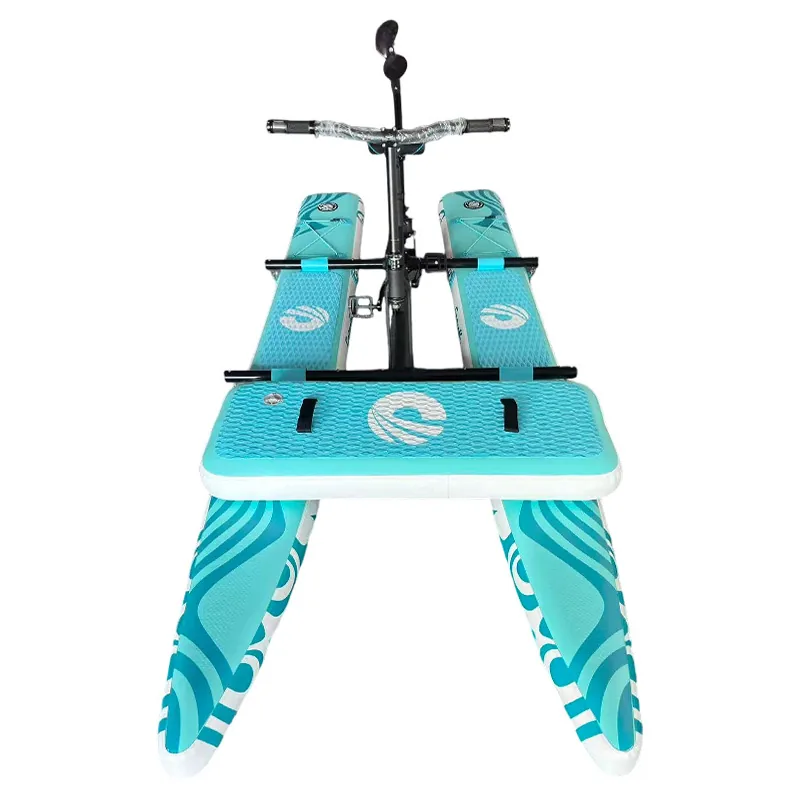
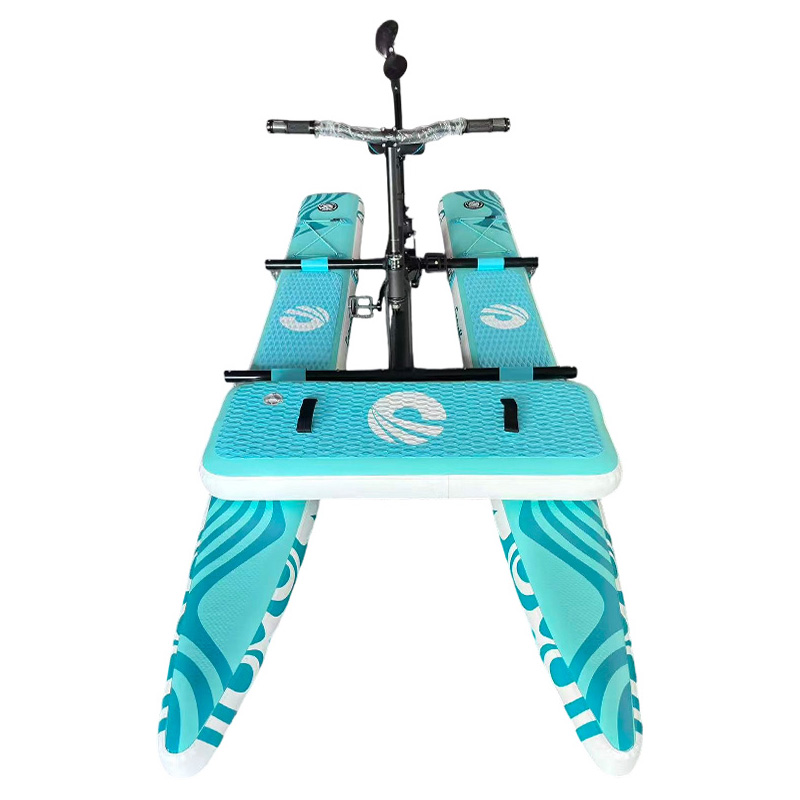
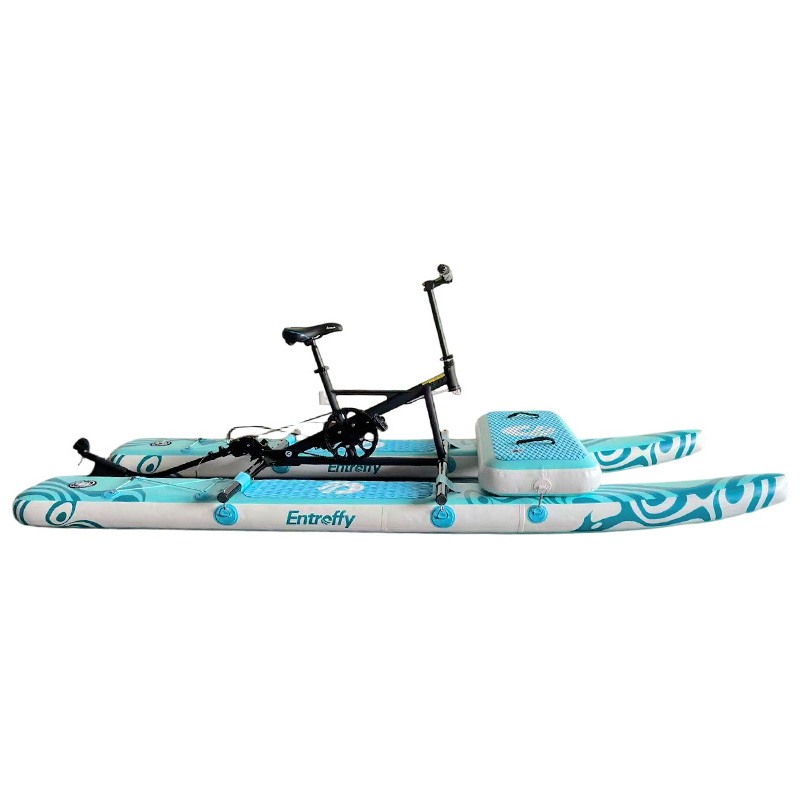
A water bike (pedal water bike / water bicycle) is a human-powered watercraft: a bicycle-style frame mounted on inflatable pontoons, with a belt-and-gear drive turning pedaling into propeller thrust. No fuel, no license, minimal maintenance. It packs flat for cheap freight — the commercial sweet spot for resorts and rental fleets.
Why Water Bikes Trend in 2026
- Waterfront tourism boom — resorts add water bike rentals as a premium guest experience.
- Eco recreation — zero emissions, no fuel cost.
- Compact logistics — inflatable pontoons fold flat, cutting freight per unit.
- Low barrier — start with a single set to test demand.
Key Specifications to Verify
| Spec | WB-f1 Water Bike |
|---|---|
| Frame | Aluminum alloy, integrated molding |
| Drive | Belt + gear, rudderless steering |
| Pontoon | 15 cm drop stitch |
| Max load | 250 kg (≈2 persons) |
| Length | 320 cm |
| Weight | 75 kg |
| Custom colors | From 20 sets |
Why these matter: aluminum resists saltwater corrosion; belt+gear is quieter and more durable than chain; 15 cm drop stitch gives hard-shell rigidity while staying packable.
Small-Batch Customization — Start Small, Scale Smart
The WB-f1 supports an incredibly low barrier:
- MOQ: 1 set — evaluate build quality and packaging before volume.
- Custom colors from 20 sets — branded fleets for resorts and rental chains.
- Lead time 7–10 business days — restock fast for seasonal peaks.
- Full accessory kit — handle, seat, pedals, pump, propellers, repair kit, backpack.
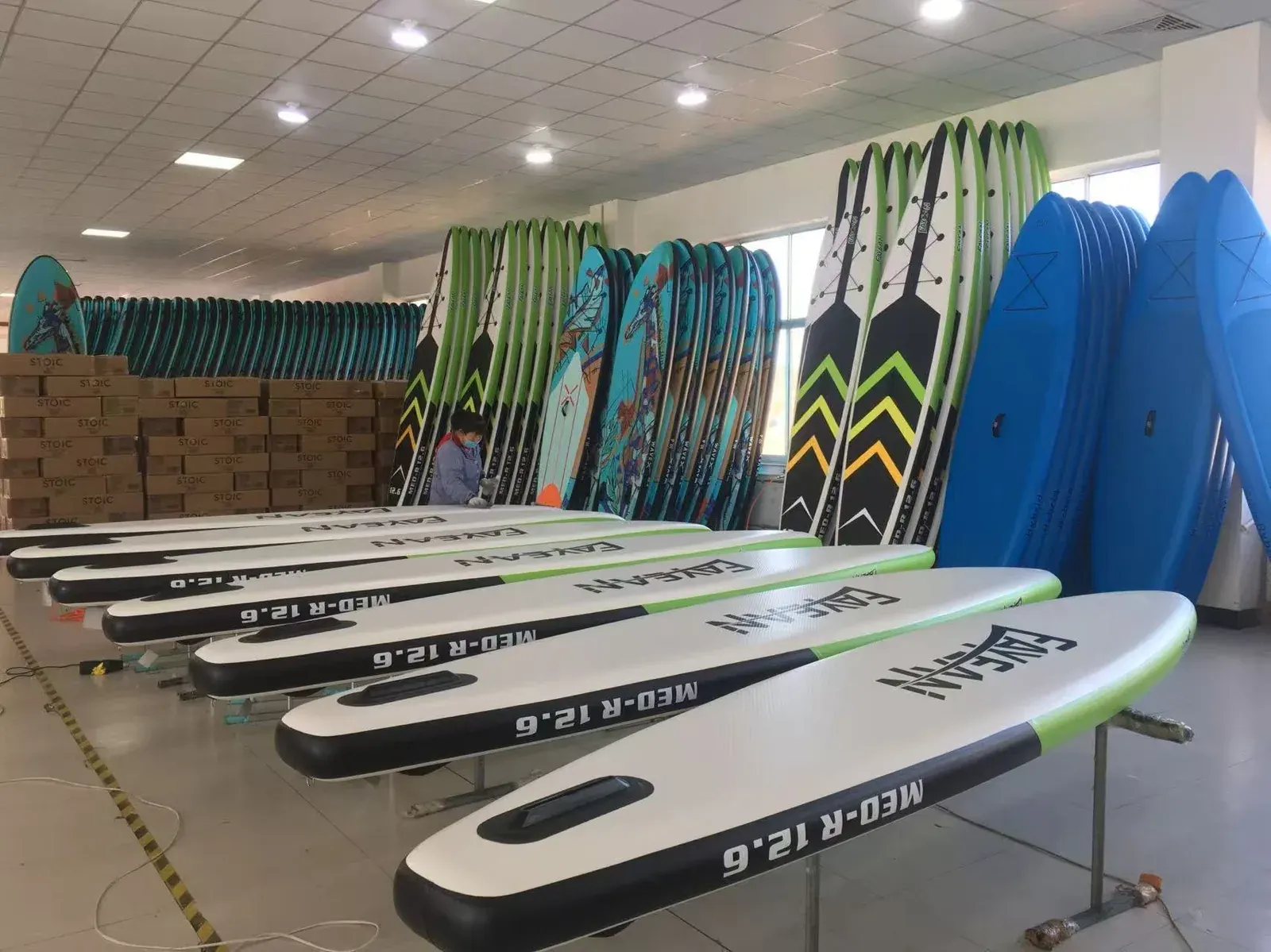
This model also applies if you later expand into a wholesale inflatable paddle board or private label paddle board line: one factory, one container, multiple categories. As an OEM ODM SUP factory we run SUPs, kayaks, and water bikes on the same floor, which simplifies your QC and consolidates freight.
Export Requirements & Shipping
- Packaging: 2 cartons, ~34 kg, 0.24 CBM — fits LCL economically.
- Compliance: HS code 9506 (water-sport equipment); CE / FCC where applicable; liability insurance for rentals.
- Freight: sea (25–40 days) or air courier for samples (5–10 days).
How to Choose a Reliable Manufacturer
- Request a sample (MOQ 1 makes this cheap).
- Ask for drop-stitch certification and pressure ratings.
- Inspect welding and seams.
- Confirm spare-parts availability.
- Evaluate communication and spec-sheet clarity.
A low MOQ paddle board and water-bike partner that answers these in writing reduces your sourcing risk dramatically. See our small-batch customization guide and the manufacturer checklist.
Pricing & Next Step
EXW pricing scales with volume and customization; FOB/CIF available for larger orders. Pricing varies by destination and quantity — contact us for a tailored quote.
Final Thoughts
The water bike market is still early-stage in most regions — first-mover advantage is real. Lock reliable supply, secure distribution, build brand recognition in 2026, and scale with confidence. Explore the WB-f1 product page or our OEM & ODM services.
Export Documentation Checklist
Every water bike export should ship with a clean paperwork pack: commercial invoice, packing list, bill of lading, and certificates of origin where required. For EU destinations, make sure the CE or REACH documentation matches the consignee’s market, and confirm your import duty classification covers inflatable watercraft. Prepare these documents before production finishes so there are no customs delays at the port.
Pre-Shipment Quality Checks
Before the container is sealed, run the standard inspection routine: inflate every unit to working pressure and hold it for 24 hours to confirm drop-stitch integrity, check seams under tension, verify valves and pump fittings, and test the drivetrain on electric models. Photograph each stage so the buyer receives a QC report with the shipment. A 20% random sample is usually enough for batch release, with full inspection on first orders.
After-Sales Support and Spare Parts
Water bikes in rental fleets take heavy use, so spare parts matter as much as the board itself. Stock spare pontoons, valves, repair kits, and pedal assemblies with your first order, and agree on a warranty policy for both private-label and OEM programs. A simple QR code on the packaging can link buyers to a maintenance video and a spare-parts order form, cutting support emails and keeping fleets on the water.
Low-MOQ Orders and Market Testing
New distributors can start small: a 10-20 unit trial batch is enough to test pricing and sell-through before committing to full container volume. Mixed-container loading with SUP boards and kayaks spreads freight costs, and repeat orders unlock better unit pricing and priority production slots.