Small-Batch OEM Guide 2026: Custom SUP, Kayak & Water Bike Manufacturing
For years, “custom manufacturing” meant one thing: a huge minimum order. If you wanted your logo on a paddle board, you ordered 500—or you did not. That gate is gone. In 2026, low-MOQ OEM/ODM and private-label programs let a single shop, resort, or startup launch a branded water-sports line with an order small enough to test the market first.
This guide explains what small-batch OEM actually covers, what you can customize, how the process runs, and how to choose a factory that will not let a small order slip in quality.
What “OEM,” “ODM,” and “Private Label” Mean
The terms get used loosely, so here is the practical split:
- OEM (Original Equipment Manufacturer) — the factory builds to *your* spec: your shape, your colors, your logo. You own the design.
- ODM (Original Design Manufacturer) — the factory already has proven shapes; you pick from them and apply your brand. Faster and cheaper to start.
- Private label — a subset of both: the product is standard, but it ships under your name with your packaging.
Most new brands start ODM/private-label to move fast, then shift specific SKUs to full OEM once they know what sells.
Why Low MOQ Changes the Math
A 50–100 unit first run means:
- You can test 2–3 designs instead of betting everything on one.
- Less cash tied up in inventory.
- Faster feedback from real customers.
- Lower risk if a color or shape misses.
This is exactly why small retailers and rental operators are now building their own lines instead of reselling national brands. See how a water bike rental business uses low-MOQ private label to brand its fleet.
What You Can Actually Customize
On inflatable SUPs, kayaks, and water bikes, a good factory can customize far more than the logo:
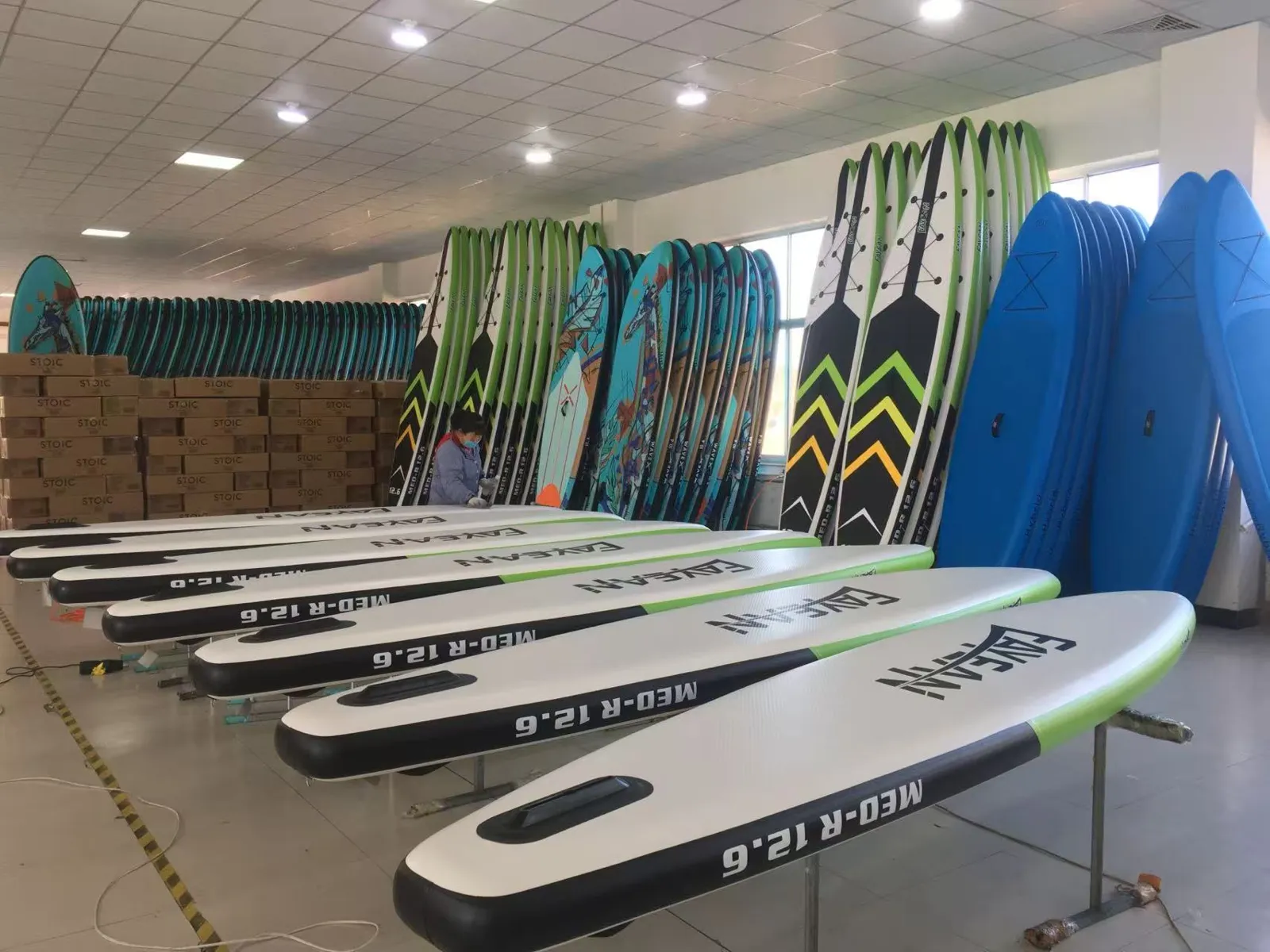
- Graphic & color — deck print, rail color, branded fin.
- Shape & size — board length/width, kayak cockpit, water-bike frame geometry.
- Material — drop-stitch density, PVC vs TPU, EVA deck pad texture (our drop-stitch guide explains the trade-offs).
- Accessories — pump, leash, paddle, bag, all co-branded.
- Packaging — box, insert card, QR to your warranty page.
The more of these you own, the harder you are to copy.
The Small-Batch Process, Step by Step
1. Brief — send your target use, volume, and brand guidelines.
2. Sample — the factory builds 1–3 units; you ride and critique them.
3. Tooling/artwork — once the sample is approved, production art is locked.
4. Small run — your low-MOQ order is produced alongside larger runs.
5. QC & ship — inspected, boxed, and freighted to your door.
A real sample stage is the single biggest predictor of a good outcome. Never skip it.
How to Vet a Factory (Without Getting Burned)
Low MOQ attracts weak suppliers. Screen for:
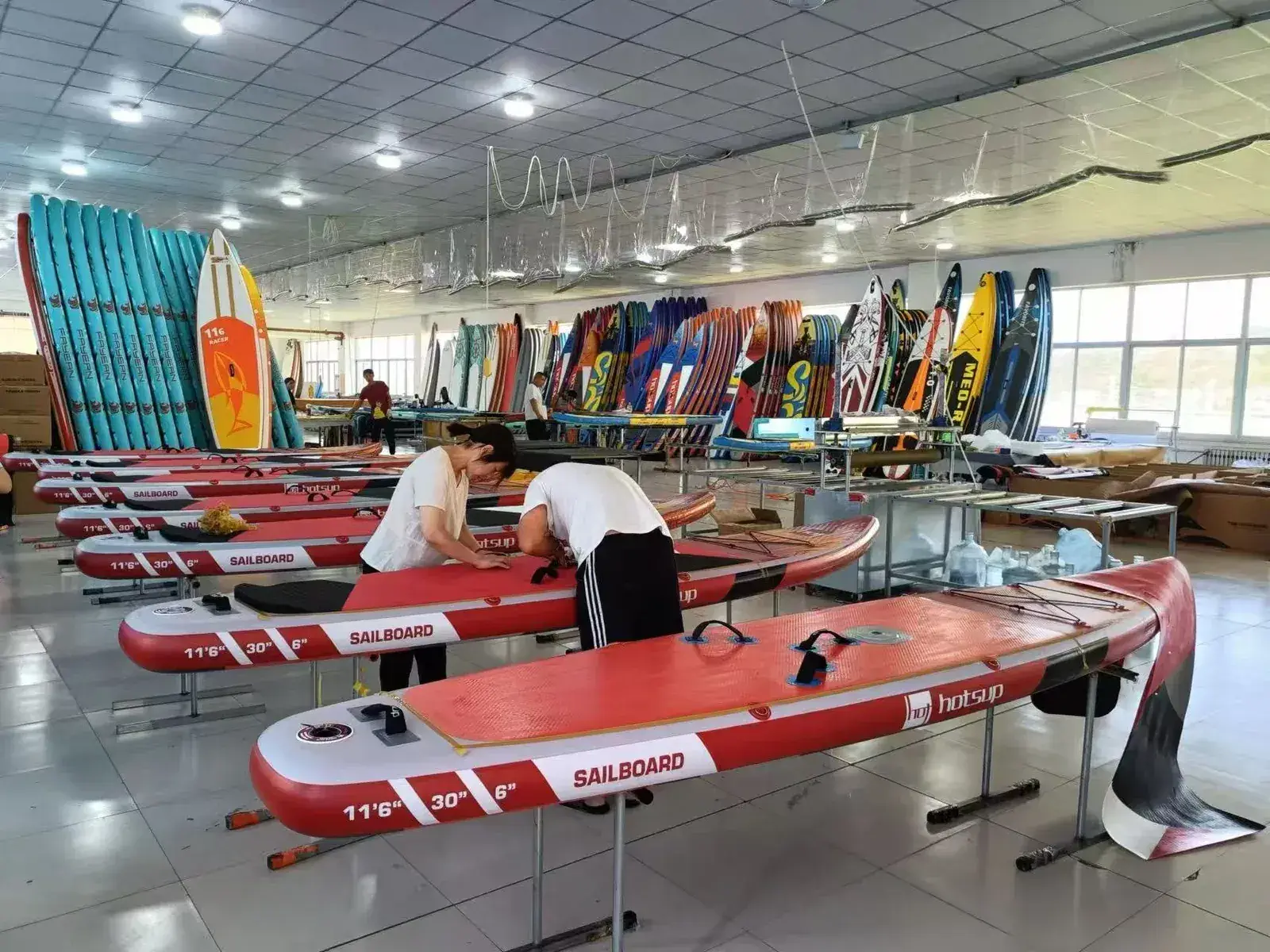
- Proof of existing production — photos or a video of a live line, not just a catalog.
- Material transparency — they can name the drop-stitch denier and PVC grade.
- Reference customers — ideally in your region or channel.
- Sample willingness — if they refuse a paid sample, walk away.
- Comms — they answer spec questions with numbers, not slogans.
Our guide to choosing a paddle-board manufacturer goes deeper on red flags.
Common Pitfalls
- Chasing the lowest price — it shows up as thin drop-stitch and weak seams.
- Skipping the sample — you discover the “custom” color is not the color.
- Ignoring packaging — unboxing is part of the brand; a plain box wastes the moment.
- Over-customizing too early — start with color + logo, expand after sales confirm.
Sample Stage: Questions That Protect You
The sample is your only chance to catch problems before a full run. Ask the factory for hard answers, not brochure talk:
- Material certificates — request the drop-stitch denier and PVC/TPU grade in writing; a vague answer is a red flag.
- Tolerance and QC — how do they check seams and PSI? Ask for the reject rate on recent batches.
- Warranty terms — what fails, and what is covered, for how long, in your market?
- Capacity — can they hold your repeat volume in peak season, or will you queue behind bigger brands?
Write these into the sample approval so the production run is locked to what you actually rode. Our guide to choosing a paddle-board manufacturer lists more red flags to screen.
Lead Time Reality
Low MOQ does not mean instant. A realistic first run takes 25–40 days including sample, tooling, and production, plus ocean freight. Build that into your launch calendar so stock lands before your marketing peaks. A factory that promises 7-day custom builds is usually skipping the sample stage—exactly the step that protects you (see the red flags above).
Bottom Line
Small-batch OEM in 2026 is the most practical way to launch a branded SUP, kayak, or water-bike line without betting the business on a 500-unit gamble. Pick a factory that is transparent about materials, insists on a sample, and supports low MOQ without quality drop-off. Contact our team with your brief and we will scope a first run that fits your market.