Water Sports Product Selection Guide 2026: SUP, Kayak, or Water Bike?
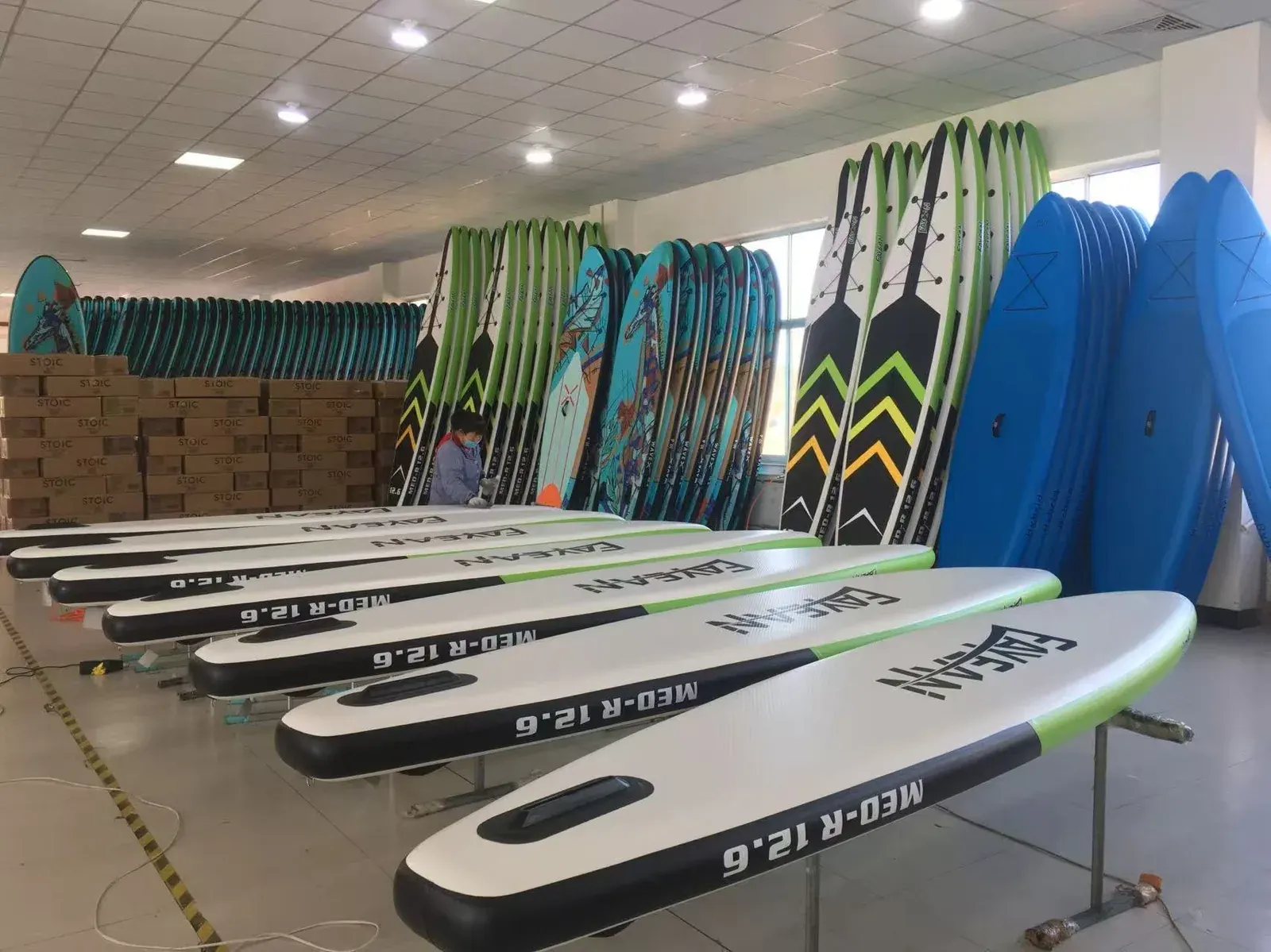
Picking the right water-sports product is the difference between a happy customer and a returned box. Whether you are buying for a rental fleet, a retail shelf, or your own private-label line, the choice comes down to who rides, where they ride, and what they want to feel. This guide compares the three core inflatable products—SUP, kayak, and water bike—and shows how to match each to a use case.
Start With the Rider, Not the Product
Before specs, answer three questions:
1. Skill level — first-timer or experienced paddler?
2. Water type — calm lake, slow river, sheltered bay, or open coast?
3. Goal — exercise, sightseeing, fishing, or pure fun?
The product that fits the rider’s reality outsells the one with the best photo every time.
Inflatable SUP: The All-Rounder
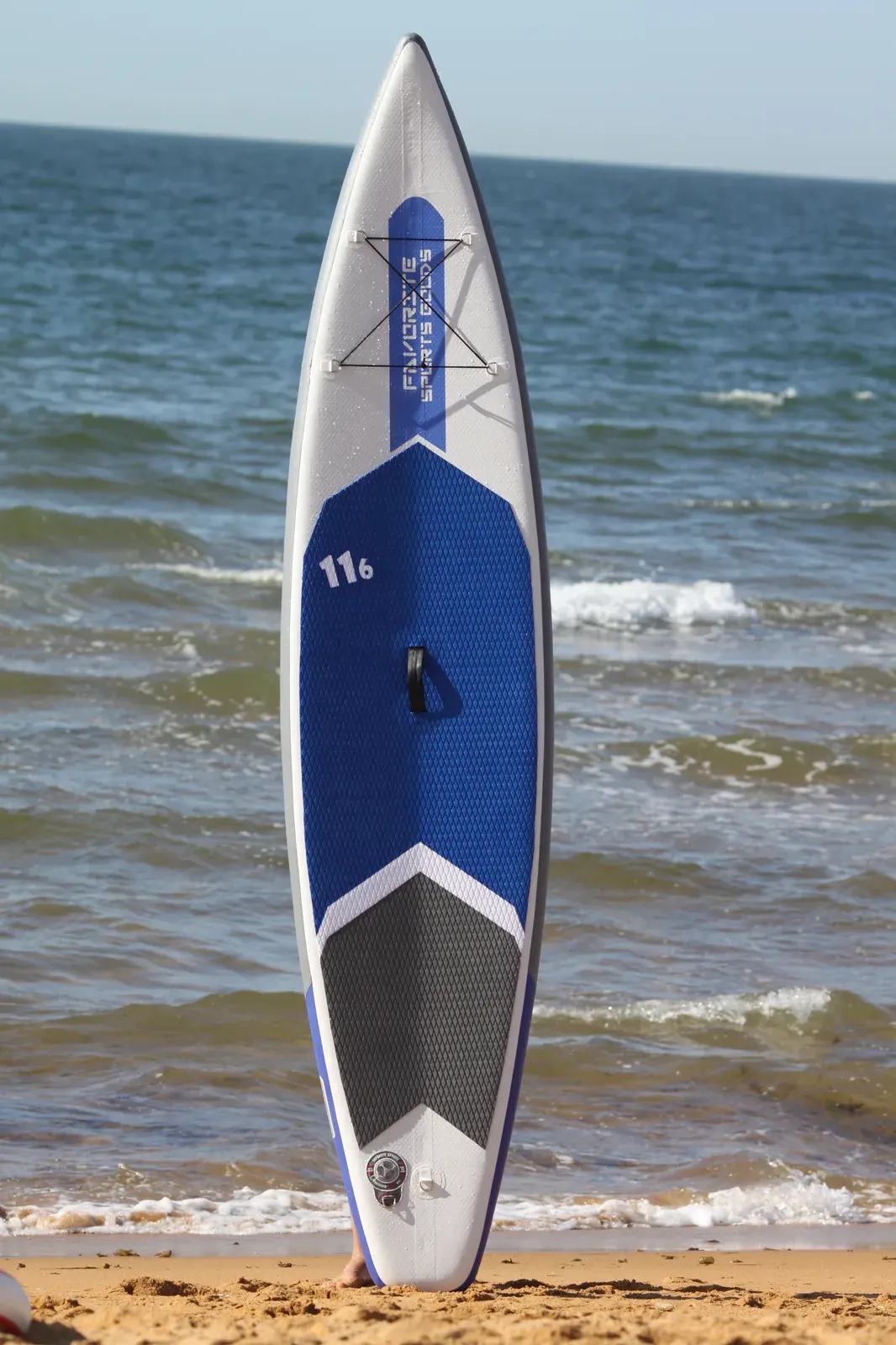
A stand-up paddle board is the most versatile entry. It suits fitness paddling, touring, yoga, and family outings.
- Best for: lakes, calm bays, rivers; ages 10+.
- Strengths: light, packs small, easy to learn, huge accessory ecosystem.
- Watch: beginners need width (30–34″) for stability; racers want a V-shape hull for speed.
- OEM angle: the widest customization canvas—deck art, shape, and drop-stitch density (see our drop-stitch guide).
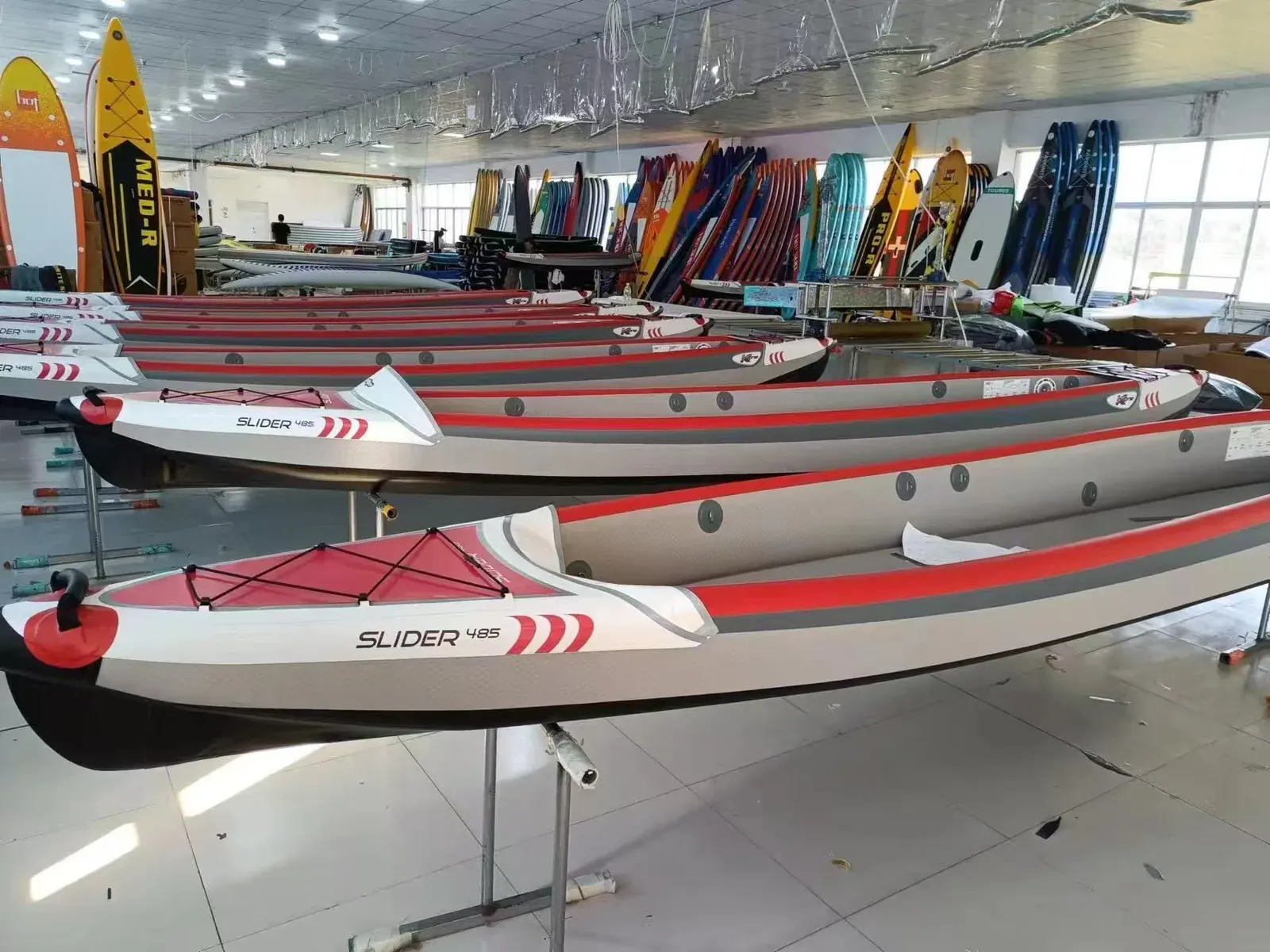
Inflatable Kayak: The Stable Two-Person
Kayaks win for pairs, kids, and cooler-water touring. A sit-in or sit-on-top inflatable kayak is stable and forgiving.
- Best for: rivers, lakes, slow coastal; families and anglers.
- Strengths: seats two, keeps gear dry, very stable.
- Watch: slower than a SUP in a straight line; check weight and packed size.
- OEM angle: co-branded seats, spray decks, and fishing mounts differentiate a line fast.
Water Bike: The Easy Crowd-Pleaser
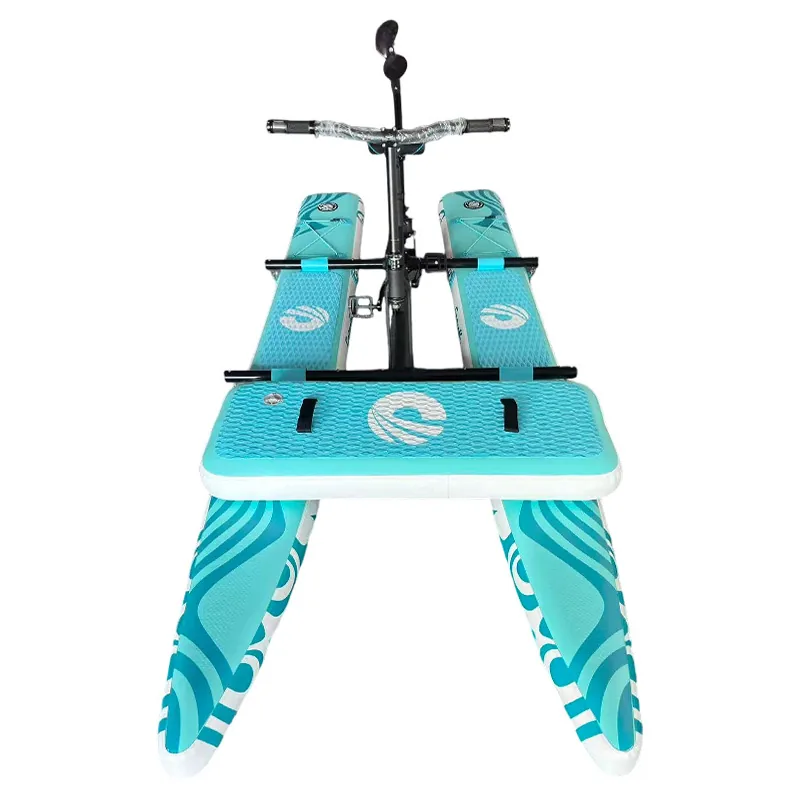
A water bike is the lowest-skill, highest-smile option—ideal for rentals and resorts.
- Best for: resorts, lakes, lagoons; first-timers of any age.
- Strengths: stable in under a minute, no training, photo-friendly.
- Watch: needs calm water; bulkier to store than a SUP.
- OEM angle: private-label fleets build a recognizable brand—see the rental business guide.
Quick Decision Table
| If the rider wants… | Choose | Why |
|---|---|---|
| Fitness + portable | SUP | light, packs small, full-body workout |
| Pair + gear + stability | Kayak | two seats, dry storage |
| Zero-effort fun | Water bike | stable, no lesson needed |
| Speed | V-hull SUP | cuts through chop |
Material & Size Rules of Thumb
- Calm + beginner — wider outline, mid drop-stitch density, high PSI.
- Touring/racing — longer, narrower, higher density, possibly TPU.
- Rental/commercial — durability over weight; fusion build, reinforced rails.
These specs are exactly what a low-MOQ OEM run can tune for you. Our small-batch OEM guide covers how to brief a factory.
Sizing by Rider Weight
Match board volume to rider weight, not just height. A 100 kg paddler needs a wider, higher-PSI all-around SUP (32–34″ wide) for stable footing; a 60 kg rider is happy on a narrower 30″ touring board. Inflatable kayaks publish a clear weight rating—stay about 20% under it for dry, stable runs. Water bikes are the most forgiving, rated at 120 kg and up, which is a big reason resorts and family beaches choose them.
Care and Storage
Inflatables win on storage: deflated, a SUP rolls to roughly the size of a sleeping bag. Rinse with fresh water after salt use, let it dry fully before rolling to avoid mildew in the core, and store it partially inflated or laid flat—never folded on a sharp crease, which stresses the weld. A little routine care can triple the service life of a rental fleet.
OEM Options Across the Range
All three products are available under low-MOQ OEM and private-label programs, so you can brand a mixed fleet without juggling three factories. Spec the drop-stitch density per use (our drop-stitch guide explains the trade-offs), choose PVC or TPU skins, and apply one co-branded accessory kit across SUP, kayak, and water bike. Our small-batch OEM guide walks through the briefing step by step, and the water-bike rental guide shows the branded-fleet model in practice.
Matching to Your Market
The “right” product is really the right product for your buyer. A coastal resort sells water bikes and all-around SUPs; a lakeside camp sells kayaks and fishing SUPs; a city fitness studio sells touring SUPs and yoga boards. Stock the two or three that fit your audience, brand them under one low-MOQ private-label run, and let the line tell a single story instead of a scattered catalog.
Quick Start Checklist
New to the category? Start with one all-around SUP and one tandem kayak under a single private-label run, add water bikes once foot traffic proves out, and keep every product on the same drop-stitch quality bar. That sequence limits risk, builds one recognizable brand, and still covers the three use cases most buyers actually want. When you are ready to spec, our small-batch OEM guide turns this checklist into a factory brief.
Bottom Line
There is no “best” water-sports product—only the best fit for the rider and the water. SUP for versatility, kayak for pairs and gear, water bike for effortless fun. Once you know your customer, spec the material and shape to match, and a low-MOQ private-label run makes it yours. Contact us with your use case and we will recommend a build and a first order size.