
Launching a paddle board brand in 2026 is easier than ever—and harder than it looks. The hard part is not finding a paddle board supplier China to fill a container; it is finding one that protects your margin, your quality, and your reputation after the first shipment arrives. This checklist is written for distributors, private label founders, rental operators, and hotels that need a reliable OEM/ODM SUP factory without betting the business on a single 1,000-unit order.
1. Define Your Business Model Before You Email a Factory
The right manufacturer for a rental fleet is not the right manufacturer for a premium private label brand. Before you request a quote, be clear about who you are and what “good” means for your channel:
- Distributor – resells an existing or white-label board under your distribution rights.
- Private label brand – sells under its own name and needs custom graphics, packaging, and protected tooling.
- Rental / hospitality – hotels, clubs, and tour operators that prioritize repair speed and abuse resistance.
Distributors vs. Private Label Brands
A distributor resells a finished product. A private label brand sells under its own name, which means the factory must support private label paddle board work: custom deck prints, branded packaging, and confidential tooling. If you want your logo on the board, confirm in writing that the factory treats your artwork as protected IP and will not reuse your design for the next buyer.
Rental & Hospitality Buyers
Hotels, clubs, and tour operators care about repair speed and abuse resistance more than retail finish. For them, an inflatable SUP for rental business should prioritize reinforced rails, replaceable fins, and a local spare-parts plan over premium graphics. Ask the factory how it supports a fleet that gets used eight hours a day.
2. Verify the Factory, Not Just the Trading Company
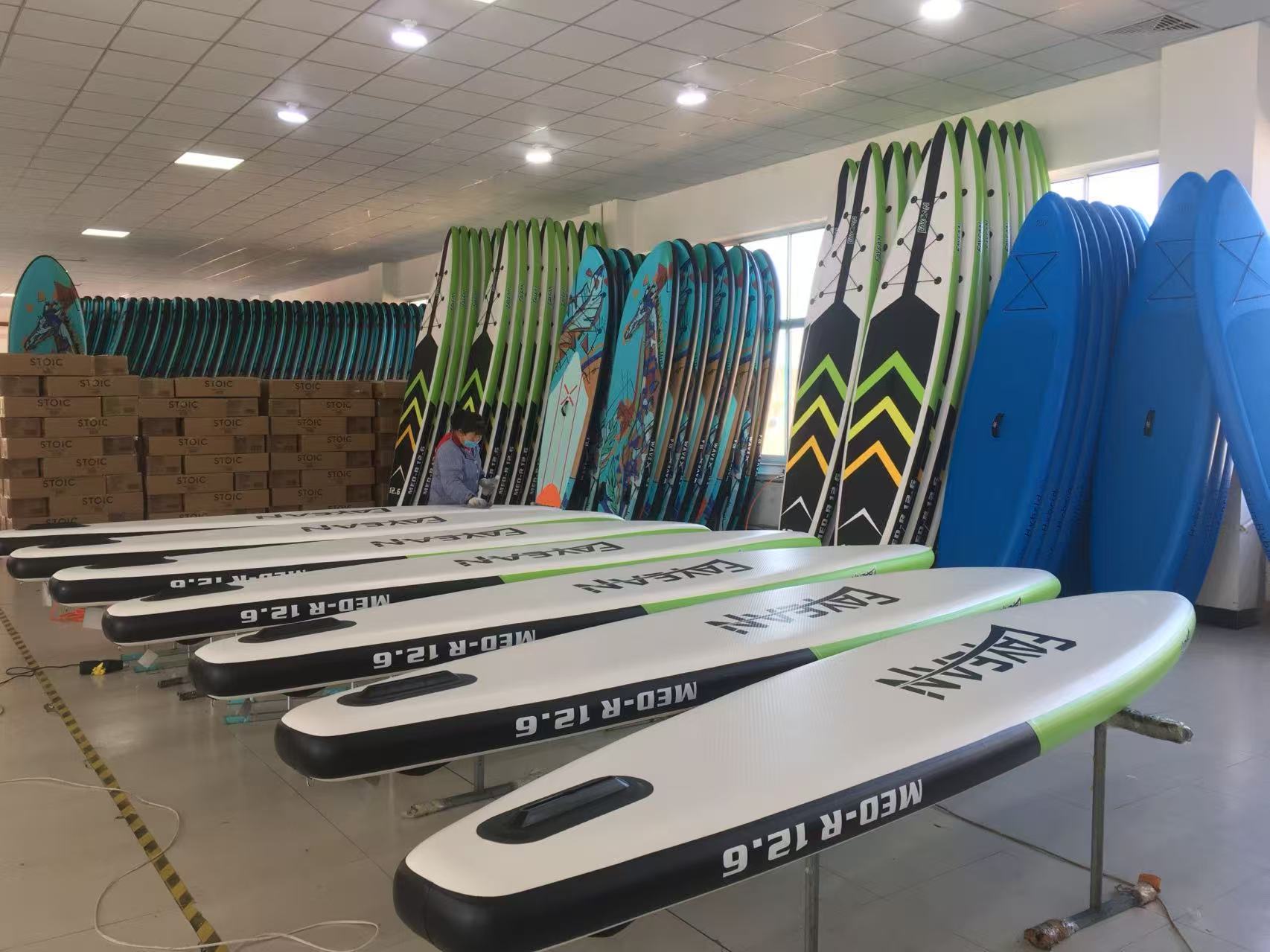
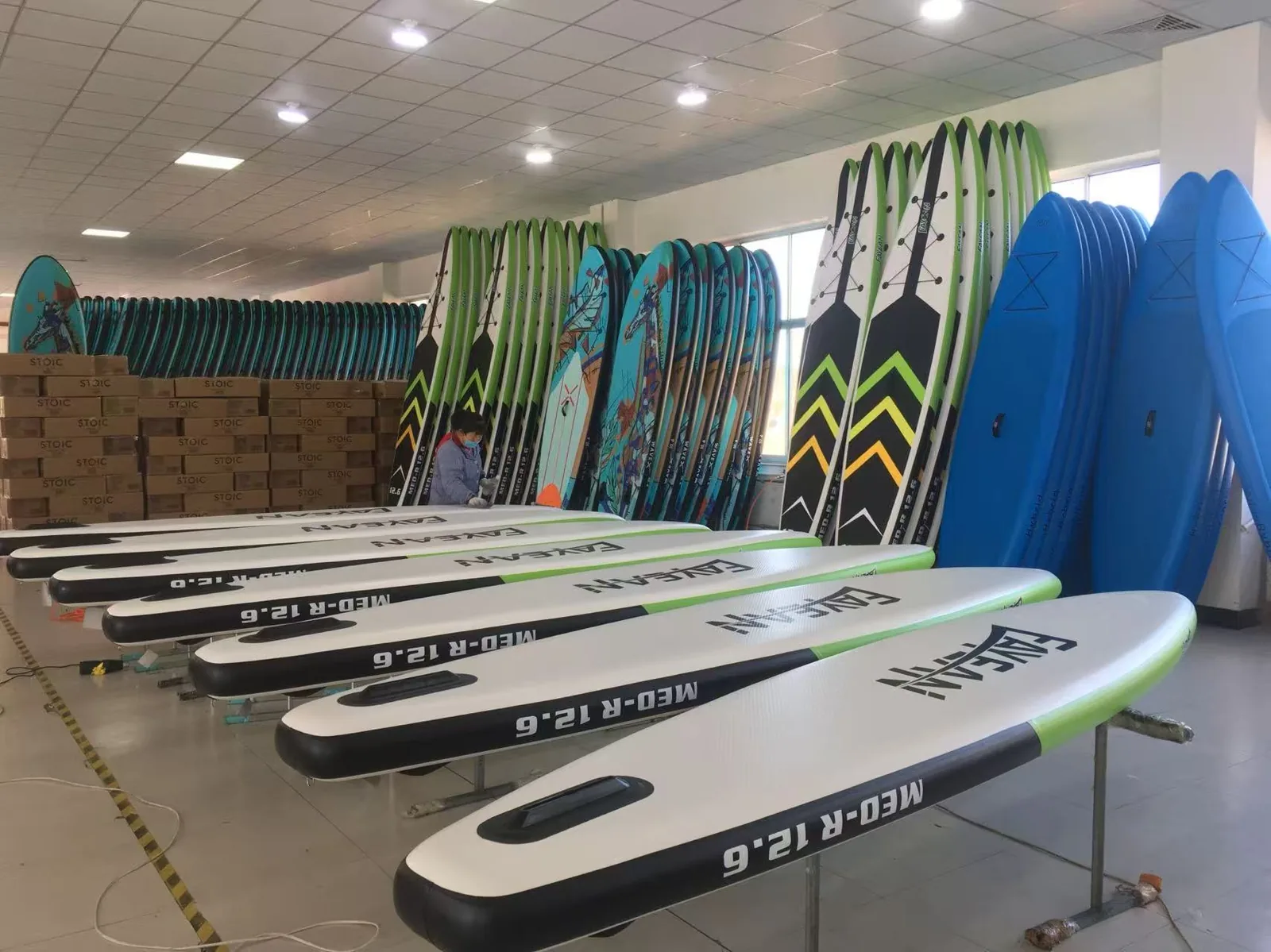
Many “manufacturers” are trading companies with a polished website and a catalog borrowed from three real factories. Ask for the production line, not a brochure. A real inflatable SUP factory controls drop stitch lamination, rail bonding, and pressure testing in-house. Request a live video walkthrough of cutting, printing, and QC, and check that the same entity issuing the contract also owns the floor.
Red flags here are easy to miss: a supplier that only shows a showroom, that cannot name its material vendors, or that refuses a video call is almost always a middle layer adding cost without adding control. A genuine factory will readily share references from existing export clients and, where permitted, let you speak with them.
3. Why Low MOQ Matters More in 2026
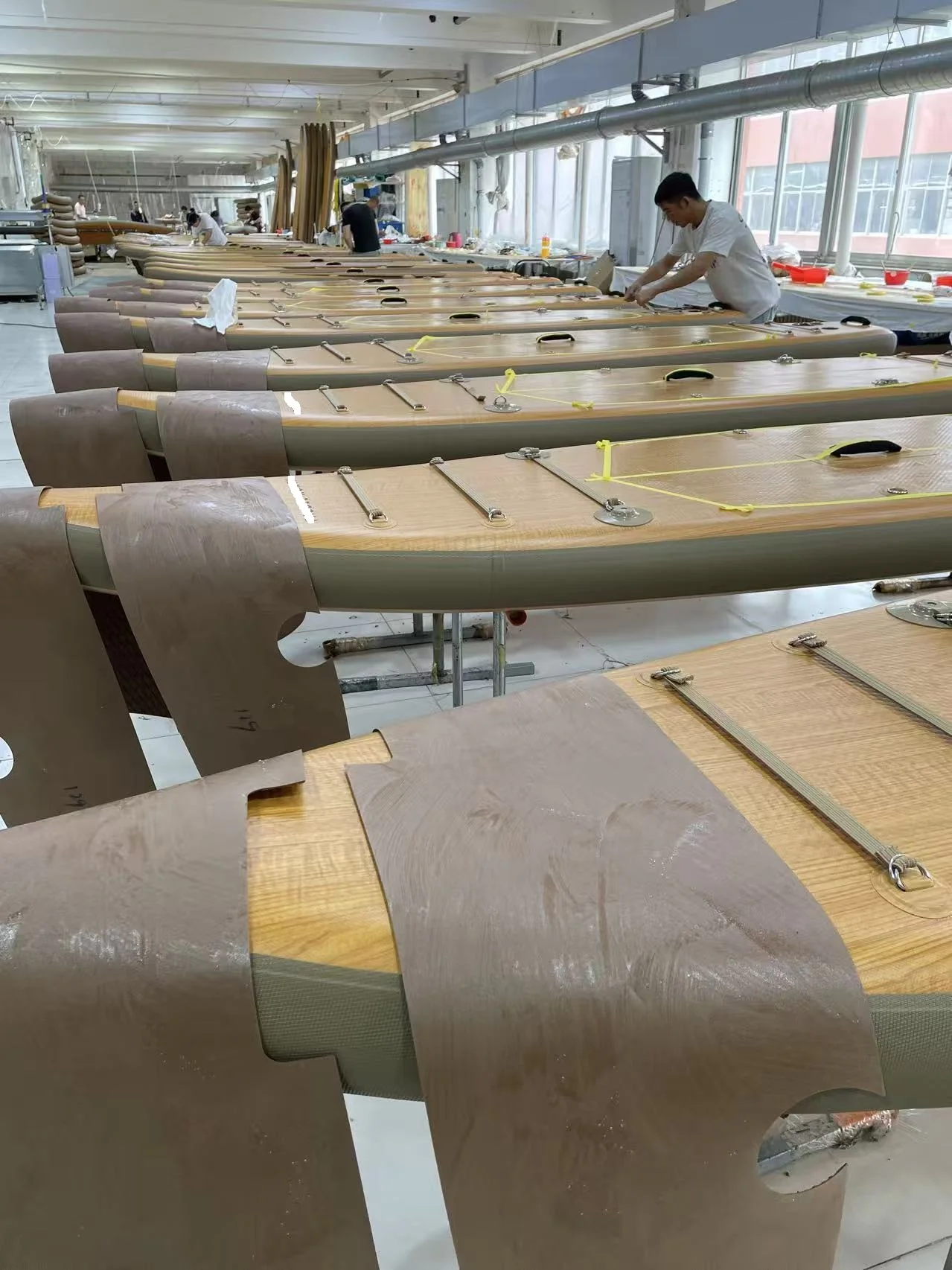
Inventory cost is the silent killer of small brands. A low MOQ paddle board program lets you test three graphics in the market instead of betting everything on one. ForwardSUP supports small-batch runs with MOQ as low as a single unit for sampling and low volumes for first production—so you can validate demand before committing warehouse space or working capital.
MOQ 1 Unit and Small-Batch Customization
A true small-batch partner treats a 20-unit pilot the same as a 2,000-unit order: same materials, same QC, same custom print. That consistency is what lets a new brand grow without a painful quality reset at scale. If a supplier quotes you a great board at 2,000 units but something different at 50, walk away—your early batches are where your reputation is built.
4. OEM/ODM Capabilities Checklist
Get specifics in writing before you pay a deposit. Your checklist should cover:
- Shape and volume – all-around, touring, race V-hull, or youth.
- Print – full-print deck/hull, partial, or single color; UV-stable inks.
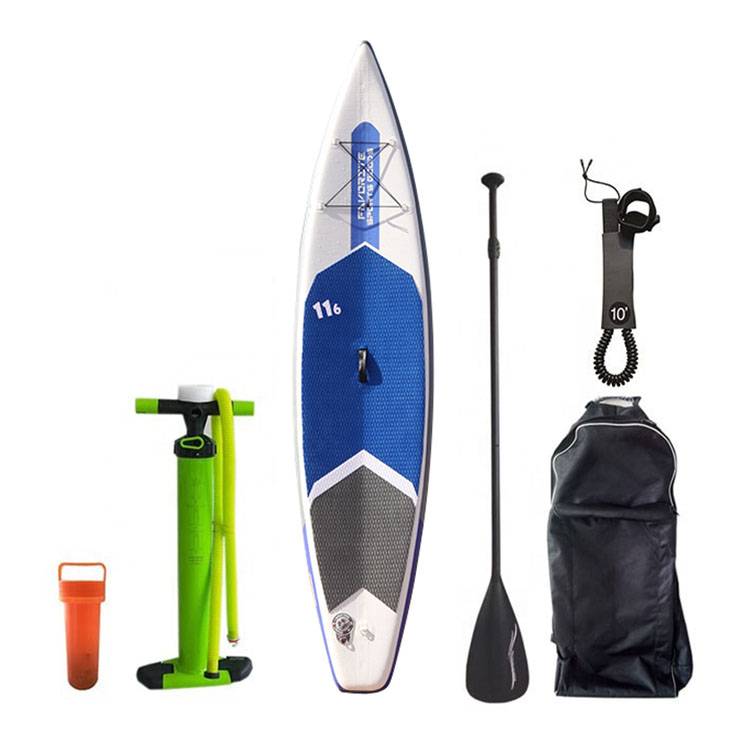
- Accessory bundling – paddle, pump, leash, backpack, repair kit, and how each is branded.
- Packaging – branded carton, multilingual manual, QR warranty card.
- Documentation – material spec sheet, pressure-test report, compliance papers.
What “ODM” Should Include
ODM means the factory co-develops the product, not just prints your logo on a stock board. Expect help with shape tuning, material specification, and compliance documentation. If a supplier only offers logo printing, you are buying OEM at best—budget and plan accordingly, because the development risk sits with you.
5. Material & Build Quality: Drop Stitch and V-Hull
Drop stitch density drives rigidity; rail construction drives lifespan. Ask for denier specs (commonly 1000D+ for the hull and double-layer PVC), and a pressure-test report at the board’s rated PSI. A V-hull shape improves tracking and glide for touring and race boards—a useful differentiator if you sell performance models. See our custom SUP board options for the shape choices we support, and compare them against a flat all-around board before you commit tooling.
6. Certifications & Export Compliance
For the EU and North America, confirm CE marking and the applicable EN ISO 25649 water sports equipment references, plus material safety declarations. A competent paddle board supplier China ships with the paperwork your customs broker needs, not a verbal promise. Missing documents are the single most common cause of a container sitting at port—and the cost of demurrage dwarfs any saving from a cheaper, less organized supplier.
7. Lead Time, Logistics & After-Sales
Confirm a realistic lead time at your MOQ, not the “15 days” quoted to win the order. Clarify Incoterms: EXW (you arrange everything), FOB (factory delivers to port), or CIF (factory covers freight to your port). Then pin down after-sales—warranty length, claim process, and spare-part availability. A wholesale inflatable paddle board program is only as good as the support you get when a batch arrives with a valve issue three months after launch.
8. Red Flags to Avoid
- No in-house production line (cannot show the floor live).
- Refuses a video call or factory tour.
- MOQ only in full containers, with no pilot run option.
- No written QC or pressure-test report.
- Vague on certifications and export documentation.
- Quotes a premium board at volume but downgrades materials at low MOQ.
Frequently Asked Questions
What is a good MOQ for a new paddle board brand?
For a first production run, 20–100 units spread across a few graphics is healthy. It validates demand without overloading cash flow. Sampling at MOQ 1 unit lets you check quality and finish before committing to a full run.
Should I choose OEM or ODM?
Choose ODM if you want the factory to co-develop shape and specs; choose OEM if you already have a finished design and only need production. ODM usually carries a small development fee but shortens time-to-market and keeps product ownership with you.
How do I verify a factory is real?
Request a live video walkthrough of the production line, verify business licenses, and ask for references from existing export clients. A genuine OEM/ODM SUP factory will readily share verifiable proof and will not hide behind “trade secrets” when you ask to see the floor.
Conclusion: Build With a Partner, Not Just a Vendor
The cheapest quote is rarely the cheapest outcome. Pick a manufacturer that supports low MOQ paddle board runs, protects your IP, documents compliance, and stands behind the product after delivery. If you are weighing suppliers, start with our OEM/ODM guide and request a quote with your target volumes and timeline.
For related reading, see our custom SUP manufacturer overview, the distributor’s product selection guide, and the drop stitch material guide. You can also review our small-batch customization guide for a deeper look at ODM workflows.
Ready to Launch Your Own Water Sports Brand?
Start with MOQ 1 unit. Full OEM/ODM customization, private label, and certified manufacturing — request your tailored quote today.
Prefer to talk first? Contact our team for a no-obligation consultation.