
Inflatable floating docks have quietly become one of the fastest growing add-on categories for water sports brands, marinas and resort suppliers. They ride on the same drop stitch technology as SUP boards, they ship in a carton instead of a truck, and they carry healthy margins for distributors who position them correctly. Yet most buyers approach a floating dock project with SUP expectations, and that mismatch causes most of the sourcing failures we see. This guide explains what an inflatable floating dock actually is, which specifications belong in your request for quotation, how OEM branding works, and which quality checks to demand before a container leaves the factory.
What Is an Inflatable Floating Dock?
An inflatable floating dock is a rigid platform built from double-wall drop stitch fabric. Thousands of polyester threads connect the top and bottom layers, so when the platform is inflated to its specified working pressure the surface becomes as firm as a wooden deck. Unlike a pool toy, you can walk on it, stack coolers on it, moor a tender against it, or use it as a launch platform for paddle boards and kayaks.
Compared with a fixed dock, an inflatable version needs no permits, no pilings and no installation crew. It folds into a storage bag, inflates in minutes with a standard high-pressure pump, and can be relocated or stored away for the season. That flexibility is exactly why resorts, yacht clubs, swim schools and waterfront property owners keep adding them to their equipment lists – and why distributors and rental operators are starting to ask factories for their own branded versions.
Who Buys Custom Floating Docks – and What They Ask For
In our production experience, custom dock enquiries come from four buyer types, and each cares about different details:
Marinas and boat clubs want modular platforms that extend slipping capacity for tenders and jet skis. They ask about load ratings, anchor points and how platforms connect to each other. Resorts and hotels want swim platforms and sun decks that look premium in photos; their priority is surface finish, color matching and guest safety. Water sports centers and SUP schools use docks as stable home bases for lessons – they want D-rings for tying off boards, and non-slip decks that stay comfortable under bare feet all day. Private waterfront owners, often reached through your retail brand, want a simple seasonal dock that one person can install.
Knowing which buyer you serve determines the specification you should negotiate. A resort deck and a boat club work platform may look identical in a catalog, but their fabric weight, hardware layout and branding requirements differ significantly.
Construction Specs to Put in Your RFQ
When you approach an inflatable floating dock manufacturer, insist on written specifications, not catalog photos. The following items are where quality is actually decided.
Drop-Stitch Core and Seams
The core decision is the drop stitch fabric itself. Thickness, thread density and the PVC layer weight determine rigidity and longevity. Ask for the fabric spec sheet, not just the finished size. Just as important is how the seams are joined: a factory that heat welds its seams produces consistent, solvent-free joints in every batch, while hand-glued assembly depends on the skill of the operator on that day. Heat welding also removes the solvent smell that European buyers increasingly screen for under REACH expectations. If you are new to the material, our drop stitch material guide explains the construction in detail.
Deck Surface, Valves and Hardware
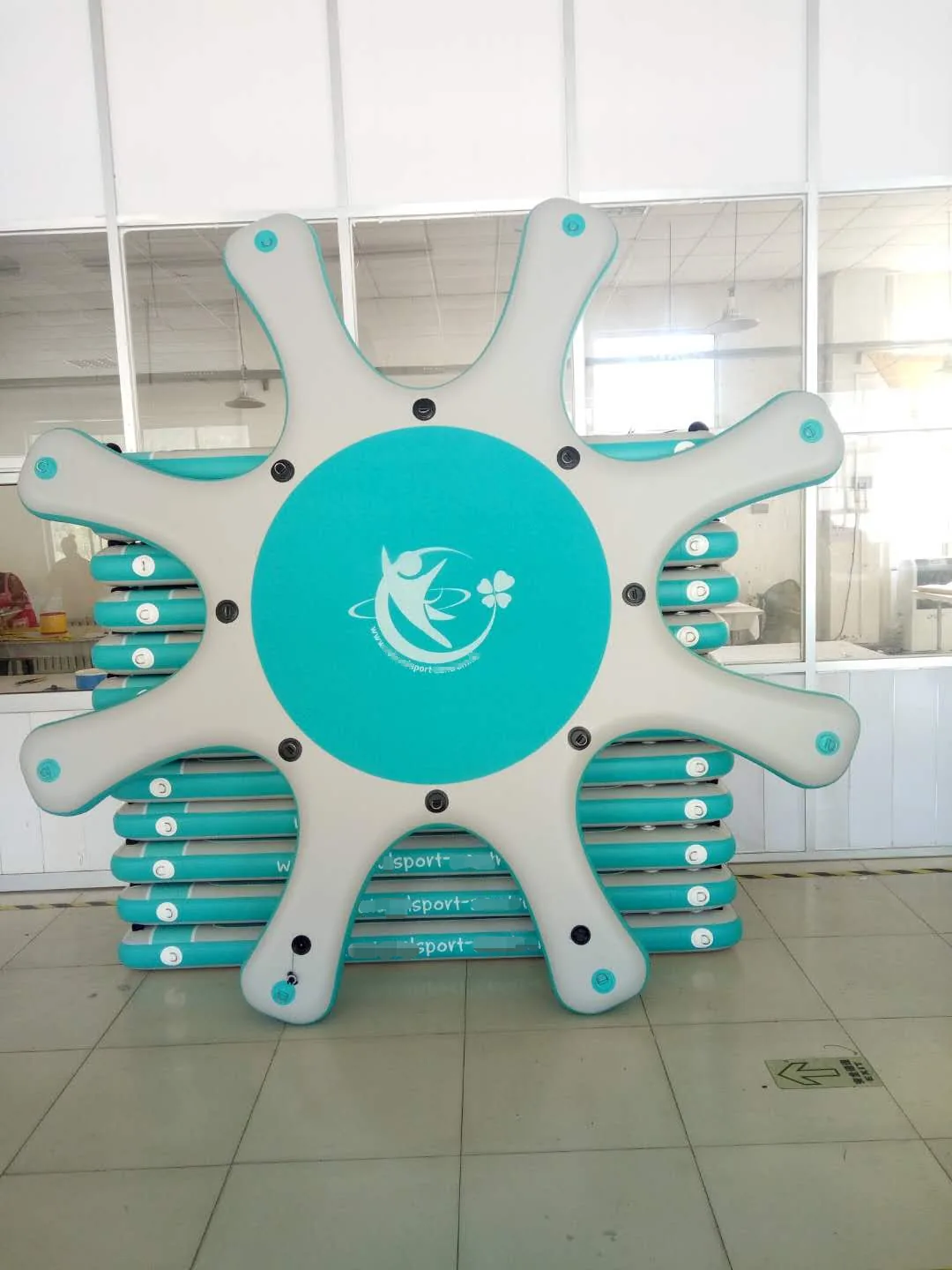
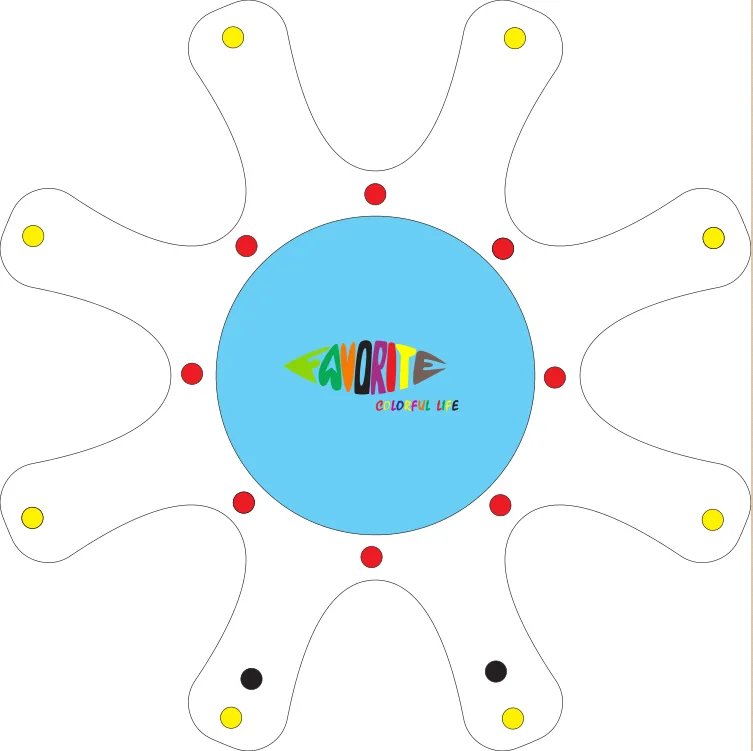
Specify the deck finish explicitly: EVA foam traction, brushed PVC, or a printed surface. Confirm the valve type and quantity – larger platforms use multiple valves to cut inflation time – and request marine-grade handles, D-rings and anchor seats welded rather than glued at attachment points. Hardware placement should be confirmed on a design drawing before sampling, because re-welding hardware after production is rarely practical.
Size, Shape and Modularity
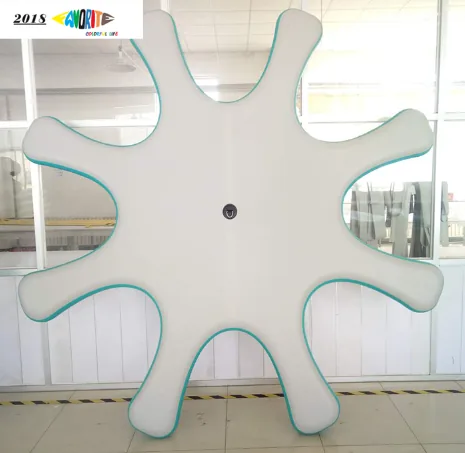
Docks are fully cut-to-size products. Standard rectangles are the most economical, but manufacturers can produce L-shapes, octagons, platform sets that zip or strap together, and matching launch fingers for kayaks. If modular connection matters to your customers, ask the factory to demonstrate the connection method on a sample – this is the most common point of failure in cheap imports.
OEM and Private Label Options for Dock Platforms
A floating dock is one of the easiest products to private label because the branding surface is large and flat. At our OEM program docks can carry your logo on the deck rail, full-color printed artwork on the deck surface, custom colorways matched to your brand palette, and retail-ready packaging with your artwork. The same heat transfer and digital printing capability used on our custom SUP boards applies to dock platforms, so a brand can launch a coordinated line – board, dock, and accessories with one visual identity.
Minimum order quantities are flexible: development and sample orders start from a single unit, which lets you validate demand in your market before committing to volume. When you request a quote, send your target size, deck finish, branding scope and destination port – a factory that replies with a written specification sheet and a design drawing, rather than just a price, is the one worth shortlisting.
Quality Checks to Require Before Shipment
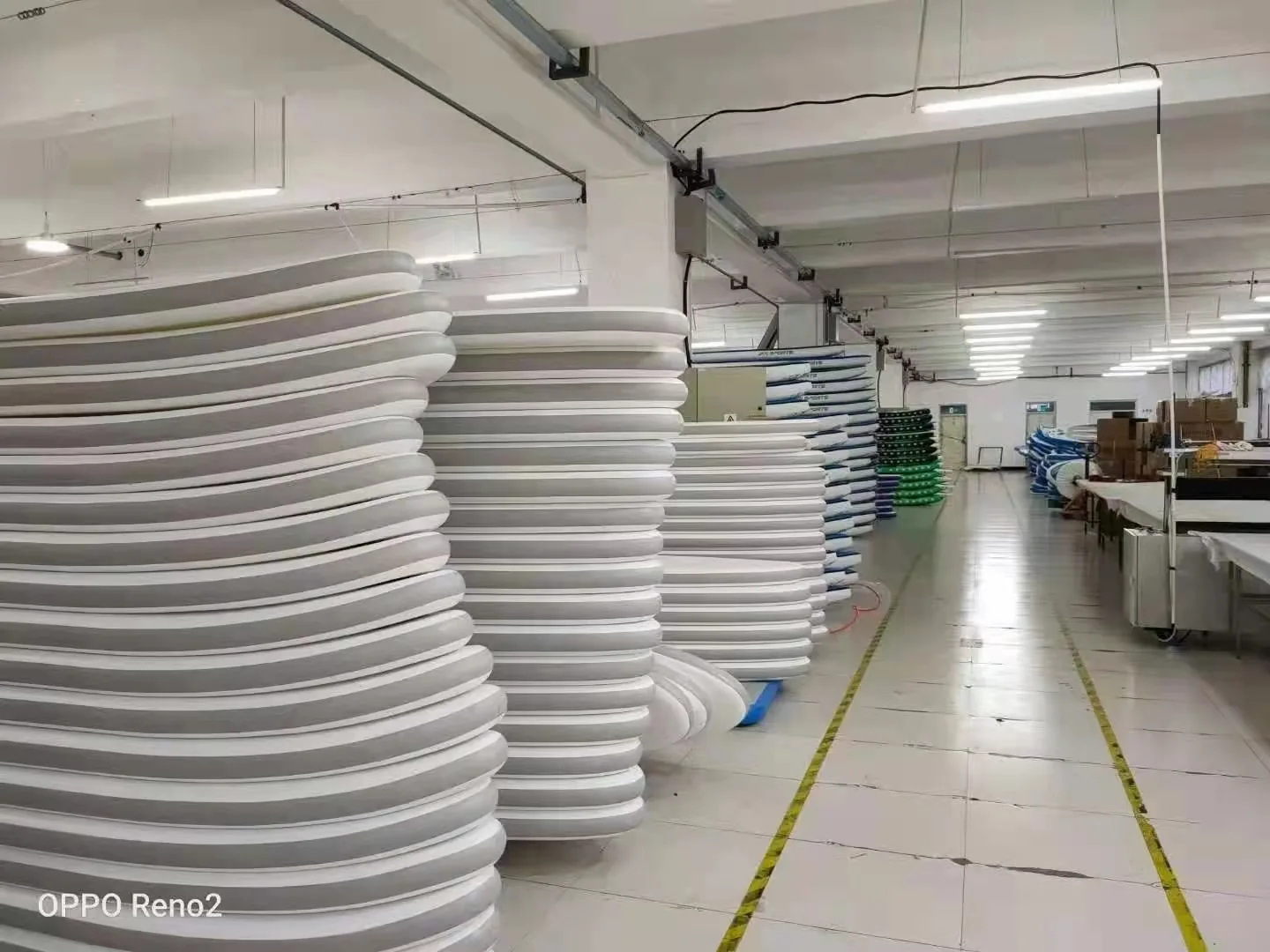
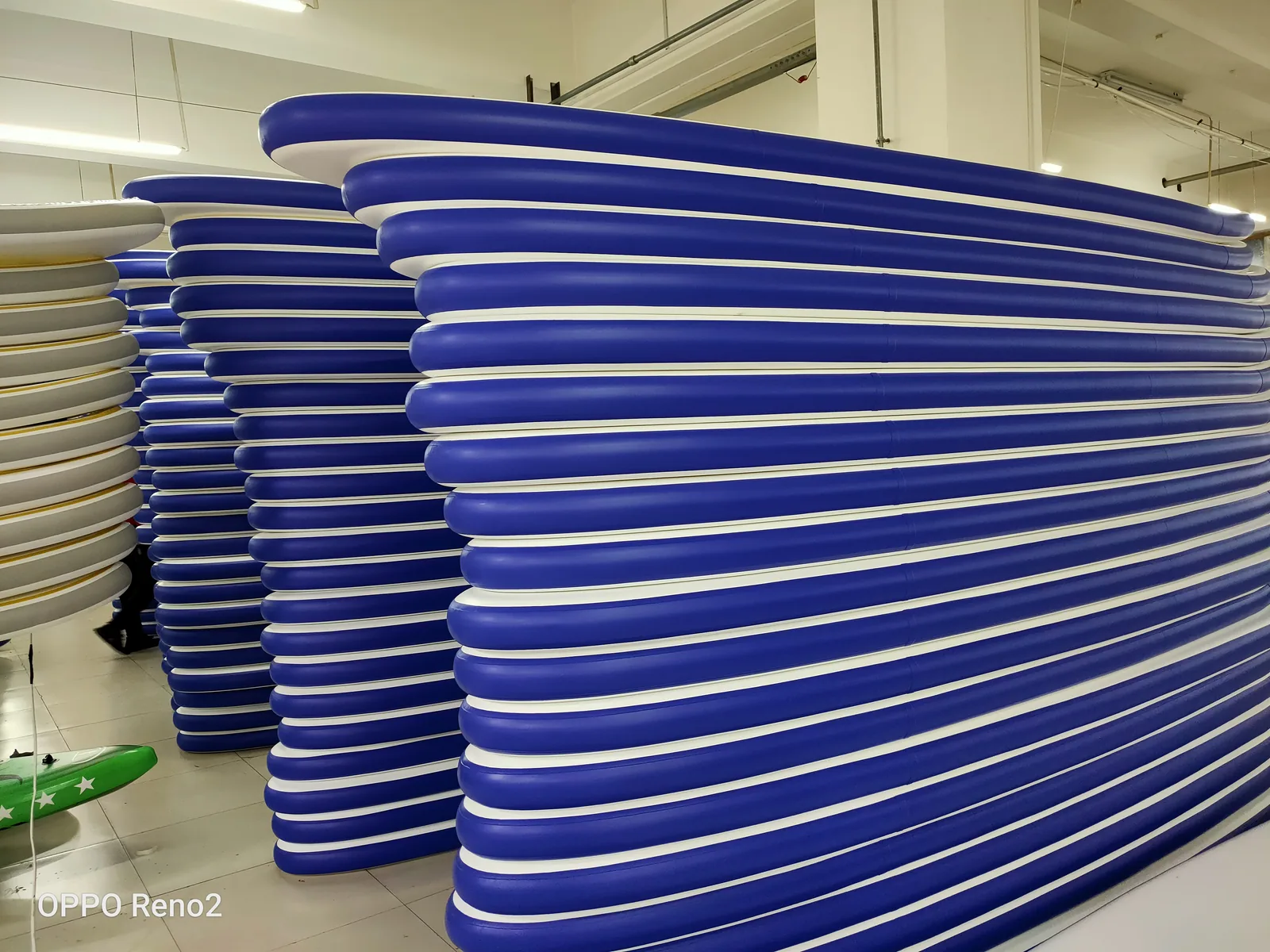
Write these into your purchase order so they are contractual, not optional. First, an air retention test: every chamber held at the specified working pressure for a defined period with no measurable pressure drop. Second, a load test: the finished platform loaded with distributed weight to confirm rated capacity. Third, a hardware pull check on D-rings and anchor points. Fourth, a visual inspection of welds and printed surfaces under proper lighting, with photos provided per production batch rather than per order. Finally, confirm packaging quality – folded platforms in woven bags with protective wrap, valves capped, and repair kits and valves included as standard.
A capable manufacturer will already run most of these checks; asking for them simply filters out factories that plan to inspect your order for the first time when the container is already packed.
What Actually Drives the Cost of a Custom Dock
You do not need a price list to compare quotes intelligently – you need to know what moves the number. Fabric weight and PVC gauge are the biggest drivers, followed by platform area, since drop stitch is priced roughly by material consumption. Printed full-surface artwork costs more than rail logo placement; stainless hardware costs more than plated fittings; and modular connection systems add both material and labor. Instead of chasing the lowest headline quote, normalize offers by asking each supplier to quote the same written specification. The spread you see then reflects real cost differences, not different assumptions.
Packing, Shipping and After-Sales
Docks ship efficiently because they fold flat, but dimensional weight still varies with size, so confirm carton dimensions when comparing quotes. Our overview of SUP packaging and container loading applies to docks the same way: FOB versus DDP, carton markings, and how mixed loads of boards, docks and accessories are stuffed into one container. For after-sales, require spare valves and repair kits in every shipment, and ask whether replacement parts can be ordered separately later – a supplier who plans the spare parts channel upfront is planning to keep you as a customer. Typical sampling and production timelines are covered in our OEM lead time guide.
Common Buyer Mistakes When Sourcing Floating Docks
Three mistakes account for most disappointing first orders. The first is approving a sample made from different fabric than the production run – always sample the exact spec, and state it in the contract. The second is ignoring valve and pump compatibility for your home market; valves that do not match locally available pumps create support tickets for years. The third is treating the dock as an isolated product: the brands that sell docks successfully bundle them with boards, pumps and accessories into complete waterfront packages, which raises order value and differentiates them from marketplace sellers.
Frequently Asked Questions
1. What is the MOQ for a custom inflatable floating dock?
Development and sample orders start from one unit. Production runs are flexible and typically begin from a small batch, so new brands can test the category without a heavy first commitment.
2. Can the dock be branded with our logo and colors?
Yes. Options include rail logos, full-deck printed artwork, custom colorways and branded packaging. Artwork is confirmed on a design drawing before sampling.
3. How should a floating dock be inflated?
Always inflate to the working pressure specified by the manufacturer for that model, using a pressure-gauged pump, and never exceed the stated maximum. The specified pressure is what delivers the rated rigidity and load capacity.
4. Can a dock connect to SUPs, kayaks or water bikes?
Yes. D-rings and connection points can be positioned for tethering boards and kayaks, and docks pair naturally with water bikes and pedal craft as activity bases for rental operations.
Ready to add floating docks to your line? Send us your target size, finish and branding requirements through our contact page, or review the full capability overview on our OEM program page to see how boards, docks and accessories are produced under one roof.