
If you are an importer or distributor planning your first container of paddle boards, the single most common scheduling surprise is not price or quality — it is OEM SUP lead time. The weeks between “approved sample” and “board arriving at the warehouse” determine whether you launch on season or miss the rental window. This guide walks through the realistic timeline from sample to container in 2026, so you can plan cash flow, marketing, and inventory without surprises.
1. Why Lead Time Matters More Than Unit Price in 2026
Many first-time buyers fixate on FOB unit cost and forget that a paddle board spends 6–12 weeks moving through production, QC, and ocean freight before it generates revenue. A two-week delay on a 500-unit container can easily cancel a season launch and tie up working capital that should be marketing stock. Understanding OEM SUP lead time is therefore the first planning step — before you discuss price.
For European buyers in particular, peak demand runs from late March through August. If you want boards on the shelf in spring, you need the prototype approved and the production slot booked before winter. The factories that survive on quality — including our own production line — encourage buyers to plan a minimum of 90–120 days between sample approval and container arrival for a first order.
If you are evaluating an OEM/ODM SUP factory on price alone, ask to see the production calendar alongside the quote. A reliable paddle board supplier China partners will share capacity, queue position, and any tooling lead — not only a quote sheet.
2. The Typical OEM SUP Lead Time in 2026: A Week-by-Week Breakdown
Lead time varies with board complexity, MOQ, factory load, and shipping mode, but the structure is consistent across most reputable inflatable SUP factories:
- Week 1–2: inquiry, drawing, and graphic confirmation. Brief, sketch, reference boards, artwork files, and target price. Tooling decisions (custom molds, deck pad print, valve position) lock here.
- Week 2–3: pre-production sample. First physical sample made from modified existing tooling or a new short-run mold. Air-hold test, drop-stitch PSI verification, graphic color match.
- Week 3–5: sample approval + deposit. Buyer feedback, revisions (often 1–2 rounds), 30% deposit, and confirmed PO.
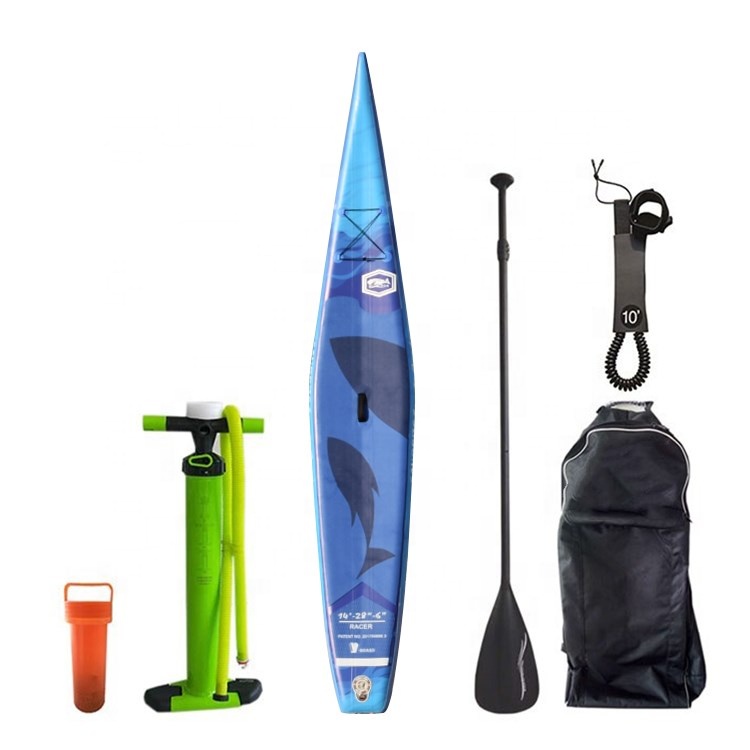
- Week 5–7: material preparation. Drop-stitch fabric cut to pattern, PVC rail and floor panels printed, EVA deck pad routed, accessories (paddle, fin, pump, leash, backpack) tooled up.
- Week 7–9: mass production. Lamination, rail bonding, inflation cycles for curing, drop-stitch PSI test on the line, full graphic QC.
- Week 9–10: QC, aging, packaging. 24-hour inflation hold, finish inspection, repair kit insertion, individual box print, master carton.
- Week 10–11: export prep and container loading. Fumigation if needed, ISPM-15 pallets, customs declaration, container stuffing.
- Week 11–14: ocean transit (sea) to EU main ports; Week 11–12 for air or rail if your budget allows.
- Week 14–16: devanning, EU customs clearance, last-mile delivery. Duties paid, VAT deferred under standard deferment, warehouse receipt.
Add a 7–14-day buffer for holidays (Chinese Spring Festival in February, European summer in July) and you have a realistic planning range of 14 to 20 weeks end-to-end for a typical 500–1,000-unit custom inflatable SUP order. Repeat orders with already-confirmed tooling often shorten the production phase by 2–3 weeks, but the shipping window is largely fixed unless you ship air.
3. Phase-by-Phase: What Each Step Actually Delays
Most delays are caused by one of three things: long approval cycles, artwork changes after tooling has started, or holiday shutdowns. Knowing which step is yours to control versus the factory’s to deliver is the fastest way to cut weeks out of the schedule.
3.1 Sample Phase
For low MOQ paddle board orders (typical MOQ 1 set for color and graphic adjustments), the factory usually builds a sample from a near-stock mold. This compresses lead time because no new tooling is needed. For fully custom shapes — new rocker, new outline, new rail — add 25–35 days for tooling before the sample can be produced. Be honest about which you need: many buyers assume “custom” means full tooling when a smart white-label adaptation would launch faster and cheaper.
3.2 Production Phase
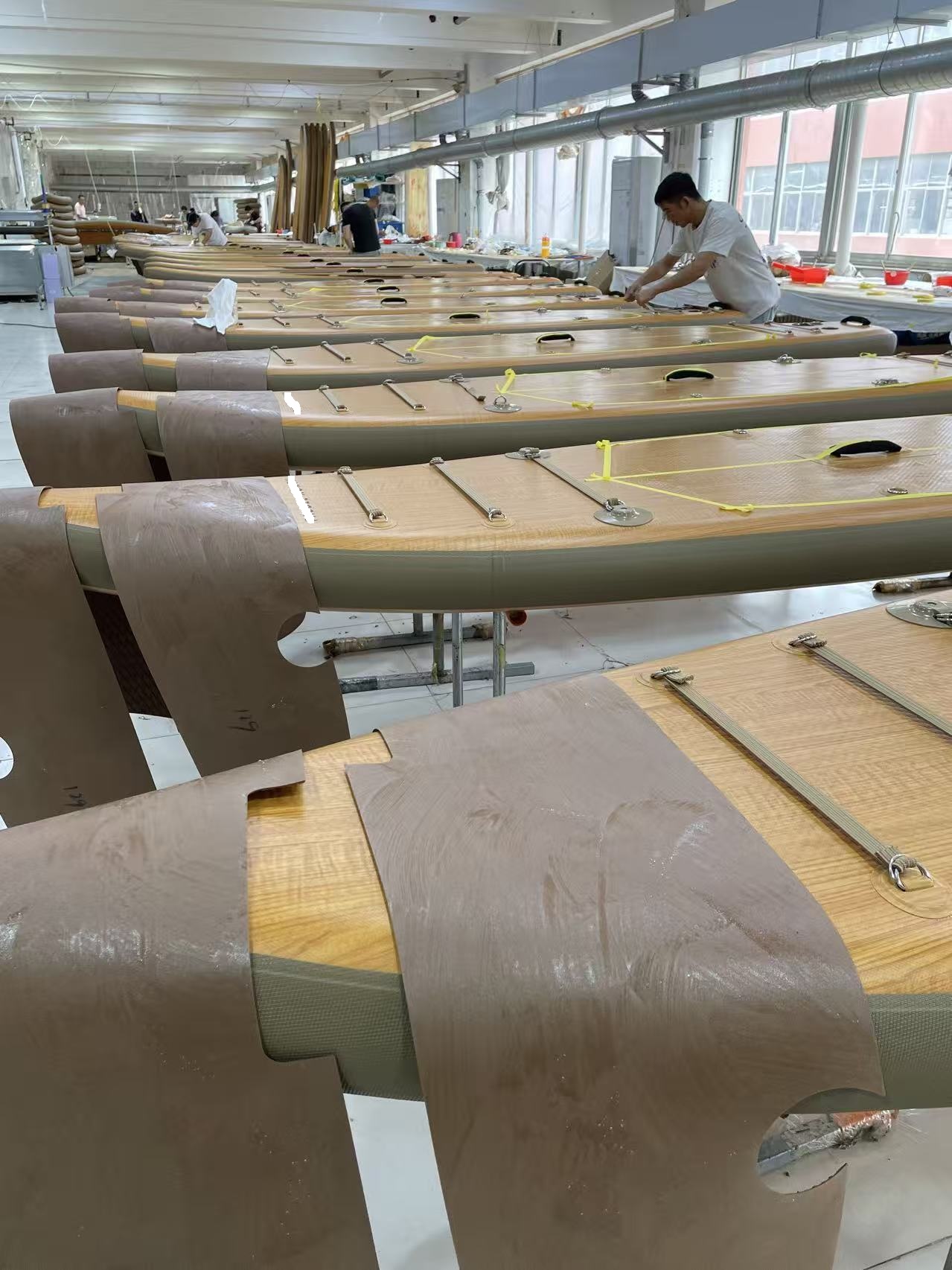
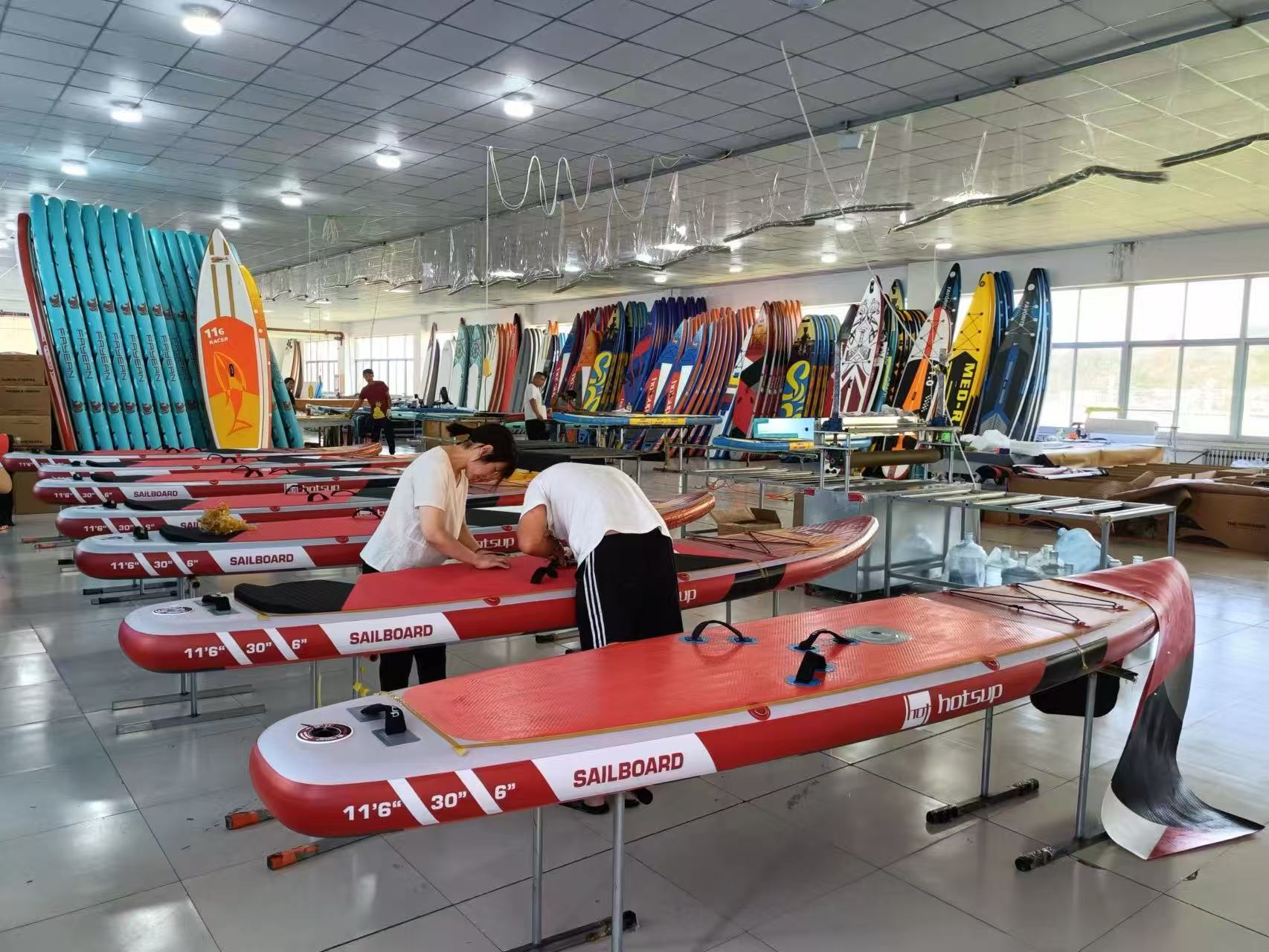
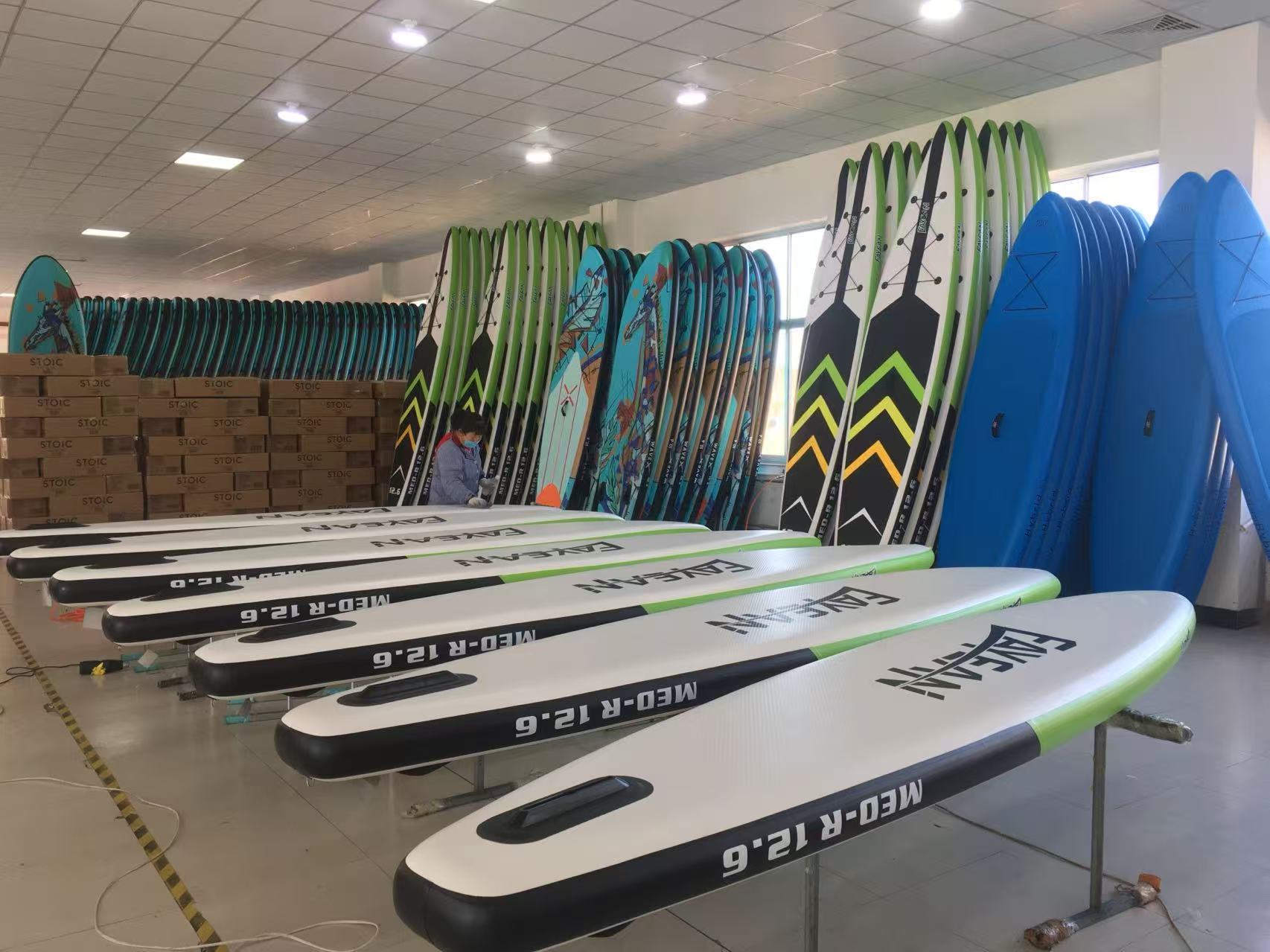
Mass production is where an experienced factory earns its reputation. Look for clear evidence of drop-stitch tension control, in-line PSI testing, 24-hour inflation aging, and a documented QC sign-off per shift. The factories that run on systems — not just on labor — produce consistent boards at scale. If your supplier cannot show you a recent production run photo or a QC log, expect surprise delays.
4. Factors That Change Your OEM SUP Lead Time the Most
Your timeline can compress or stretch significantly depending on a handful of variables. Plan with these in mind, especially if your launch date is fixed.
- Tooling complexity. Custom shapes add 3–5 weeks; graphic-only changes add none.
- Order volume. A 100-unit container often cannot share a production slot with larger runs in busy months. Confirm your queue position in writing.
- Material choice. Standard PVC and standard drop-stitch are usually in stock. Specialty fabrics (MSL, fusion-layered, double-layer) often require a separate material purchase and extend the lead time by 1–3 weeks.
- Custom accessories. A custom paddle, fin, or branded backpack can quietly add 2–4 weeks if the factory does not already tool the part.
- Packaging. Custom retail boxes with your artwork require an extra print run, typically 7–10 days.
- Shipping mode. Sea is the default. Air freight for 500 boards is rarely cost-effective; rail to Europe is a strong middle option in 2026.
5. How to Compress Lead Time Without Sacrificing Quality
Speed and quality are not opposites — they require a different kind of preparation. The fastest buyers we work with use the same playbook.
5.1 Lock artwork and spec before sampling
The single biggest time-saver is a complete spec sheet and final artwork on day one. Color values in Pantone or CMYK, EPS or AI vector files, and clear reference photos reduce revision rounds from three to one. For our custom paddle board workflow at ForwardSUP, we send a written brief template that covers everything from PVC density to fin box type so the production team can quote, sample, and schedule on the same call.
5.2 Use available tooling for color and graphic changes
If your market needs your brand on a high-performance shape but does not need a unique outline, choose a near-stock tooling platform and customize colors, prints, and deck pad. This is the model behind many successful private label paddle board launches in Europe and saves 30–40 days versus a full custom mold. Most wholesale inflatable paddle board buyers launching in 2026 use this approach for the first container, then consider full tooling once volume justifies it.
5.3 Book the production slot early
Once you sign a PO, ask for a written production slot — week number, not just “in 6 weeks.” Confirmed slots force internal prioritization. For our own factory we manage a rolling 8-week calendar; buyers who confirm early consistently see faster turnarounds on repeat orders.
6. Shipping Realities: Sea, Air, and Rail in 2026
OEM production lead time is half the story. The other half is the transit window you choose. Sea remains the default for full containers — a 40HQ from China to Rotterdam or Hamburg runs roughly 28–35 days port-to-port in 2026, plus 5–10 days for customs and devanning. Air freight remains 8–10× the cost and is rarely used for finished boards; it is occasionally justified for sample matching or replacement parts. Rail via the China–Europe rail network has matured: door-to-door central Europe in 18–22 days at moderate cost is now realistic for brands that need middle-ground timing.
Whatever you choose, lock the Incoterms early. FOB is the most common starting point — the factory handles export clearance, the buyer handles ocean and import. For buyers new to importing, CIF or DDP removes ambiguity but adds cost; if you want to learn the flow, start with FOB on your first container and graduate to DDP once volumes justify it. For an export-focused primer, see our inflatable product export guide and the water bike export guide for shipping patterns specific to each product family.
7. Planning Your First Container: A Buyer’s Checklist
- Day 0: Brief complete — sketch, target price, target launch date.
- Day 3: Sample quote + production slot estimate received.
- Day 14: Physical sample in hand, with QC photos and aging test result.
- Day 30: Final artwork, signed PO, 30% deposit wired.
- Day 60: Mid-production photo report, QC log on request.
- Day 80: Pre-shipment inspection (PSI) booked; third-party inspector briefed.
- Day 90: Container loaded; B/L, certificate of origin, commercial invoice received.
- Day 110–120: Container arrives at destination port, customs cleared, warehouse receipt.
If you can hit those checkpoints on schedule, you have a realistic plan. For deeper detail on the timing trade-offs, our custom SUP board overview walks through the design options, and the drop stitch material guide explains the fabric choices that most affect timelines.
8. Frequently Asked Questions About OEM SUP Lead Time
8.1 How long does a full OEM SUP production run take?
From sample approval to a finished container loaded at port, expect 8–10 weeks of factory time. Add 4–5 weeks for ocean transit and EU customs, so a typical first-time order lands in 14–16 weeks. Repeat orders with confirmed tooling often run 10–12 weeks door-to-door.
8.2 Can lead time be shortened if I pay more?
Partially. Switching to air or rail cuts transit by 2–3 weeks. In-factory acceleration is harder: production capacity is fixed by shifts, and a small-batch run on a busy line cannot be compressed past a certain floor. The realistic answer is 10–14 days, not 30.
8.3 What is the typical MOQ for custom inflatable SUP orders?
For graphic and color customization on existing tooling, MOQ starts at 1 set, with container pricing kicking in around 100–200 units. For fully custom shapes requiring new molds, MOQ is higher and the tooling cost is amortized across the run. The exact threshold depends on the factory, the model, and the accessories in the kit.
8.4 How should I plan around Chinese New Year?
Factory shutdown usually runs 2–3 weeks around the Lunar New Year (typically late January to mid-February). If your sample or PO is in motion during this window, add 2–3 weeks of buffer. Many experienced buyers target a deposit before the holiday so production resumes on the new cycle, not weeks later.
9. Plan Your Timeline With a Manufacturer That Publishes Its Calendar
The shortest path to a reliable OEM SUP lead time is partnering with a factory that gives you a written timeline before you place a deposit — sample date, mid-production check, pre-shipment inspection, container loading, and estimated arrival. At ForwardSUP we run production on a published weekly schedule, so importers can plan launches around real capacity, not sales pitches. Whether you are sourcing your first container or scaling from small-batch customization into full OEM, the same roadmap applies.
Send your brief — model, target MOQ, target launch date — to our sales team and we’ll come back with a written sample-and-production plan you can build a launch calendar around.