
If you are building your own paddle board brand, the graphics on the deck are the first thing a customer sees — long before they read your spec sheet or test the board. That is why custom sup board printing has become one of the most requested services buyers ask from an OEM/ODM SUP factory. In this guide we walk through how private label boards actually get their look: printing technologies, artwork requirements, durability testing, and what to confirm with your paddle board supplier in China before the first sample ships.
Why Board Graphics Decide Whether a Customer Picks Up Your Board
Rental shops, beach clubs and retail buyers all behave the same way: colorful, well-printed decks sell first. For a wholesale inflatable paddle board program, graphics are not decoration — they are your shelf presence. A clean, durable print signals quality; a faded or peeling print destroys trust even if the board itself is well built.
For private label buyers the goal is simple: your logo and artwork must survive two to three seasons of sun, sand, abrasion and inflation cycles. Everything in this article is aimed at that outcome.
The Three Printing Methods Used on Inflatable SUP Boards
Not every factory prints the same way, and the method affects both cost and durability. When you compare quotes from any paddle board supplier China, ask specifically which of these three processes is used:
1. Digital UV Printing
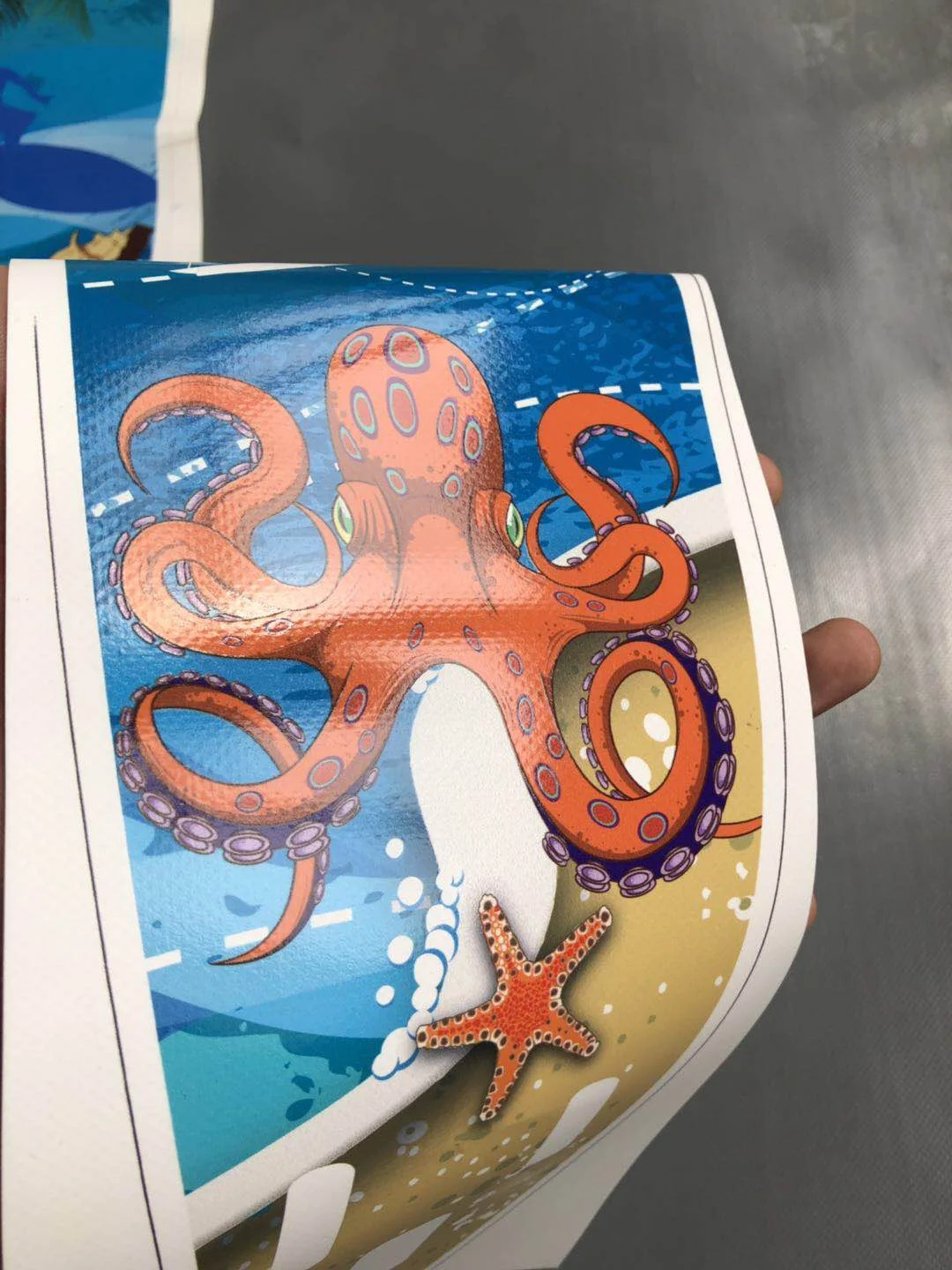
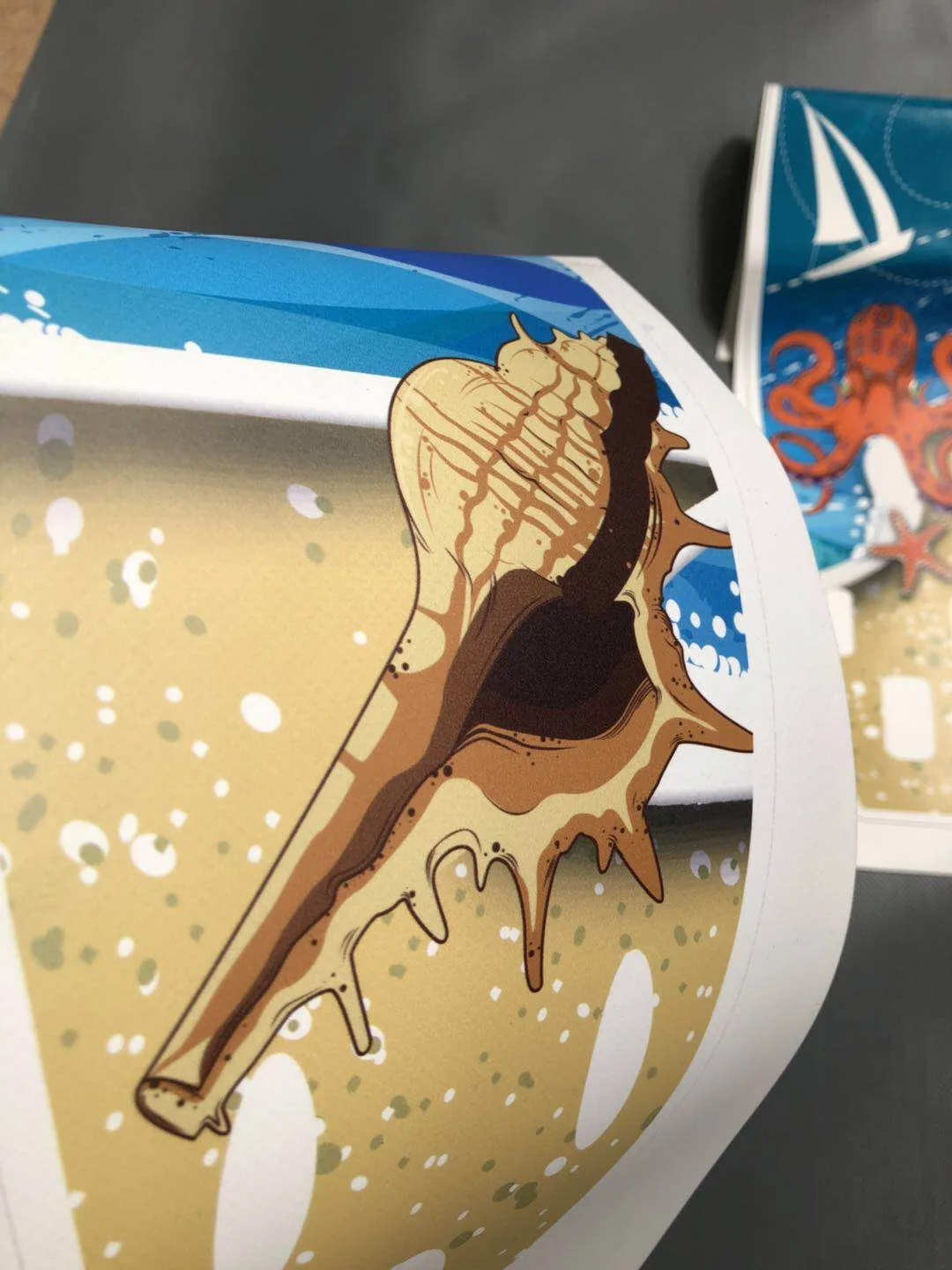
Digital printing sprays UV-cured inks directly onto the PVC layer. It handles photographic gradients, multi-color artwork and small runs economically. This is the standard choice for low MOQ paddle board programs because there are no screens or setup plates — you can print a different design on every board in a one-piece order.
2. Screen Printing
Screen printing pushes ink through a mesh for each color. Colors are denser and extremely abrasion-resistant, which is why many brands still choose it for large logo panels. The trade-off: each color needs a screen, so it suits repeated bulk orders of the same design rather than small-batch customization.
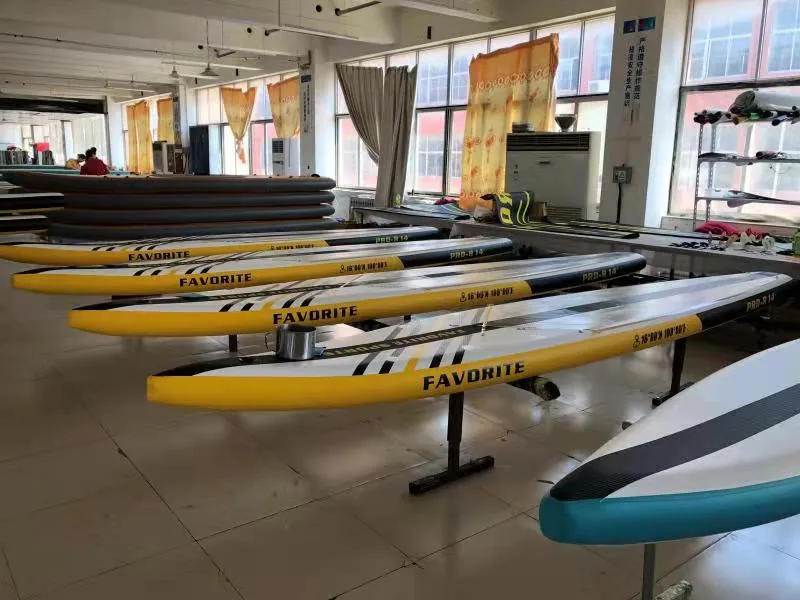
3. Full-Deck Printed PVC Laminate
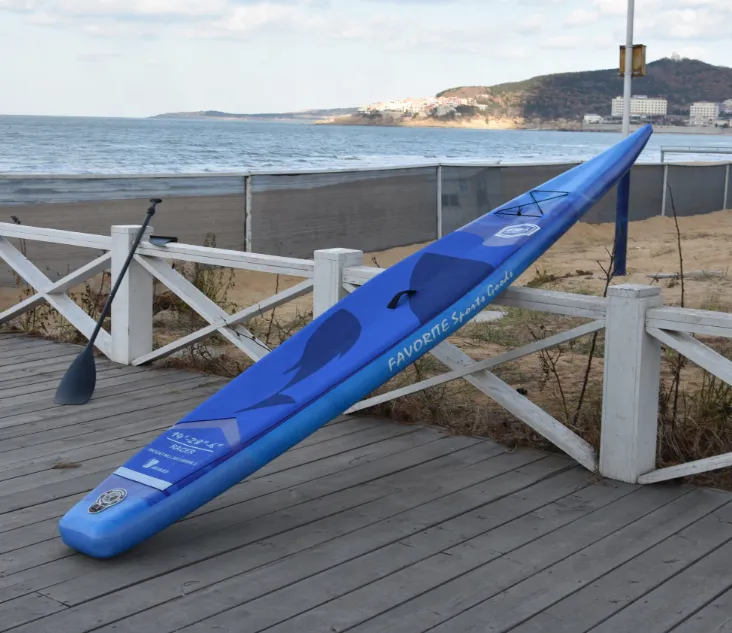
For race boards and statement products, the artwork is printed on a PVC layer that is laminated into the drop-stitch structure itself. The graphic becomes part of the board, not a coating on top of it. This is how full-print race SUP boards achieve edge-to-edge artwork that never fades or peels.
4. Laser Marking on the EVA Deck Pad
The fourth method is the one most suppliers never mention, and for private label programs it is often the safest choice. Instead of printing ink onto the board, a laser marks the artwork directly into the EVA traction pad. There is no film to lift and no ink layer to scratch off, so the graphic is as durable as the pad itself — it survives sand, salt water and repeated inflation cycles without fading or peeling.
Because the graphic is cut into the foam rather than printed on top of it, laser marking also works on the textured surface where screen printing and UV printing need a flatter area. Buyers typically use it for the board model name, a club logo, a serial number or a graphic motif that has to look permanent from day one — and because it is a physical cut, it needs no minimum order and no per-colour setup fee.
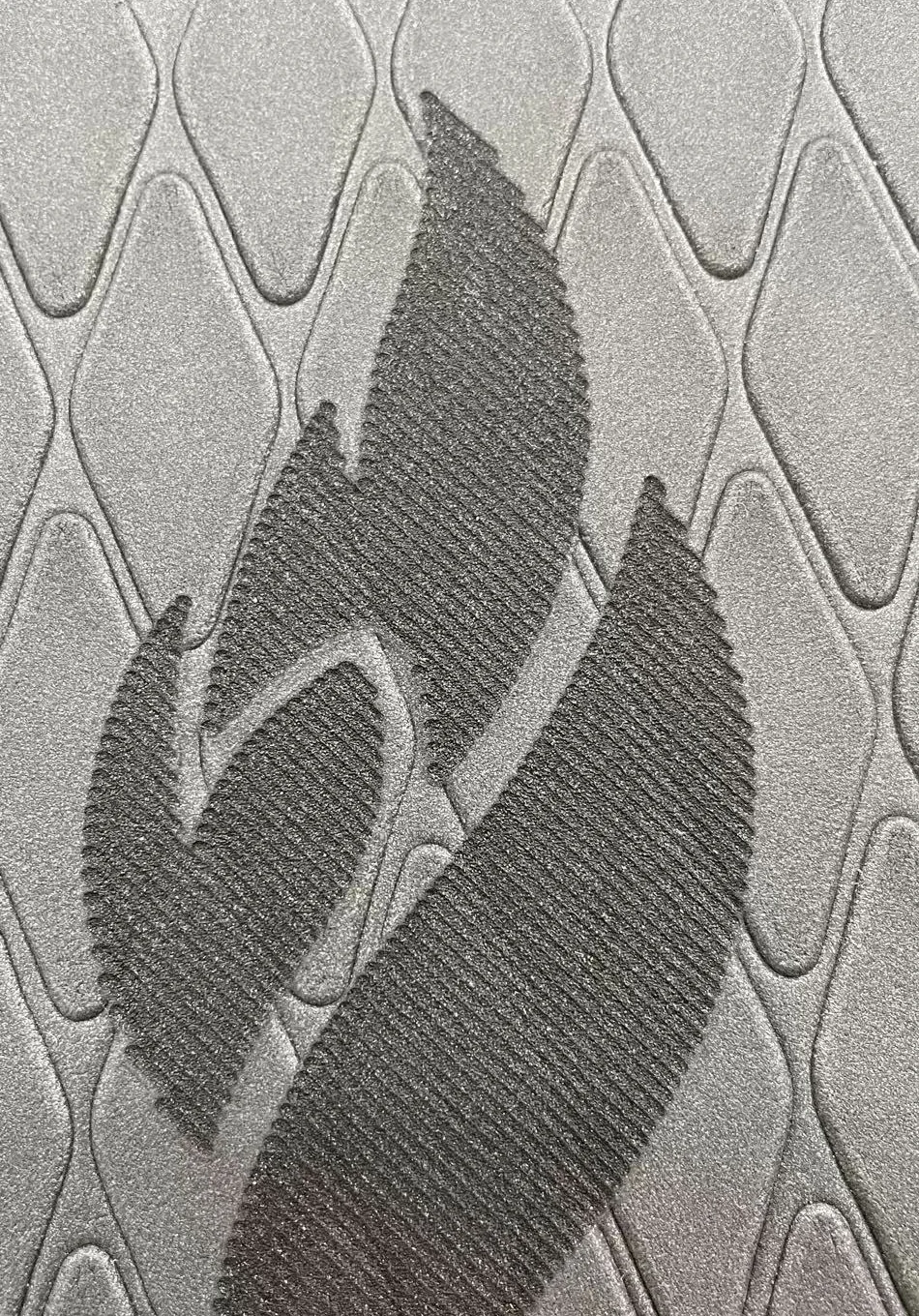
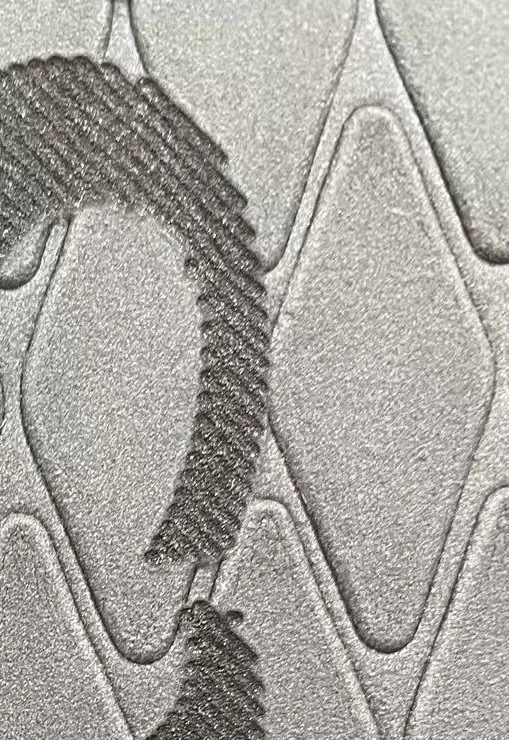
Full-colour artwork is still possible on the same pad. Where your design needs photographic or multi-colour graphics, the pad is printed; where it needs to last a rental fleet, the same artwork can be laser-marked in a single tone. Ask us which route fits the artwork you have and how the board will be used.
How the Custom SUP Board Printing Process Works Step by Step
Understanding the workflow helps you plan lead time and avoid the most common delays. A typical custom graphic program at our factory runs like this:
- Step 1 — Artwork intake. You send vector files (AI/EPS/PDF) for logos and high-resolution images (300 dpi minimum) for full-deck art. We check printability on PVC.
- Step 2 — Color matching and mockup. We produce a digital mockup on your board template, then confirm Pantone references. Expect two rounds of revision.
- Step 3 — Sample board. One physical sample is printed and photographed under real light. Only after your written approval does mass production start.
- Step 4 — Production and QC. Each finished board is inspected for print registration, color consistency and surface finish before packing.
From approved artwork to finished sample, plan for roughly 7–12 days; container orders follow the standard OEM SUP lead time of 25–35 days depending on the season.
Artwork File Requirements: What to Send Your Factory
Ninety percent of printing delays come from artwork, not from production. Before you request a quote, prepare:
Vector vs Raster Files
Logos must be vector (AI, EPS or PDF) so they scale cleanly to any board size. Full-deck photographic art can be raster, but at 300 dpi at final print size — a 10’6″ board deck is a big canvas, and low-resolution files print blurry.
Color and Placement Specs
Provide Pantone codes where possible. Screen colors on your monitor will not match printed PVC exactly, so agree on Pantone references instead of eyeballing RGB values. Mark EVA pad zones, valve positions and rail areas on the template so the artwork avoids wear zones and hardware.
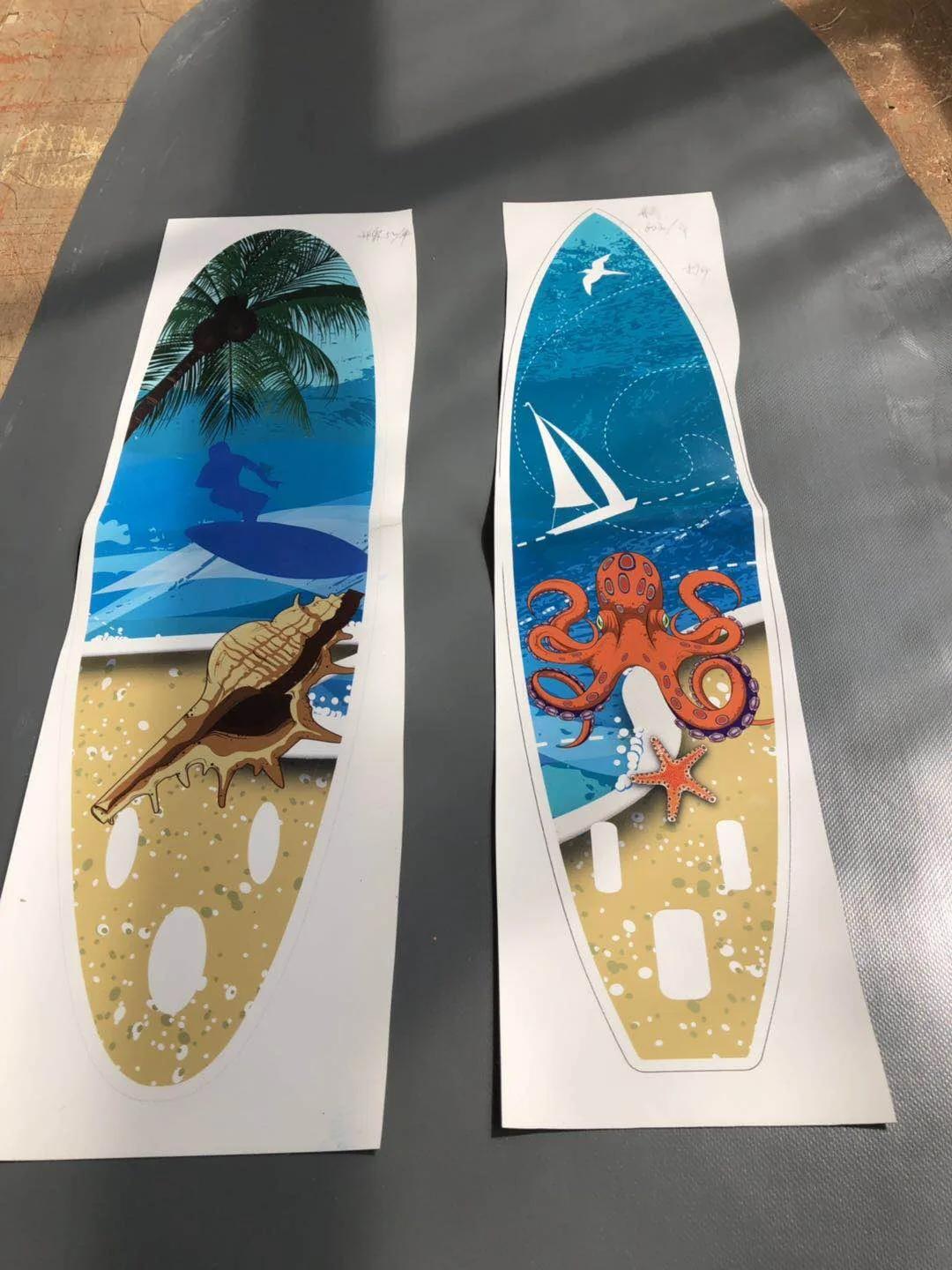
Print Durability: What to Test Before You Commit
A beautiful sample means nothing if the print scuffs off in week three. Ask your factory to demonstrate durability with these checks — we run all of them in-house:
- Abrasion rub test — simulated sand and pad contact across the printed surface.
- UV exposure check — prints must hold color through months of outdoor sun exposure.
- Inflation cycling — the board is inflated and deflated repeatedly at working pressure to confirm the print does not crack at flex zones.
- Salt-water soak — especially relevant if your customers are coastal clubs.
For buyers comparing constructions, our drop stitch material guide explains how the base fabric and coating choice also affect how well prints bond to the surface.
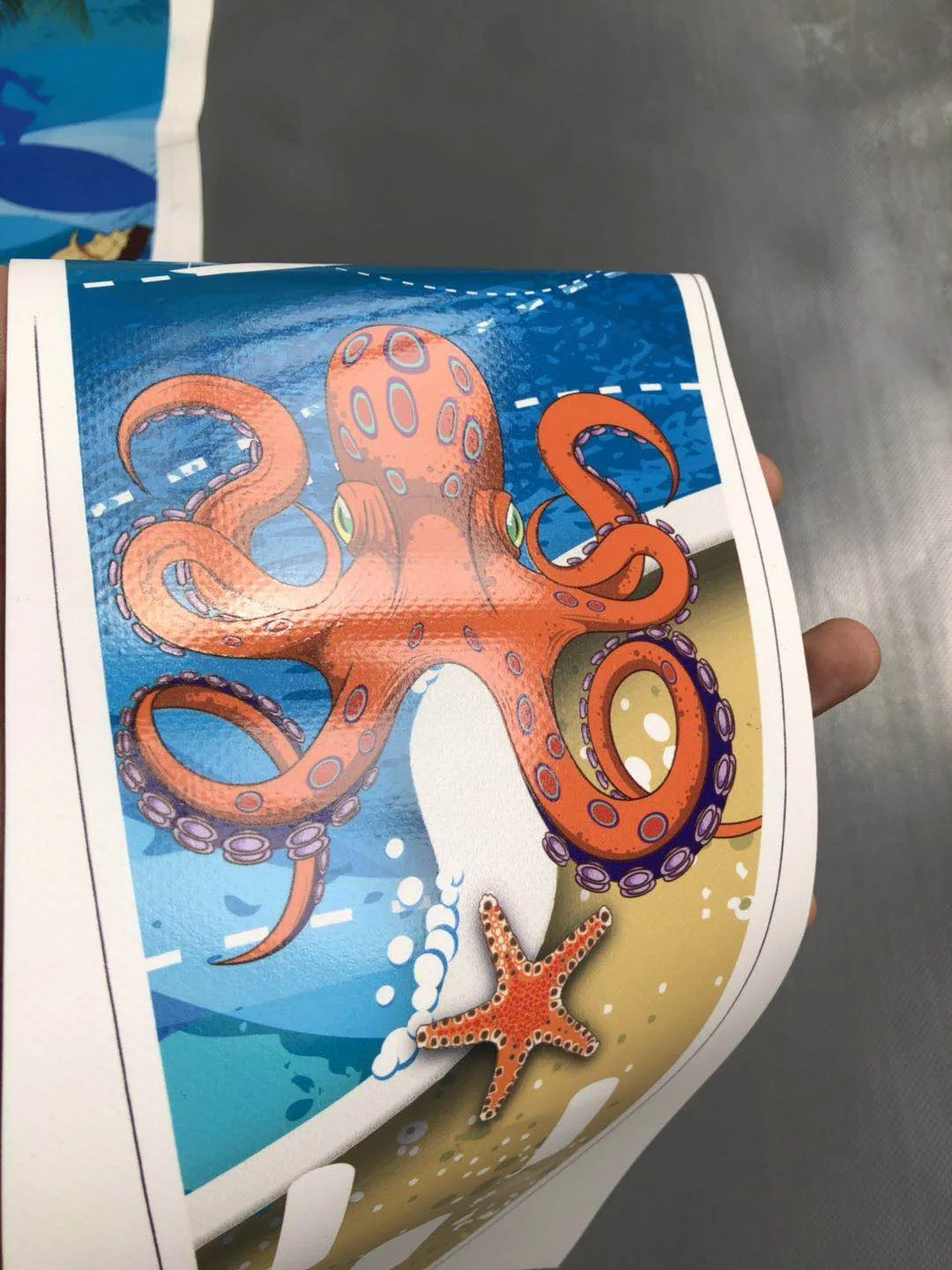
Custom Cut-Out Shapes and Deck Hardware
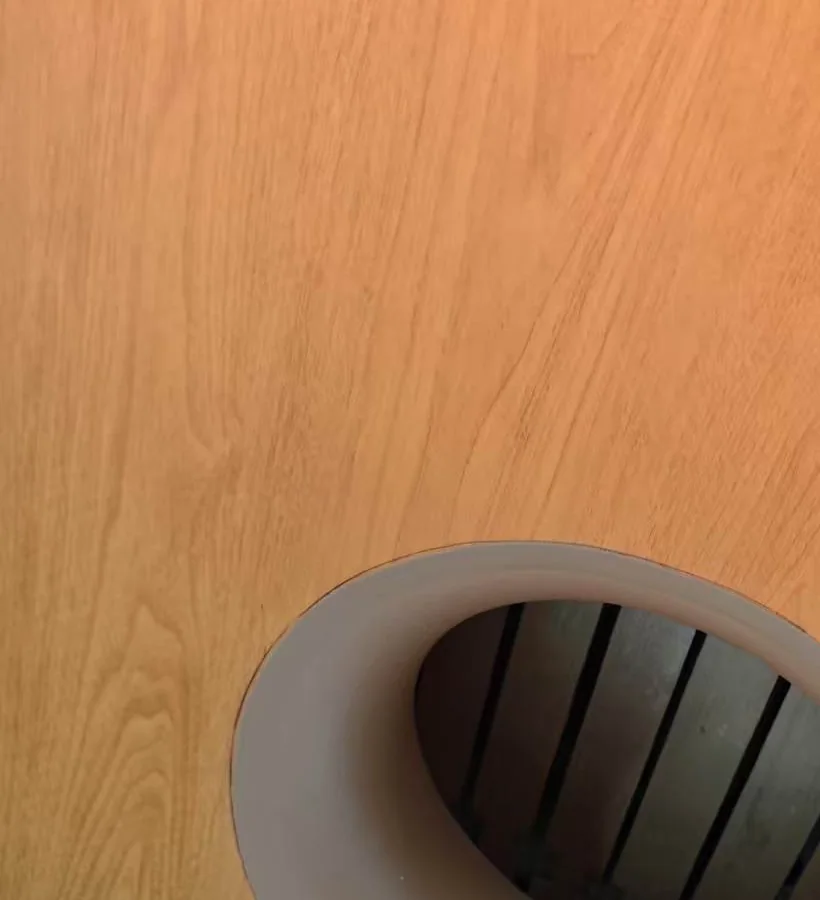
Graphics only tell half the story. Buyers with a specific use case also ask whether the factory can change the board itself — and the honest answer at most factories is no. We machine custom-shaped openings directly into the board: round cut-outs for pumps and rod holders, elongated openings for camera mounts and drink holders, and shaped handle openings that follow the outline you send us.
Every cut-out is finished with a welded white rim so the board keeps its air seal and the edge does not crack when the panel flexes. On a wood-grain printed deck the print is aligned to the opening before assembly, so the grain and the cut line stay consistent across the whole panel.
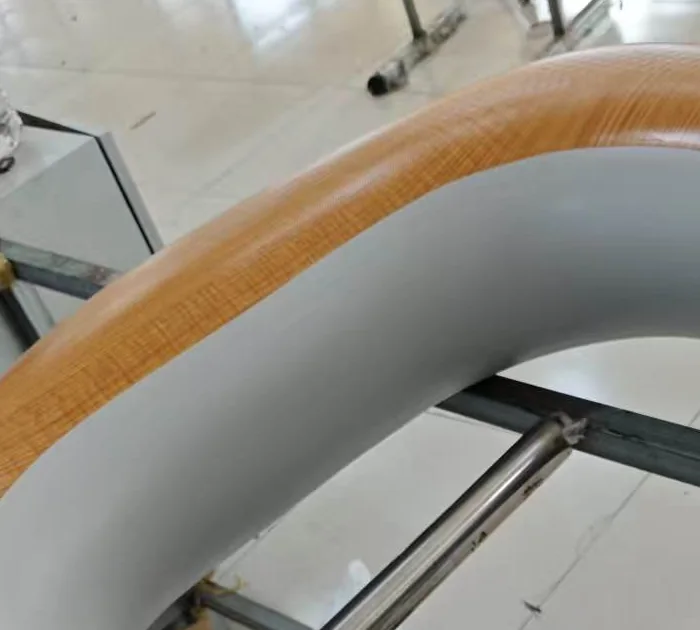
Deck pads follow the same logic. They are cut to your board outline and artwork rather than dropped in as a standard rectangle, which means the pad, the print and the hardware openings line up instead of fighting each other.
For the full list of what can be changed on a private label board, see the OEM service page and the custom SUP boards capability page.
MOQ and Cost: What Small Brands Should Expect
Custom printing no longer requires container-scale commitments. Because digital UV printing needs no screens, we support MOQ 1 board for private label customers — one board, your design, shipped with your logo on the board, packaging and accessories. This is ideal for testing a market before scaling.
Cost drivers to understand: number of colors and coverage area, single-layer vs double-layer construction, and whether accessories (paddles, pumps, fins) also carry your branding. If you want the full kit private-labeled, see our guide to custom SUP accessories for private label brands.
Common Graphic Printing Mistakes First-Time Buyers Make
- Designing for paper, not PVC. Ultra-fine lines and tiny text disappear on a textured surface. Keep key elements bold and simple.
- Ignoring rail wrapping. Artwork that stops abruptly at the rail looks unfinished; plan how the design wraps the outline.
- Skipping the physical sample. Never approve from a digital mockup alone — colors and scale read differently on a real board.
- Overloading the deck. Too many elements fight each other; one strong hero graphic beats five competing ones.
How to Start Your Custom Printing Project With Us
We are a factory-direct private label paddle board manufacturer producing inflatable SUP, kayak and water bike products for brands across Europe, the US and Japan. Send us your logo and an idea of the look you want, and we will return a mockup and quotation — typically within 24 hours.
- Browse capabilities and board options on our custom SUP boards page.
- Review the full OEM process on the OEM service page.
- Ready to talk? Reach us directly via the contact page.
Frequently Asked Questions
What is the minimum order for custom sup board printing?
With digital UV printing the MOQ is 1 board. Screen printing or full-deck laminated graphics may carry higher minimums because of setup costs — ask us which method fits your design and quantity.
Will the printed graphics fade in the sun?
We use UV-stable inks and run exposure checks on every new design. Correctly printed boards hold color through multiple seasons of outdoor use.
Can you print my logo on the paddle, pump and backpack too?
Yes. Private label programs can extend branding to paddles, pumps, fins, leashes, bags and retail packaging.
How long does a custom printed sample take?
About 7–12 days from approved artwork to a finished sample, depending on design complexity and current production schedule.
Can you laser print my logo on the EVA deck pad instead of printing it?
Yes. Laser marking cuts the artwork into the EVA rather than printing ink on top of it, so it cannot peel or scratch off and it works on the textured pad surface where ink printing struggles. It needs no minimum order and no per-colour setup. Send us your artwork and we will confirm whether laser marking or a printed pad suits your design.
Can you cut custom holes and shaped openings in the board?
Yes. We machine round cut-outs, elongated openings and custom shapes directly into the deck panel, each finished with a welded reinforced rim so the board keeps its air seal and the edge does not crack under flex. Send your drawing or a photo with the dimensions you need and we will confirm what is feasible for your board model.