
You can argue about fin boxes, deck pads and bag zippers later. The specification that decides your landed cost, your warranty rate and how your boards feel on the water is written in one line of your RFQ: construction — single layer or double layer. Choose the right one for your channel and the board holds air through seasons of hard use while your reviews stay five-star. Choose wrong and you either pay for stiffness your customers never notice, or you save a little per unit and hand it straight back in warranty replacements.
This guide compares the two constructions the way an importer or brand owner needs to see them: how each one is built, how they differ on weight, stiffness, durability and freight, and which buyer types each one actually fits. It closes with the exact specification lines to put in your next RFQ — including how modern heat-welded construction has quietly changed the durability math on the double layer inflatable SUP board side.
Why Construction Is the First Spec to Lock Down
Every other choice on a paddle board can be adjusted after the sample stage. Construction cannot. It sets the weight of the finished board, how stiff it feels at working pressure, how it survives docks and beaches, what it costs to produce, and how much your carton weighs when it reaches the freight forwarder’s scale. It also quietly sets your customer’s expectations: a board that flexes reads as cheap even when the materials are fine, and a board that is nearly indestructible but heavy reads as sluggish.
There is a practical trap here too. If you do not specify construction in your RFQ, the factory will decide for you based on its default production line and your target price. That default may suit one channel perfectly and be completely wrong for yours. Two boards can look identical on a product page — same shape, same colors, same fin setup — while one is built for calm-water retail and the other for a daily rental fleet. Decide construction first, and every other spec, from PSI rating to accessory kit, falls into place around it.
What Is a Single Layer Inflatable SUP Board?
How Single Layer Boards Are Built
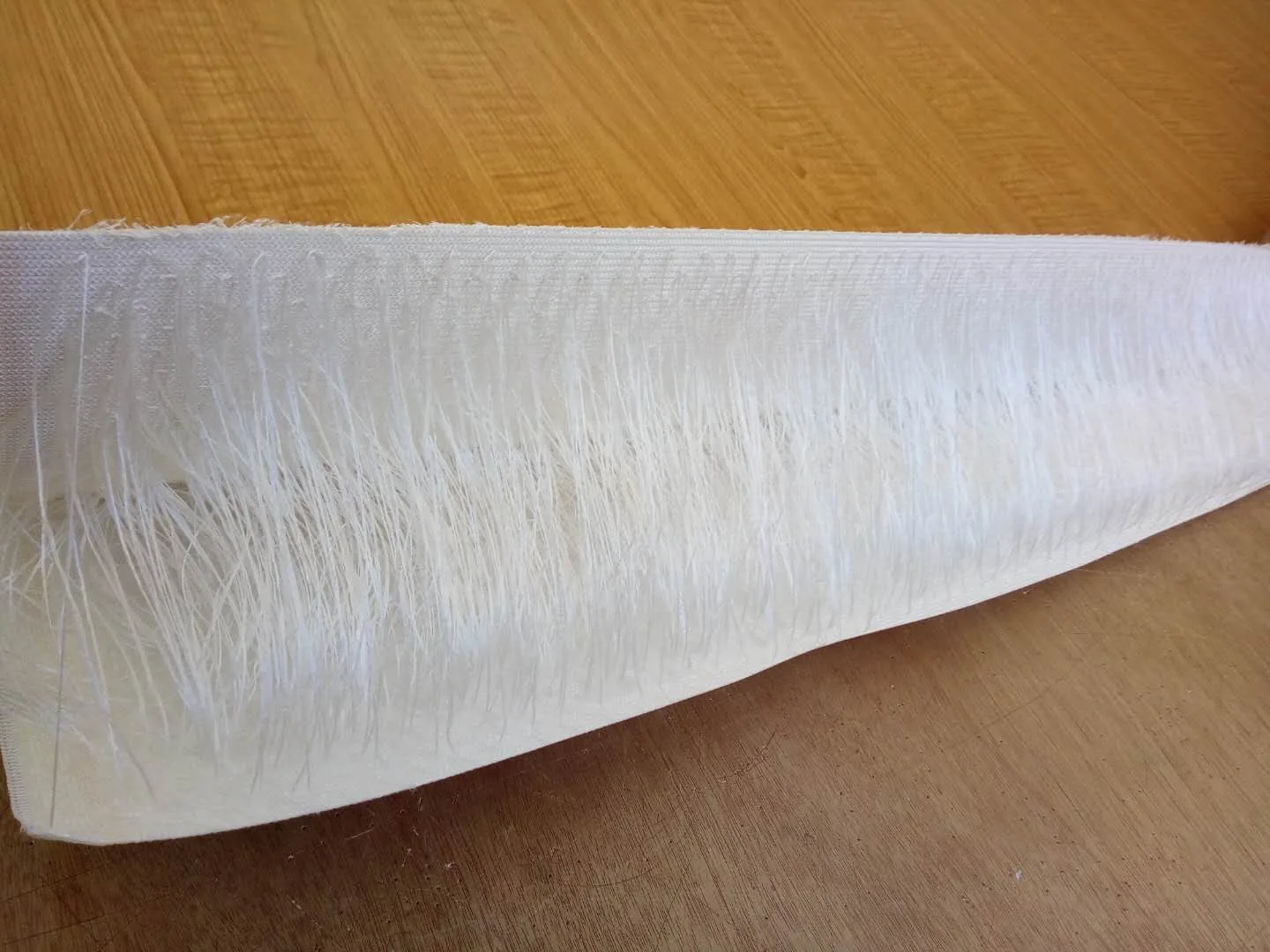
A single layer board uses one sheet of woven drop-stitch fabric as its entire structure. Two coated surfaces — the deck you stand on and the hull that meets the water — are connected by thousands of polyester threads that pull taut when the board is inflated, creating the rigid drop-stitch effect. The rail, the side wall where those two surfaces meet, is sealed with tape layers. That is the whole sandwich: one fabric layer, coated on both sides, taped at the edges.
For a deeper look at the material itself — weave density, coating weights and what the numbers on a material certificate actually mean — see our drop-stitch material guide.
Where Single Layer Construction Shines
Single layer construction is the lightest way to build an inflatable board. A typical 10’6″ all-around shape in single layer construction runs roughly one to two kilograms lighter than the same shape in double layer, and it packs into a smaller, lighter roll. For e-commerce sellers, that weight difference flows directly into carton weight and last-mile delivery cost. For end customers, it is often the difference between a board they carry happily to the water and one that stays in the car trunk.
It is also the most cost-efficient route to produce, which makes it the natural choice for entry-level retail lines: first-time paddlers, seasonal beach towns, and private label paddle board programs that need a competitive opening price point. Used in calm water with normal care, a well-built single layer board delivers years of recreational service — the keyword being recreational.
What Is a Double Layer Inflatable SUP Board?
How Double Layer Construction Works
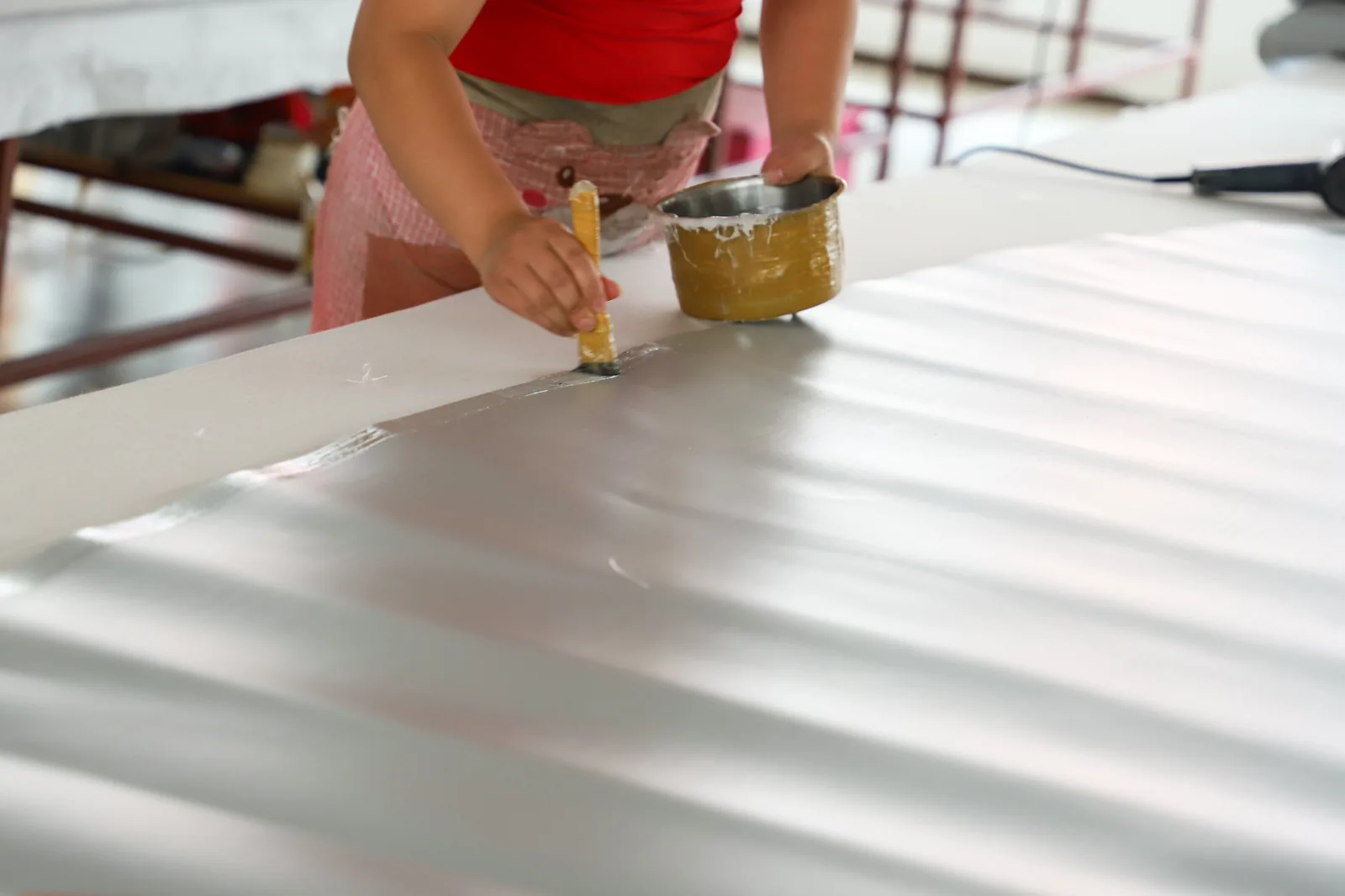
A double layer board adds a second layer of PVC over the base drop-stitch structure, bonded at the factory. Historically that bond was made with adhesive applied by hand; on modern production lines the second layer is machine heat-welded to the base. The result is a thicker, tougher shell: more material between your customer and the rocks, reinforced rails, and a structure that holds its shape under load.
The Payoff: Stiffness and Durability
The second layer does two jobs. First, stiffness: a double layer inflatable SUP board flexes noticeably less at the same working pressure, which paddlers feel immediately as a more stable, more efficient platform — particularly heavier riders, or anyone carrying a cooler, camping gear or a second passenger. Second, durability: the extra material resists abrasion from sand and dock edges, tolerates being dragged over gravel ramps, and shrugs off the daily knocks of shared use. Air retention also benefits, because the airtight structure is protected from the outside world by an extra skin.
Single vs Double Layer: Side-by-Side Comparison
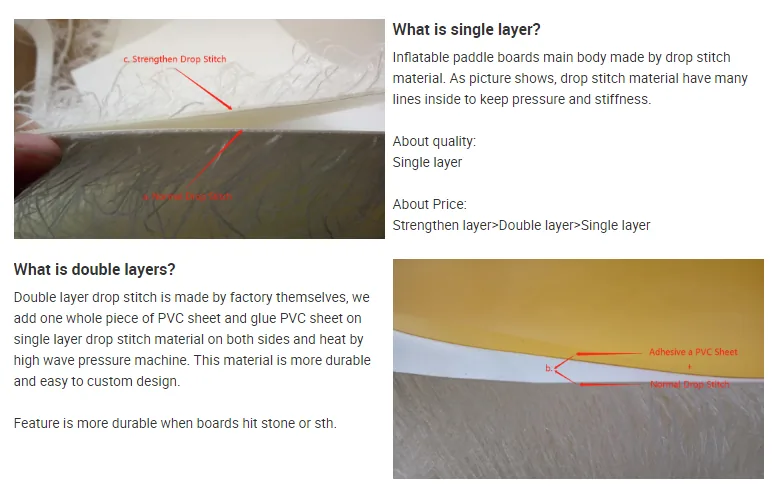
The table below summarizes how the two constructions trade off across the factors that actually drive import decisions.
| Factor | Single Layer | Double Layer |
| Weight (10’6″ board) | Lightest | Heavier by 1–2 kg |
| Stiffness at working pressure | Good | Excellent |
| Abrasion and impact resistance | Recreational grade | Commercial grade |
| Air retention over years | Good | Better |
| Carton weight and freight | Lighter, cheaper | Heavier |
| Best fit | Retail entry, calm water | Rental fleets, touring, racing |
Durability and Air Retention
In light recreational use, a quality single layer board and a double layer board age similarly for the first couple of seasons. The difference appears under commercial load. Rental and school fleets drag boards over concrete boat ramps, stack them wet on trolleys, leave them inflated in the sun, and hand them to beginners who treat the shoreline as a suggestion rather than a warning. Under that regime the single layer’s thinner shell wears first, usually at the rails. This is why nearly every operator running a fleet standardizes on double layer construction — and why the resale market for used double layer boards is noticeably stronger.
Stiffness Under Load
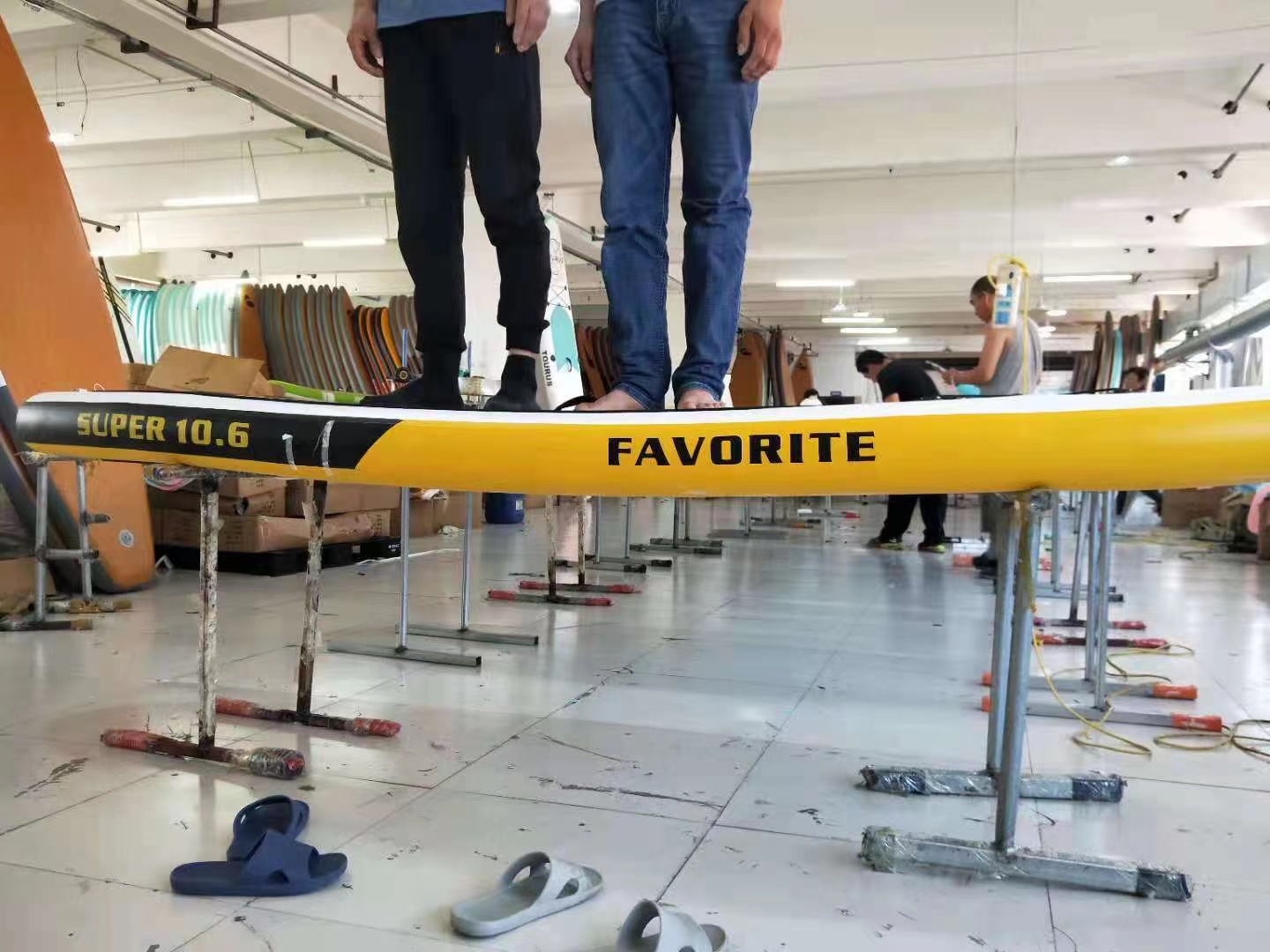
Flex is not just a comfort issue; it is lost energy. Every time the middle of the board dips under a paddling stroke, the nose yaws slightly and the stroke pushes water sideways instead of pushing the board forward. At the recommended 12–15 psi working pressure, a double layer build holds its line under a heavier paddler far better. We verify this the same way we verify everything else: with load tests on the factory floor, standing multiple adults on a finished board and checking deflection and seam integrity before the board is approved for packing.
Weight, Carton Size and Freight Cost
Double layer construction adds roughly one to two kilograms to a 10’6″ board, plus a little extra volume to the rolled carton. Multiplied across a container, that raises freight cost — our guide to importing SUP from China to the EU breaks down how duties, VAT and logistics interact, and packaging weight is part of that equation. The offset is that a warranty replacement costs far more than a few kilograms of extra freight, so for commercial buyers the heavier construction usually wins on total landed economics. For pure retail e-commerce, where every gram of parcel weight shows up in your shipping bill, the single layer keeps its appeal.
The Process Factor: Heat Welding Changes the Math
Historically, the double layer’s weak point was the glue line. A second layer bonded by hand with solvent adhesive could bubble or delaminate after a few seasons, especially after long periods in a hot container or on a car roof in summer. Machine heat welding removes that variable entirely: the layers are fused by heat rather than glued by solvent, which means no solvent VOC emissions to document for EU compliance, no adhesive to soften when a board sits at 60–70°C on a container deck, and no second layer peeling away in season three. Batch-to-batch consistency improves as well, because a welding machine does not have good days and bad days the way a hand-applied glue line does.
Welded construction also improves the stiffness-to-weight ratio, because the same reinforcement can be achieved with less adhesive mass. And on pressure, here is the number that matters to a fleet operator: our heat-welded double layer boards are used at the recommended 12–15 psi working pressure, but burst testing shows the structure holding until 30–40 psi — a safety margin roughly two to three times that of a standard construction. Nobody should ever inflate a board anywhere near those limits; the margin is simply the engineering reason why these boards survive seasons of commercial abuse without seam failures.
Which Construction Should You Import? A Buyer-Type Map
Rental Operators, Schools and Clubs
Double layer, and it is not a close call. Fleet boards live a harder life than any private customer will ever give them, the weight penalty is irrelevant when the board rides a trolley from rack to dock, and the reduced replacement rate pays back the upgrade within the first couple of seasons. Schools add one more reason: a stiffer, more stable platform is easier and safer for beginners, which reduces both incidents and complaints.
Retail Brands and Private Label Startups
Here the honest answer is a portfolio, not a single SKU. A single layer entry model gives you a competitive opening price for first-time buyers; a double layer flagship earns the reviews that actually build a brand. Most of the wholesale inflatable paddle board programs we run for retailers settle on two or three SKUs across both constructions, sharing one accessory standard so kit costs stay controlled. If you are planning that kind of range, our private label guide walks through MOQ and timeline expectations for a first order.
Touring, Racing and Fishing Programs
Double layer again — for physics rather than abuse. Long boards flex more than short ones, so touring and race shapes benefit disproportionately from the extra rigidity: a 12’6″ touring board in single layer construction is noticeably whippier than the same shape in double layer. Fishing adds its own demands, with gear loads, rod holders, anchor systems and the occasional enthusiastic dog all arguing for the tougher shell.

Specifications to Put in Your RFQ
Whichever construction you choose, write it into the RFQ explicitly, with numbers attached. Construction left vague invites the factory to substitute whatever is on the line that week, and you will not see the difference until the container is open.
A Practical Spec Sheet Checklist
- Construction type: single layer, double layer, or heat-welded (fusion) double layer — named explicitly, not just “reinforced”
- Material spec: drop-stitch weave density and per-layer coating weights, confirmed on the material certificate
- Working pressure: 12–15 psi recommended operating range, plus the factory’s tested burst range for that construction
- Finished weight: a tolerance per size (for example ±0.5 kg), not just a marketing number
- Rail construction: number and type of tape layers
- Valve, fin box and accessory specification, or a reference to your accessory standard
- Documentation: burst pressure and peel strength test reports, and a clear answer on whether the second layer is machine welded or glued
Send the RFQ with a realistic calendar attached. Our OEM lead time guide explains what happens between sample approval and container loading, so you can plan a season launch around real factory dates instead of optimistic ones. Any serious OEM/ODM SUP factory should return a spec confirmation within days; if a supplier cannot state which construction they are quoting, treat that as the answer.
FAQ: Single vs Double Layer SUP Boards
Can a single layer board handle rental abuse?
For occasional, light rental use — a few sessions a week in calm water with staff supervision — a quality single layer board can work. For a daily commercial fleet, no. The thin shell wears at the rails first, replacements compound, and the economics turn negative fast. Fleets should standardize on double layer.
Is a double layer board too heavy for retail customers?
The difference is roughly one to two kilograms on an all-around 10’6″ shape, spread across a backpack — with wheels — that most kits already include. Touring and racing buyers accept the weight without hesitation because they feel the stiffness immediately. For entry-level recreational buyers who prioritize the lightest possible package, the single layer remains the better match.
Does double layer construction double the cost?
No. The second layer adds material and labor, so unit cost rises, but not proportionally to the durability gain — and machine-welded double layer production has narrowed the gap further. When you factor in fewer warranty claims and stronger resale value, total cost of ownership often favors double layer, especially for commercial programs.
How do I verify which construction a supplier actually used?
Three practical checks. Ask for a cross-section sample of the actual production material, not a datasheet. Request the material certificate plus independent burst pressure and peel strength reports. And ask the OEM/ODM SUP factory for live production photos or a video call from the laminating line — a supplier running genuine heat-welded double layer production will show it without hesitation.
Get a Construction Sample Before You Commit
The cheapest mistake to avoid is also the easiest: spec both constructions for your best-selling shape, order one sample of each, and put them in front of your real customers — or your real rental staff — before you commit to a container. We build single layer and machine heat-welded double layer boards under OEM and ODM programs, with low MOQ paddle board options starting from a single set so you can test the market first. Explore our custom SUP board capabilities or contact our team to request material samples and test reports for both constructions.