
If you import inflatable paddle boards – whether for a retail brand, a rental fleet or a school program – the two numbers that decide how long your boards survive are load capacity and burst pressure. Yet most supplier quotations treat both as marketing figures rather than tested engineering values. This guide explains what a real inflatable SUP burst pressure test looks like, what load capacity ratings actually mean, and the exact specs you should write into your purchase contract before you wire a deposit.
Why Burst Pressure Matters More Than the Printed PSI
Every inflatable SUP deck sticker shows a recommended inflation pressure, usually 12-15 PSI. What the sticker does not show is the structural limit of the board – the pressure at which seams, drop stitch fibers or the valve seat will actually fail. The gap between those two numbers is your safety margin, and the size of that margin is a direct reflection of manufacturing quality.
A budget single-layer board assembled with hand-applied glue might fail around 15 PSI – dangerously close to the recommended operating pressure. A machine heat-welded double-layer board, by contrast, typically withstands 30-40 PSI in burst testing. That is roughly a 2-3x safety margin over the same 12-15 PSI operating range, which is what you should demand in supplier documentation.
- Recommended pressure (12-15 PSI): the everyday operating range printed on the board.
- Test burst pressure: the failure point measured in destructive testing – a quality heat-welded board should reach 30-40 PSI.
- Safety margin: burst pressure divided by recommended pressure; require at least 2x, ideally 2-3x.
Important: a high burst pressure is a design margin, not an invitation. No manufacturer recommends inflating a recreational SUP above its printed 12-15 PSI range, and sun-heated boards on a hot dock can gain pressure on their own – always vent down to the printed range.
How a Professional Burst Pressure Test Is Performed
A credible supplier should be able to describe their test procedure in detail, not just quote a number. A proper inflatable SUP burst pressure test follows roughly these steps:
1. Condition the Sample
The board is inflated to its recommended 12-15 PSI and left to rest for 12-24 hours so the drop stitch fibers settle and the seams reach a stable state. Testing a freshly inflated board produces inflated-looking numbers that do not reflect real-world use.
2. Ramp Pressure Gradually
Pressure is increased in controlled steps – typically 1-2 PSI at a time with hold periods – while the board is monitored for seam deformation, fiber pull-out or valve leaks. Boards that bulge unevenly or hiss at the seams are rejected long before a dramatic failure.
3. Record the Failure Point and Mode
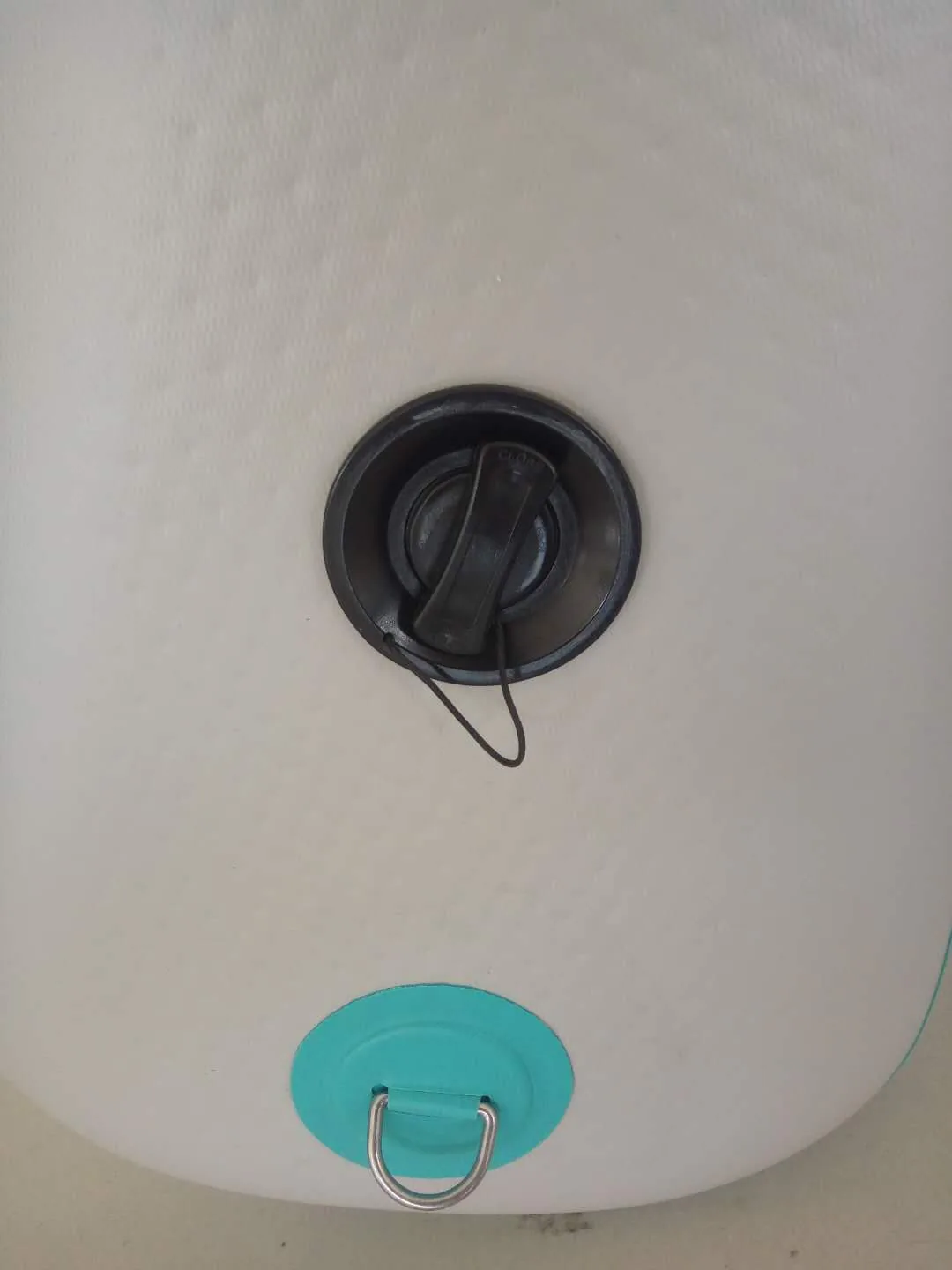
The final value is not just a number: the failure mode matters. A seam that peels cleanly tells you the adhesive or weld line was the weak point. Drop stitch fibers snapping across a wide area indicates the fabric itself reached its limit – a healthier result. A valve leaking before the structure fails means the valve seat bonding needs rework.
Load Capacity: What the Numbers Really Mean
Load capacity ratings on inflatable SUPs are frequently abused. A board sold as “400 lbs capacity” is often just a calculation from volume, not a tested figure. A meaningful load specification comes from structured testing:
- Static load test: the board is inflated to recommended pressure and loaded with distributed weight (sandbags or calibrated plates) for 24-48 hours. Acceptance criteria: deflection within tolerance, no seam stress whitening, no pressure loss beyond a small percentage.
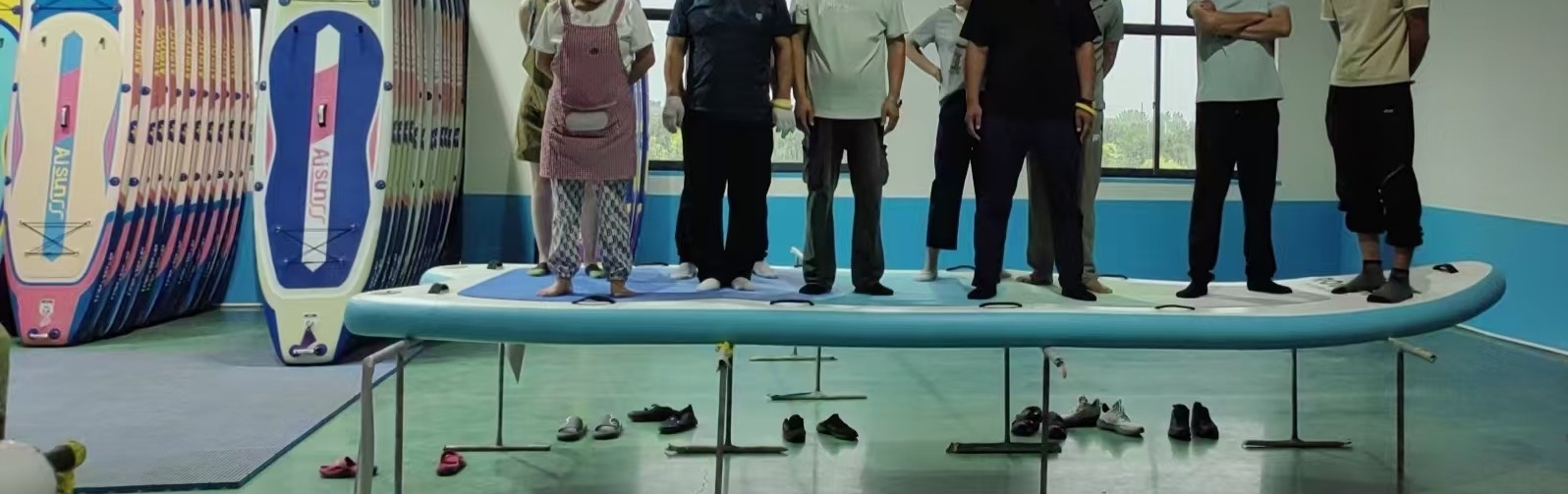
- Multi-person load test: real people standing across the deck – the test our factory team runs on every new construction – confirms the board stays rigid and stable under uneven, dynamic loads, which is what rental customers actually do.
- Deflection measurement: under a known load, hull deflection should stay within a defined percentage. Excess flex under load is the first symptom of weak drop stitch density or under-specified rails.
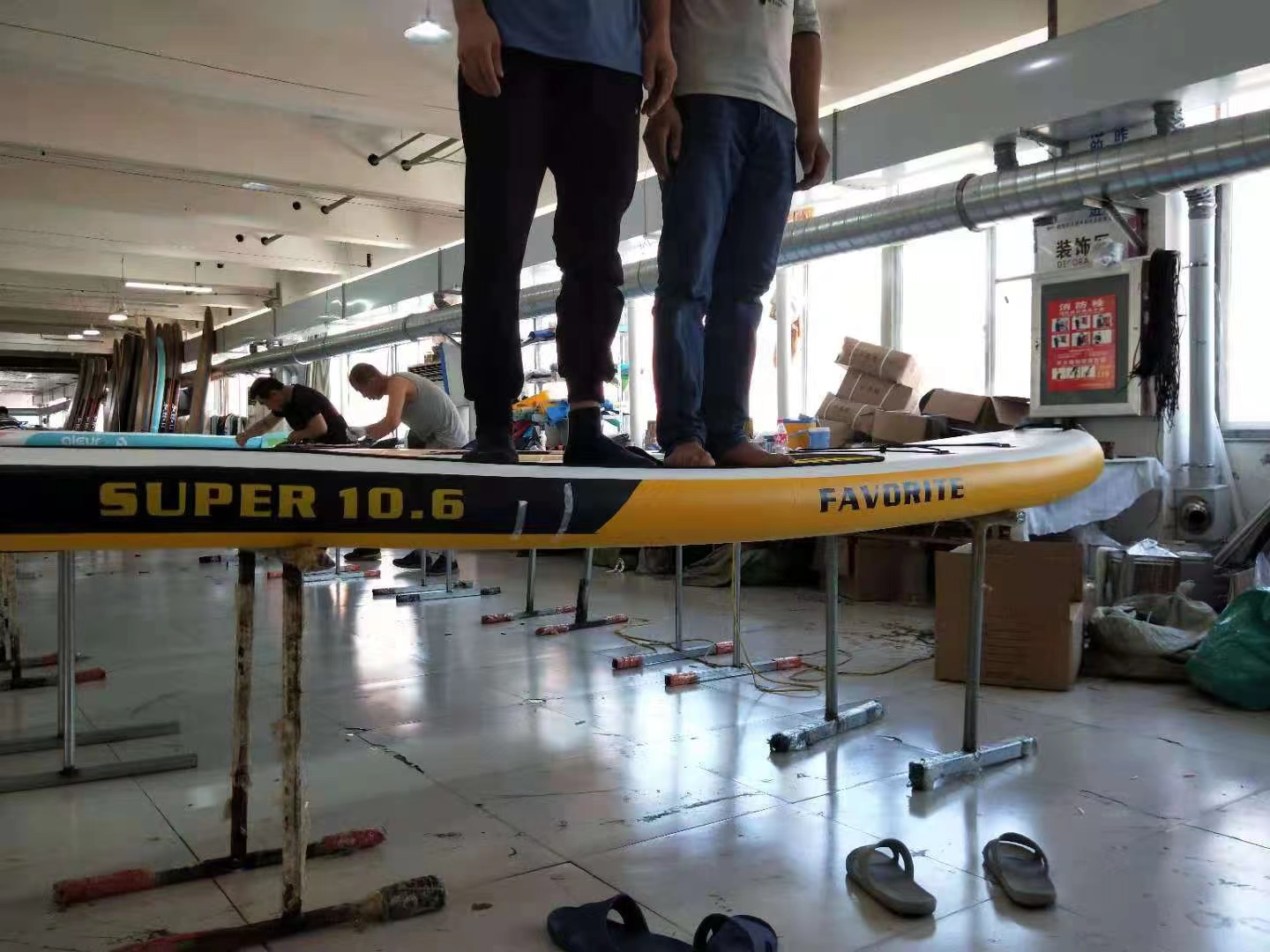
As a rule of thumb for your spec sheet: a 10'6" all-around inflatable SUP should carry a tested static load of 250-300 lbs with minimal deflection, while large platform and fishing boards should document 400+ lbs. Ask the supplier which figure is tested and which is calculated – the honest ones will tell you immediately.
Construction Choices That Move Both Numbers
Burst pressure and load capacity are not independent specs – they both trace back to construction. When you compare quotations, these are the variables to pin down:
Single Layer vs Double Layer Drop Stitch
Single-layer fusion boards are lighter and cheaper, with burst margins adequate for casual use. Double-layer (laminated) drop stitch adds a reinforcing layer that raises burst pressure substantially, improves rigidity under load, and dramatically reduces the blistering and delamination issues that plague cheap boards after a season in the sun. For rental fleets and schools, double-layer construction pays for itself in lifespan. For a full comparison, see our drop stitch material guide.
Seam Method: Hand Glue vs Machine Heat Welding
This is the single biggest quality divider in the industry today. Hand-glued seams depend on operator skill and ambient conditions; heat-welded seams are produced by machine at controlled temperature and pressure, which means consistent, solvent-free bonds on every board. In burst testing, heat-welded boards consistently outperform glued equivalents – and because no solvent is involved, they also meet European VOC and odor expectations more easily.
Drop Stitch Density and Rail Construction
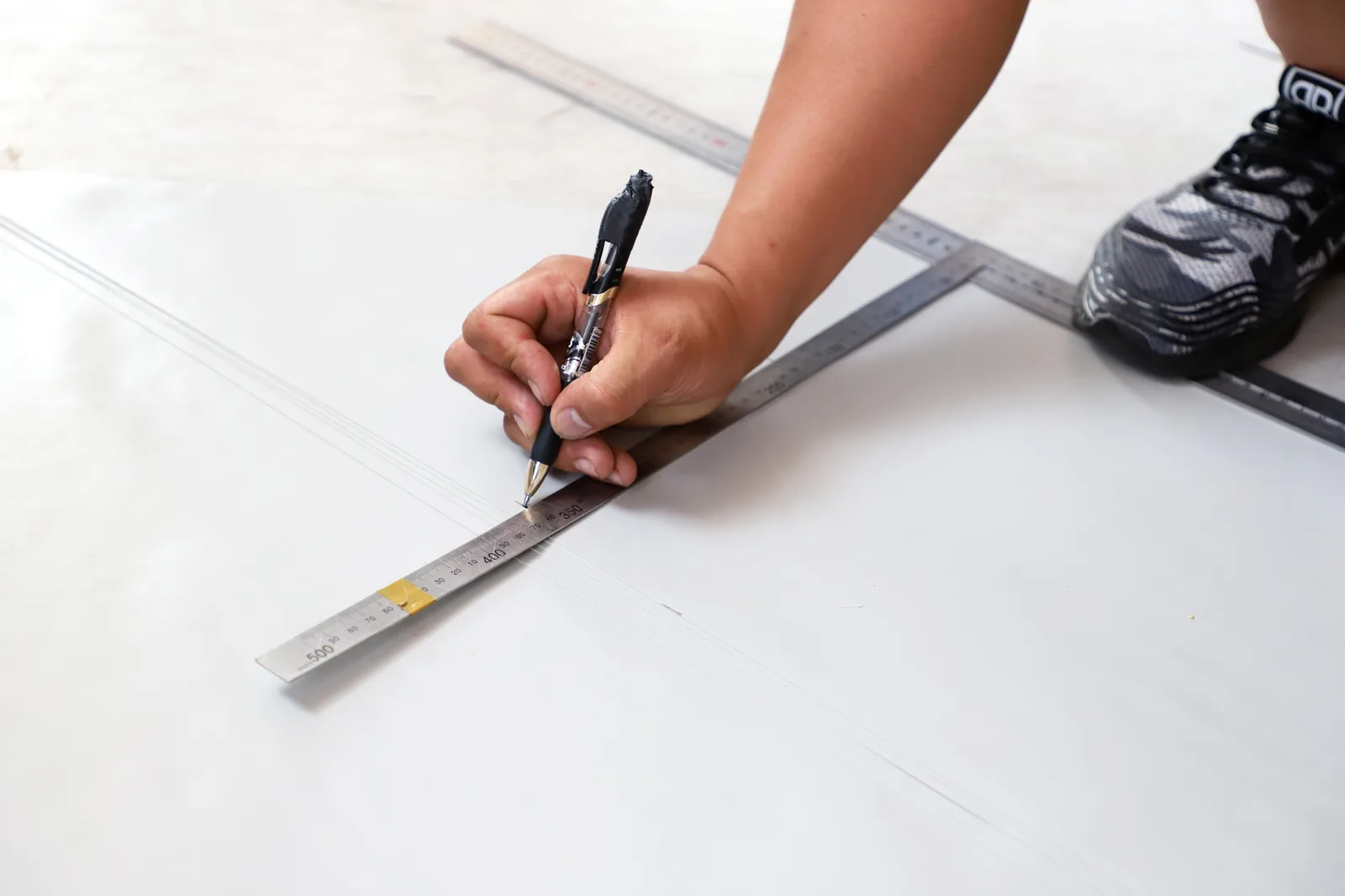
Higher fiber density per square inch means less stretching under load, higher burst point and better air retention. Combined with a reinforced rail band, this is what lets a 5-inch-thick board stay flat under a heavy paddler instead of folding like a taco. Ask for the fabric specification (e.g. threads per unit area and denier) in writing – vague answers usually mean the factory buys whatever is cheapest that week.
The Importer Checklist: Specs to Put in Your PO
Before signing with any OEM or private label SUP factory, require the following in writing. It costs the supplier nothing if their process is real, and it filters out pretenders instantly:
- Burst pressure test report from an independent or in-house lab, stating failure PSI and failure mode, for the exact construction quoted.
- Recommended operating pressure stated as 12-15 PSI, with the tested burst value documented separately.
- Static load test method, duration and acceptance criteria for your model.
- Drop stitch fabric specification: density, denier and layer count.
- Seam process confirmation (machine heat welding vs hand glue) with factory photos or video.
- Air retention test: pressure loss after 24 hours at recommended pressure (accept under 5%).
- Valve and accessory provenance – a cheap valve is the most common point of failure under pressure.
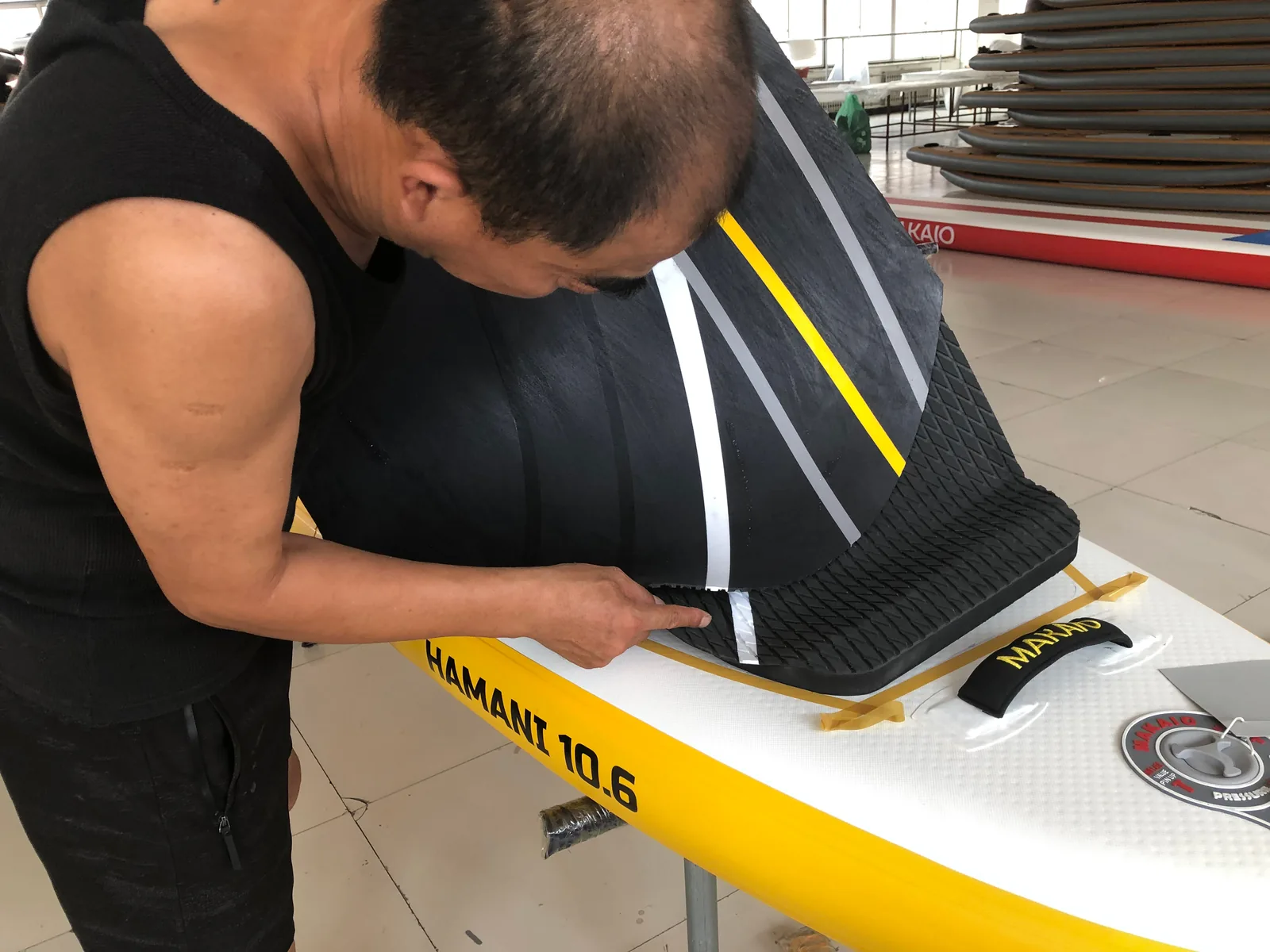
At our factory every new construction goes through exactly this sequence before it reaches a customer's container – load tests, multi-person deck tests and documented burst testing on the same production spec that ships.
Sun, Heat and Pressure: The Field Risk Most Importers Ignore
Laboratory numbers mean little if the board fails in a rental van. A board left inflated in direct sunlight can gain 2-4 PSI as internal air heats up. On a board with a thin safety margin, that is enough to blister seams. This is why burst margin is not about encouraging high pressures – it is about surviving real-world conditions:
- Instruct rental and school customers to store boards deflated or vented to half pressure in sun.
- Require pressure relief behavior from your valve supplier, or specify quality valves with tested seats.
- Ask for 60-70°C heat aging test data – it simulates a board on a car roof or a container in summer and confirms the seams do not soften or weep.
How This Applies to Private Label and OEM Orders
If you are building your own brand, burst pressure documentation is one of the strongest trust assets you can hand your dealers. Publish the tested numbers, not fantasy ones. Boards built on machine heat-welded double-layer construction with a documented 30-40 PSI burst point and a 2-3x safety margin over the 12-15 PSI operating range give your sales team a defensible technical story – and let you offer a genuine multi-year warranty instead of fine print.
The same documentation protects you commercially. When a customs officer, an insurer or a rental operator asks for proof of safety compliance, a test report with the batch number and construction spec answers the question in one page.
Frequently Asked Questions
Can I inflate my inflatable SUP to higher PSI for more stiffness?
No. Stay within the printed 12-15 PSI range. Higher burst pressure is a factory-tested safety margin that protects against heat gain and accidents – it is not an operating instruction. Over-inflation voids warranties and can permanently deform the deck.
What burst pressure should a good inflatable SUP reach in testing?
A quality heat-welded construction should test out at 30-40 PSI before failure, while hand-glued budget boards often fail near 15 PSI. Since the recommended operating pressure is only 12-15 PSI, always look for a safety margin of at least 2x – ideally 2-3x – between tested burst pressure and daily use pressure.
How is load capacity different from maximum pressure?
Maximum pressure describes the air inside the board; load capacity describes weight on top of it. A board can hold 15 PSI perfectly and still flex badly under 300 lbs if the drop stitch density is low. Demand both a burst test report and a static load test with deflection criteria.
Do I need burst test reports for every model I import?
You need them for every construction – the thickness, fabric and seam method combination. If two models share the same construction, one report can cover both, but it must reference the exact material spec in your purchase agreement.
Bottom Line for Buyers
Treat burst pressure and load capacity as contract terms, not brochure copy. Specify 12-15 PSI operating pressure, require a documented 30-40 PSI burst result on heat-welded construction, ask for static and multi-person load test data, and keep the reports with your batch records – the same logic behind our single vs double layer construction guide. Suppliers who test will provide the paperwork within a week; suppliers who guess will change the subject.
Looking for a private label paddle board supplier with documented testing on every construction? Explore our custom SUP board program, review the full drop stitch material guide, or contact our team with your spec sheet – we will send back the test data to match it.