
European buyers used to treat paperwork as a formality that could be sorted out after the container landed. That era is over. Since the General Product Safety Regulation took effect in December 2024, marketplaces delist products that lack a named responsible person in the EU, customs and market surveillance authorities ask for technical files, and serious distributors now request test reports before they will even look at a price list. For anyone importing inflatable boards, understanding inflatable SUP certification has become as important as understanding drop stitch or PSI.
This guide walks through what certification actually involves for an inflatable stand up paddle board in 2026: the EN ISO 25649 safety standard, the GPSR framework that sits above it, the chemical rules under REACH, and the packaging regulation that started applying in August 2026. It is written from the factory side of the table — what a buyer should ask for, and what a serious OEM/ODM SUP factory should be able to produce without being asked twice.
Note: this is a sourcing overview, not legal advice. Regulatory scope can depend on how a product is classified and marketed, so confirm the final compliance route with your EU importer of record or a qualified consultant.
EN ISO 25649: The Safety Standard Behind Inflatable SUP Certification
There is no single law called the “paddle board directive”. The document the industry actually leans on is ISO 25649, titled Floating leisure articles for use on and in the water, adopted in Europe as the EN ISO 25649 series. It is the reference standard that test labs use when they evaluate an inflatable SUP, and it is what market surveillance authorities and insurance companies treat as the benchmark for “was this product designed safely”.
What the Standard Actually Tests
The series runs across seven parts, and the test areas relevant to an inflatable board include:
- Design working pressure and overpressure behaviour — the board must survive pressure cycling and an overpressure test well above its rated value. This is why a board rated for 12–15 psi of inflation is pressure-tested far beyond that figure before it earns a certificate.
- Buoyancy and load capacity — the stated maximum rider weight and user count must be demonstrated, not estimated.
- Air tightness — chambers must hold pressure over time without leakage at valves, seams or welds.
- Valve requirements — valve fit, function and compatibility with standard adapters.
- Mechanical hazards — entrapment and entanglement points, sharp edges, corners and crushing points on handles, D-rings and fin boxes.
- Hull strength and material performance — puncture resistance, coating adhesion, and resistance to heat, cold, mineral oil and chlorinated salt water.
- Marking durability and consumer information — warnings must stay legible after exposure, and the manual must carry the required safety information.
That last point surprises many first-time importers: the standard does not stop at the board. Your warnings, your manual and even the durability of the printed label are in scope. We covered the pressure side in detail in our load capacity and burst pressure guide.
Which Parts Apply to a Paddle Board
In practice, buyers should expect the file to reference Part 1 (classification, materials and general requirements) and Part 2 (safety requirements and test methods for consumer articles), plus the part that covers the applicable device class as determined by the board’s intended use and buoyancy. The test laboratory confirms the classification — it is not something the brand guesses.
One clarification worth repeating, because it trips up even experienced buyers: a stand up paddle board is generally treated as a floating leisure article, not as a “craft” under the EU Recreational Craft Directive, which excludes surfboards and sailboards. That means the compliance route for a typical inflatable SUP runs through general product safety law with EN ISO 25649 as the technical benchmark — not through a marine CE certificate. If a supplier hands you a “CE certificate” for a paddle board, ask exactly which legislation it is declared against and request the full test report behind it. A one-page certificate with no test data is a red flag, not evidence.
GPSR: The Rule That Reshaped EU Imports Since December 2024
The General Product Safety Regulation (EU) 2023/988 has applied since 13 December 2024 and replaced the old General Product Safety Directive. It covers essentially every non-food consumer product, inflatable boards included, and it changed three things that matter directly to paddle board importers.
The EU Responsible Person Requirement
Every product placed on the EU market must have a named economic operator established in the EU — the manufacturer, the importer, or an authorised representative — whose name and contact details appear on the product, the packaging or the online listing. Marketplaces now enforce this at the listing level, and delistings for a missing responsible person are one of the most common reasons a board “disappears” from Amazon or a national platform overnight. If you sell through distributors, decide in the contract who holds this role; if you sell direct, budget for an authorised representative service.
Traceability and the Technical File
GPSR expects the product to be traceable (manufacturer name and address, product identifier, batch or serial number) and expects a documented risk assessment plus technical documentation that can be shown to market surveillance authorities. For an inflatable board, a defensible file typically contains:
- construction drawings and material specifications per component;
- the EN ISO 25649 test report for the model;
- a documented risk assessment covering use, misuse and foreseeable users;
- label artwork with warnings, rated pressure and maximum load;
- the user manual in the languages of the destination markets;
- batch-level quality control records from production.
None of this is exotic. It is routine documentation for an established private label paddle board program — and if a factory cannot produce it, that tells you something about how the board behind it was made.
Test Evidence Your Factory Should Hand You With Every Batch
A certificate from three years ago describes a board you are not shipping today. What protects a distributor is batch-level evidence, and it costs a disciplined factory almost nothing because the tests belong in normal production QC anyway:
- Pressure hold and leak testing — every chamber inflated and held before packing; a pressure drop beyond the limit fails the unit, not the shipment average.
- Cyclic and overpressure checks — done at sample stage per model, and repeated whenever the material spec, welding process or chamber design changes.
- Seam and weld inspection — visual plus mechanical spot checks, especially after any change in adhesive batch or heat-welding parameters.
- Valve function checks — seat, seal and cap threads on every unit.
- Final inspection records — dimensions, weight, accessories, labeling position and carton condition, per batch.
When you evaluate quotes from more than one paddle board supplier China has plenty of, ask each one to describe its pressure hold procedure in numbers — target pressure, hold time, acceptance limit — and to send a sample batch record. The answer, or the silence, will rank suppliers faster than any unit price comparison. More on what to require is in our drop stitch material guide.
REACH and the Chemical Questions Serious Buyers Ask
Physical safety is only half the file. European regulators and retail chains increasingly ask chemical questions, and the framework is REACH:
- SVHC candidate list — if an article contains a substance of very high concern above 0.1% weight, professional suppliers downstream must be informed, and the article may need SCIP database notification. Ask your factory for a declaration listing any SVHC in the PVC, EVA, adhesives and coatings.
- PAHs (polycyclic aromatic hydrocarbons) — restricted in rubber and plastic parts that have prolonged skin contact. Handles, grips and certain pads are the usual suspects.
- Phthalates — certain plasticisers in soft PVC are restricted; the drop stitch top layer, side walls and repair patch material should be covered by the declaration.
- PFAS — a broad restriction is moving through the EU regulatory pipeline. It does not bind paddle boards today, but footwear-style “waterproofing” claims and certain coatings could fall in scope later, so keep an eye on it.
None of this requires a chemistry degree from the buyer. It requires a factory that keeps material declarations per component and updates them when a supplier changes. When you audit an OEM/ODM SUP factory, put “who supplies your PVC film, and can they issue REACH declarations” on the checklist next to machine lists and QC photos.
Packaging Is Now Regulated: The PPWR Applies Since August 2026
The newest layer is one most importers have not budgeted for. The Packaging and Packaging Waste Regulation (EU) 2025/40 generally applies from 12 August 2026, and it reaches all packaging placed on the EU market — including the retail box and protective wrapping around a wholesale inflatable paddle board.
Practically, that means packaging needs to meet requirements on minimisation and recyclability with supporting technical documentation, and the producer responsibilities (registration and fees) attach to whoever first places the packaged product on the market in a member state. For a B2B import model, your EU importer normally carries that duty; if you ship direct to consumers, the obligations can land on you, market by market — Germany’s LUCID registration is the example everyone hits first.
What to Change in Your Carton Spec
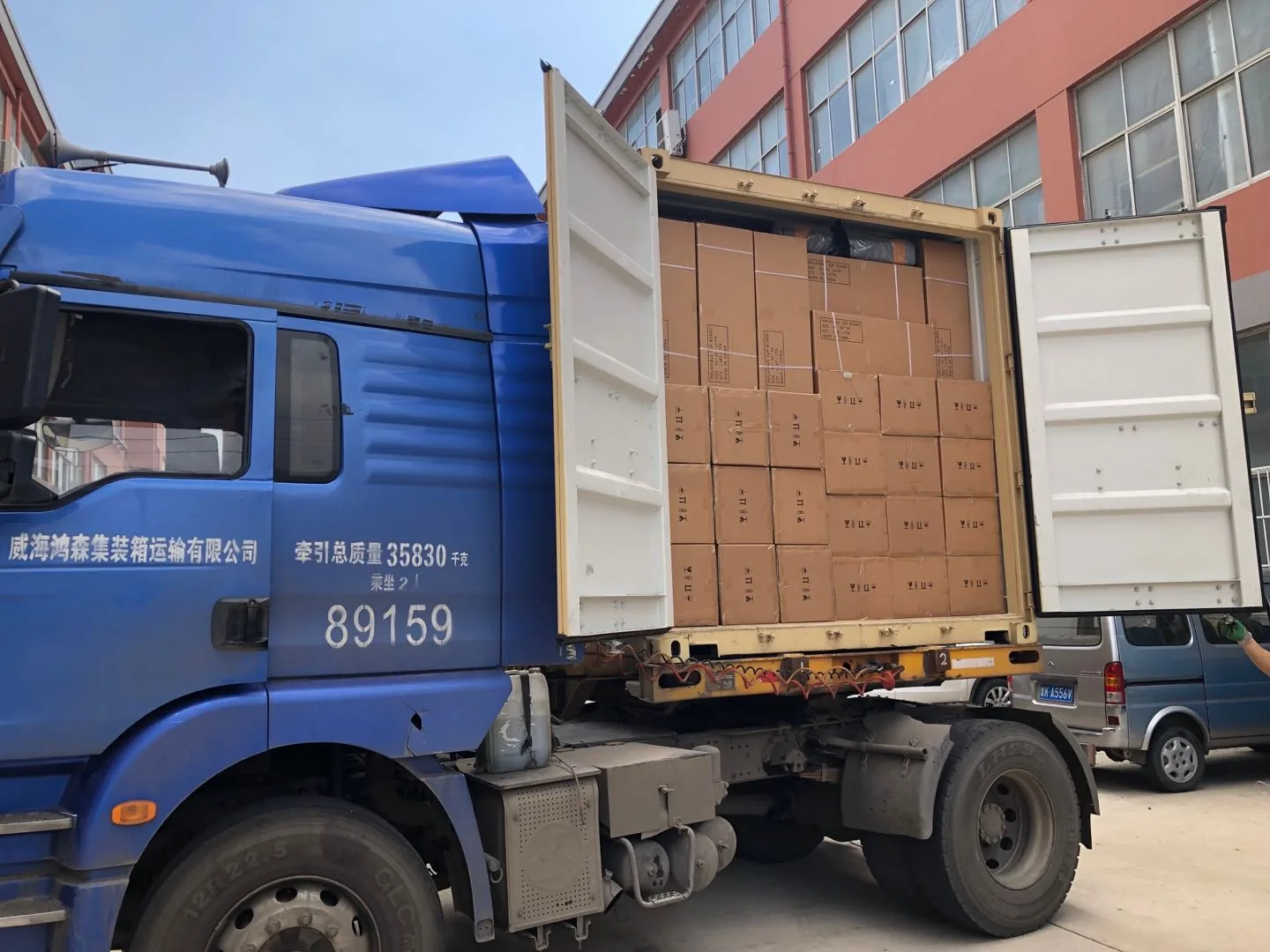
Three low-cost adjustments keep a container compliant without redesigning anything: right-size the carton so it does not carry obvious empty space, specify mono-material packaging where possible instead of mixed plastic-and-paper laminates that are hard to recycle, and ask the factory to file the packaging material breakdown (grams of corrugated, film, tape) with the shipping documents. Our SUP packaging and container loading guide covers the logistics side in depth.
Labels, Warnings and the Manual: Cheap Fixes, Expensive Mistakes
Labeling is where certification meets the customer, and it is decided at the factory weeks before shipment. The EN ISO 25649 family tests whether warning markings survive exposure — sun, water, abrasion — which means a screen-printed logo is not the same thing as a compliant warning mark. Before production, lock down:
- rated inflation pressure (for most all-round boards, the recommendation stays in the 12–15 psi band) and maximum load, printed durably;
- warning wording and pictograms per the standard and the destination market’s language;
- manufacturer or responsible person details for traceability;
- a manual that covers inflation, deflation, storage, repair and the safety warnings the standard expects.
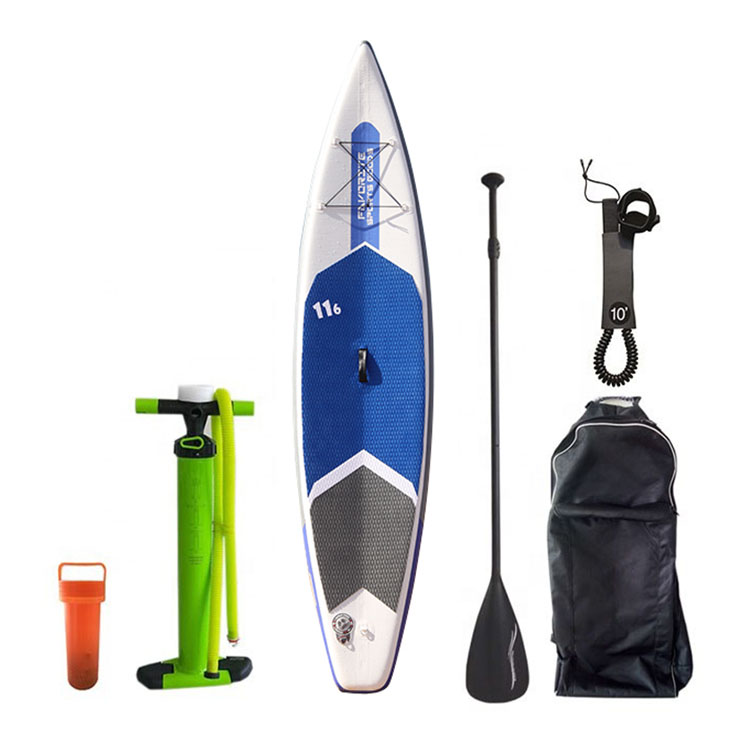
Because the kit travels as one product, the same logic applies to the pump, paddle, leash and bag — they are part of what the importer places on the market. Specifying them together in the OEM contract avoids the classic gap where the board is documented and the accessories are not.
How to Build Certification Into Your OEM Spec Sheet
All of the above compresses into six contractual lines. Put them in the purchase order, not in a friendly email:
- Name EN ISO 25649 as the reference safety standard for the model.
- Request the test report per shape and size, not per order.
- Require REACH declarations for board materials and every accessory.
- Approve warning label artwork, material and placement at sample stage.
- Specify manual content and destination-market languages.
- Require batch QC records, including pressure hold data, with each shipment.
An experienced factory will read that list and recognise it — it mirrors how any mature production line already works, and it is the same discipline behind the private label MOQ and timeline process we run. A supplier who pushes back on all six points at once is answering your compliance question in a different way.
Frequently Asked Questions
Do inflatable SUP boards need CE marking?
Not in the way a marine product does. Paddle boards generally fall outside the Recreational Craft Directive (surfboards and sailboards are excluded), so there is no CE “certificate” issued under marine law. The obligations come from the General Product Safety Regulation, and EN ISO 25649 is the standard used to demonstrate the board meets it. Buyers and marketplaces will still ask for test evidence — they just should not expect a marine CE certificate, and any supplier claiming one should be asked exactly which legislation it references.
Who carries the compliance duty, the factory or the importer?
Both, in different seats. The EU-established importer normally carries the importer obligations under GPSR — verifying the product is safe, keeping documentation, cooperating with authorities. The factory outside the EU carries the duty to manufacture to spec and provide accurate technical documentation. The practical answer is to write the split into your supply contract, so nobody discovers the gap during a market surveillance inquiry.
How long does EN ISO 25649 testing take for a new model?
Timelines vary by laboratory and how many size variants share one test series, but planning around a few weeks for a standard all-round model is realistic, longer if failures require redesign. The smart move is to book testing in parallel with sample approval rather than after bulk production — finding a labeling or valve issue at sample stage costs a revision; finding it after 300 boards are packed costs a season.
Getting the File Right Before the First Container
Compliance is not a hurdle to jump at the port — it is a spec sheet decision made before the first sheet of drop stitch is cut. Importers who treat EN ISO 25649 evidence, GPSR documentation, REACH declarations and packaging data as part of the product definition consistently launch faster, survive marketplace audits without drama, and keep their distributors confident between seasons.
If you are planning a private label program for the European market and want a factory that treats documentation as part of production, look at our OEM program, review how our small-batch custom board service works, or send us your market requirements and we will map the file with you before you commit to a single board.