
A wood grain SUP board looks like a solid timber board on the dock and costs a fraction of one to ship. That gap is why wood-grain finishes have moved from a niche detail to one of the most requested looks in the European and North American paddle board market, and why more brands are asking a paddle board supplier China whether they can produce it. But “wood grain” on a factory spec sheet can mean three very different things, and the difference determines whether your retail shelf price holds up or your returns pile up.
This guide covers what a wood grain inflatable paddle board actually is, the three printing routes used to produce it, how you combine it with laser marking on the EVA deck pad and custom cut-out shapes in the deck panel, and the specification questions worth putting into your purchase order before you wire a deposit.
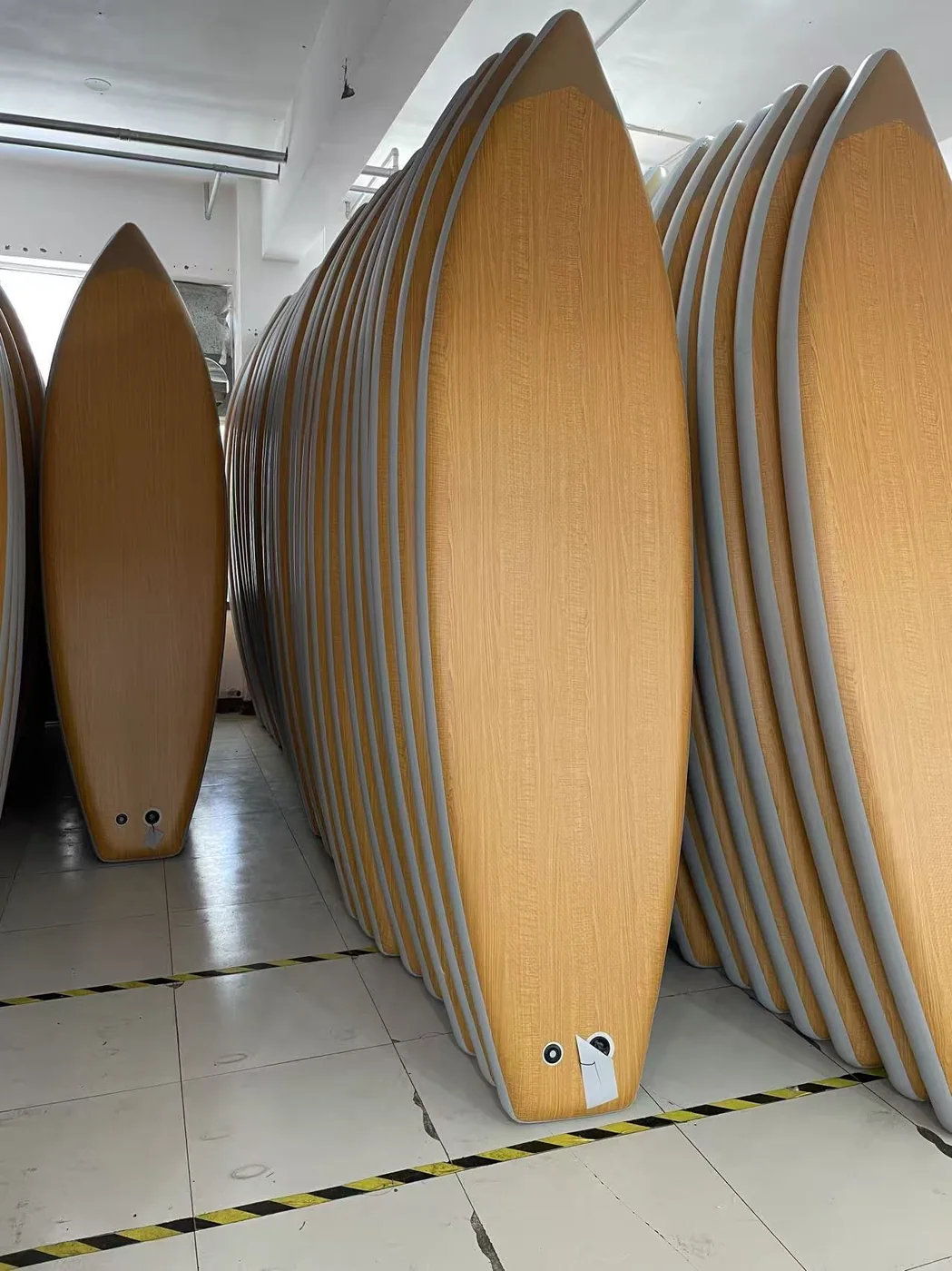
Why Wood Grain Inflatable SUP Boards Are Selling in 2026
The commercial logic is simple. A flat, single-colour inflatable board competes on price and loses to cheaper alternatives. A board that looks like a hand-finished wooden craft sells on identity, which means a brand can hold a higher retail price without changing the hardware underneath it. Distributors buying for beach clubs, surf schools and rental fleets report the same pattern: the boards that photograph well and look premium on an Instagram shelf are the ones that get picked up and resold quickly.
Three market signals are worth noting if you are planning a 2026 program:
- Retail listings have consolidated around the look. A dedicated category of wood-grain inflatable boards now sits alongside conventional all-round and touring models in mainstream outdoor retail, which means buyers searching for the style already exist and already buy.
- European brands have made it a positioning statement. Several established European paddle board labels now market wood-grain models explicitly as their premium line rather than as a budget alternative to the standard range.
- Manufacturers list it as a standard option. Wood-grain style alongside custom colour and custom logo appears in the regular specification tables of established export factories, not as a one-off R&D request.
For a buyer, this means the look is proven at retail and reproducible at factory scale. The question is no longer whether it works commercially. The question is which production method you are actually buying.
How the Wood Look Is Actually Produced
There are three routes to a wood-grain finish on an inflatable board, and they differ in durability, in how they wear, and in how they interact with everything else you customise.
Route 1 — Full-Print Wood Grain Graphic on the Deck
The board is a standard drop-stitch inflatable and the wood grain is a printed graphic applied across the deck surface and rail. This is the route most suppliers default to because it needs no new tooling. It is fully customisable: you can put any graphic you like over the wood base, including your own logo, a serial number or a club mark.
The weakness is that the wood grain is a coating, not the material. It is a print on PVC, and prints on PVC have a finite life. UV exposure, repeated inflation cycles at working pressure, sand abrasion and salt water all work on the same layer. Expect a good board to hold the look through two to three seasons of hard commercial use before you would want to replace it, and expect buyers to compare it against a real timber board on handling quality if the print starts to fade early.
Route 2 — Thermal Transfer and Wood Grain Film
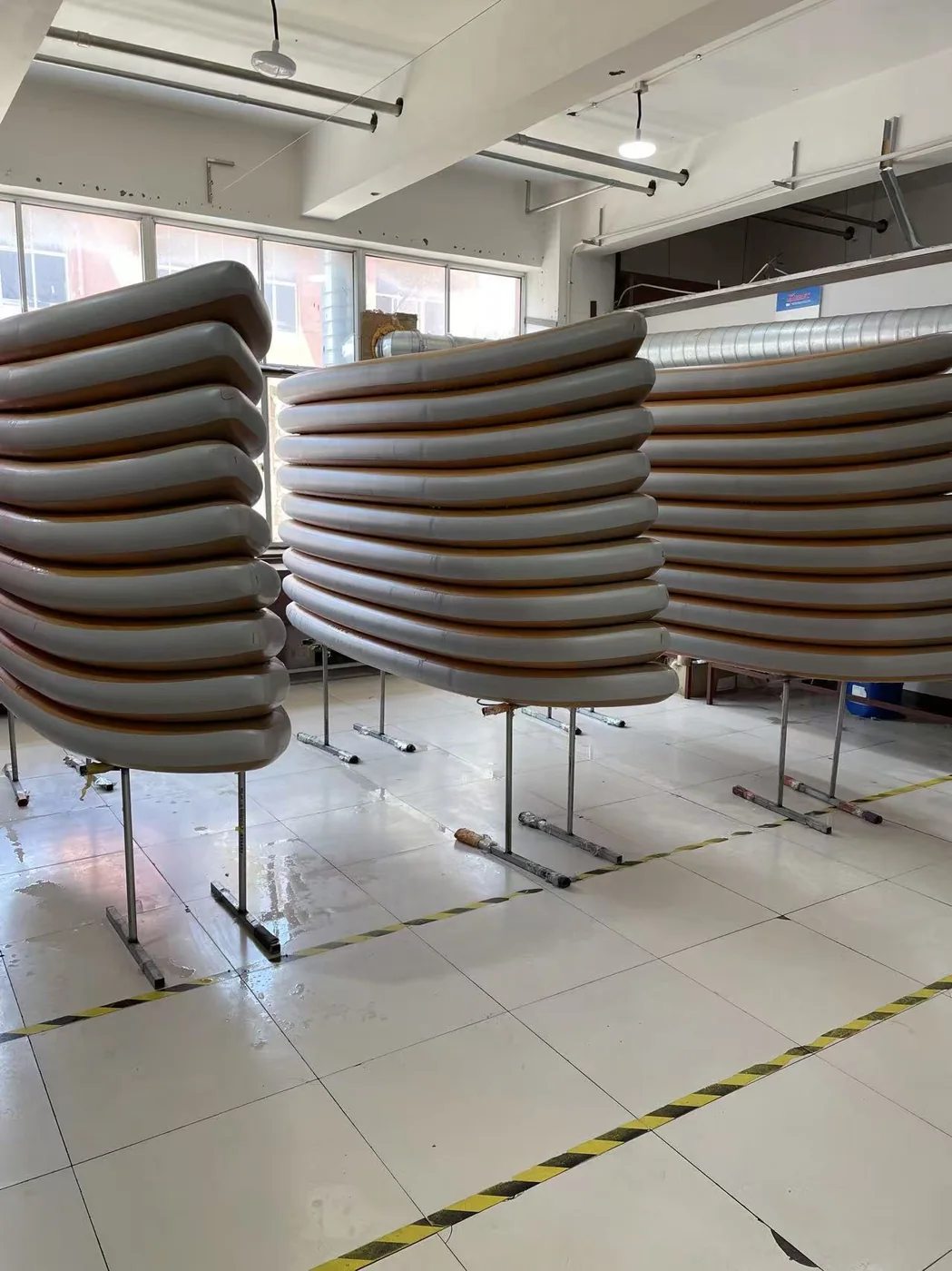
Here the wood pattern is transferred onto the PVC layer under heat and pressure before or during panel assembly, so the graphic becomes bonded into the board skin rather than sitting on top of it. Because the transfer is applied before the drop-stitch structure is finished, the pattern runs through the whole deck and around the rail as one continuous surface with no lifting edge and no seam where the graphic stops.
This is the strongest of the three for durability and the one most people mean when they say they want a wood grain board. It also has a specific production consequence worth confirming with your supplier: artwork has to be aligned to the panel before lamination, so if your design includes custom cut-out shapes in the deck, the print and the cut positions have to be agreed before the board is built, not after.
Route 3 — Structural Wood Veneer and Composite Boards
The third category is a rigid board: EPS core with a wood stringer, glass fibre layers and a wood veneer or sprayed wood-grain finish. These are genuinely timber-hybrid products with a different weight, a different price band and a completely different supply chain. They are a valid choice for a premium or heritage brand, but they are not inflatable, they do not stack into a container the same way, and they are not the same product as the two routes above.
Decide which category you are in before you start comparing quotes. A wood-grain inflatable board and a wood-veneer composite board will never be price-comparable, and a supplier who quotes both without separating them is not answering the question you asked.
Laser Marking on the EVA Deck Pad: The Detail That Buyers Underestimate
The deck pad is the surface a rider actually touches, and in a wood-grain board it is usually the one place where the brand mark ends up. There are two ways to decorate it, and they solve different problems.
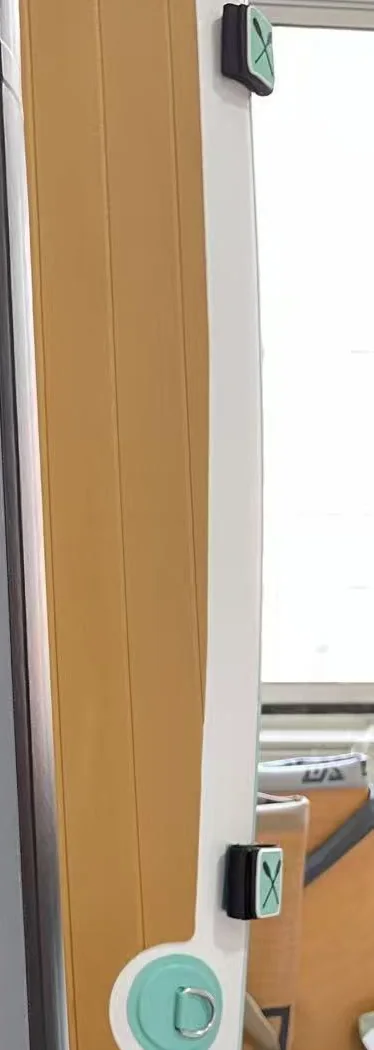
Full-colour printing on the EVA pad handles photographic or multi-colour artwork. The pad is printed and then cut to the board outline, so the graphic follows the shape of the deck and wraps around the handle and D-ring cut-outs instead of stopping short of them as a rectangle would.
Laser marking is the other route, and it is the one most suppliers do not offer. A focused laser cuts the artwork directly into the EVA foam instead of laying ink on top of it. There is no film to lift and no ink layer to scratch off, so the graphic is as durable as the pad itself and survives sand, salt water and repeated inflation cycles without fading or peeling. Because the graphic is a physical cut rather than a printed surface, it also works on the textured area of the pad where screen printing and UV printing struggle, and it carries no minimum order and no per-colour setup fee.
Buyers typically use laser marking for the board model name, a club or resort mark, a serial number for fleet tracking, or a graphic motif that has to look permanent from the day the board leaves the factory. Where a wood-grain deck carries the mood and a laser-marked pad carries the identity, you get a board that looks premium and still survives a rental operation.
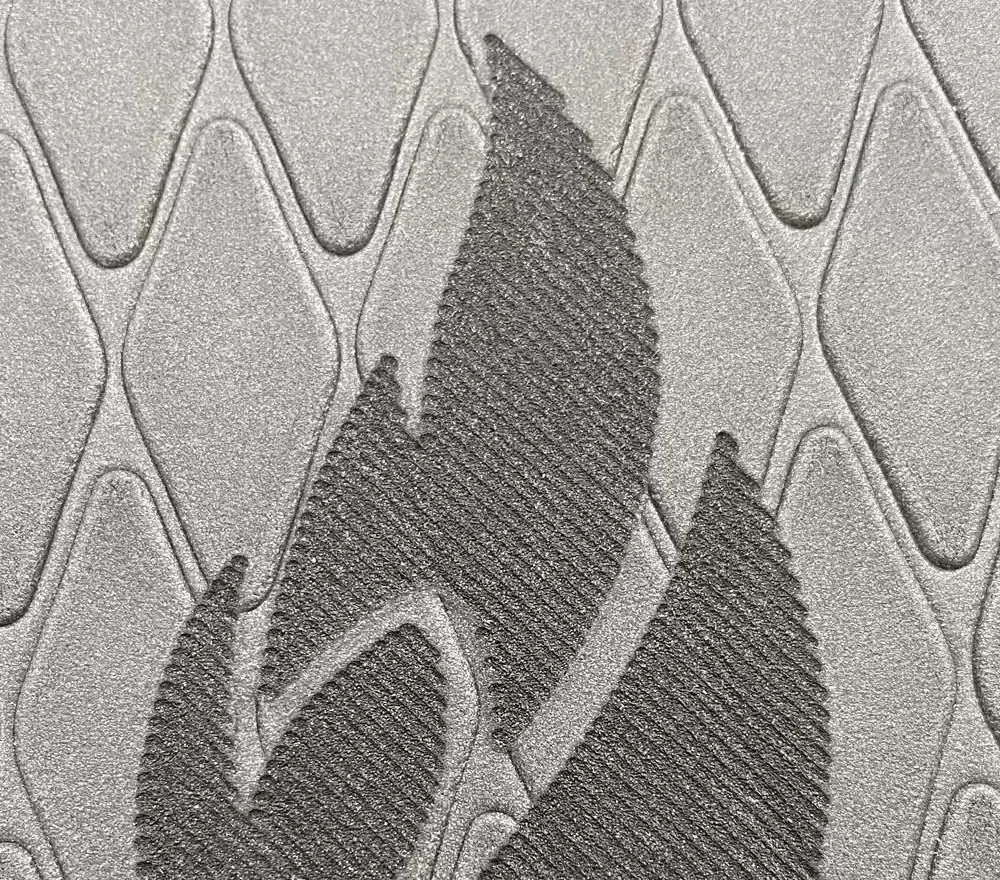
It is worth noting that a laser-engraved pad is a single-tone treatment. If your artwork needs photographic or multi-colour graphics, that is a printing job rather than a marking job. Ask your supplier which route fits the artwork you have and how the board will actually be used.
Custom Cut-Out Shapes in the Deck Panel
The second capability that separates factories from suppliers is whether they will machine the board itself rather than only decorate it. Buyers with a specific use case need round cut-outs for pump access and rod holders, elongated openings for camera mounts and drink holders, and shaped handle openings that follow the outline they send in.
Every opening has to be finished with a welded rim. On a wood-grain printed panel this matters twice over: the weld has to hold the air seal, and it has to look deliberate. A raw cut edge on a printed deck reads as a manufacturing fault, and it will read that way to a retail customer standing in a shop, not just to your QC inspector.
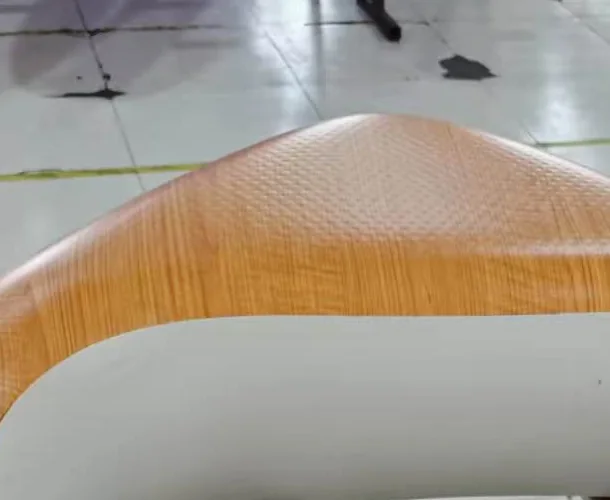
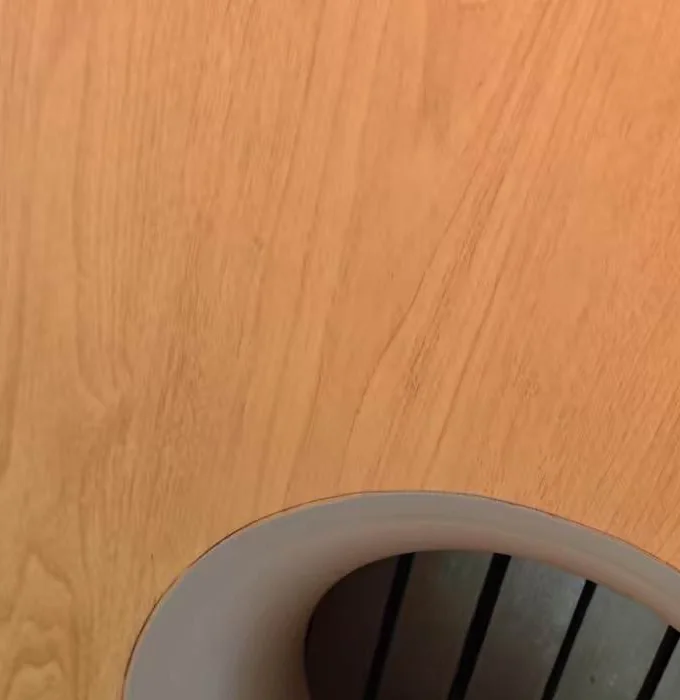
Deck pads are cut to the same logic. A pad that arrives as a standard rectangle and gets trimmed on site will never line up with the hardware, and the seams will show. Factory-cut pads, matched to the board outline and the artwork, are the difference between a board that looks designed and one that looks assembled.
What to Put in Your Purchase Order
Wood grain adds a layer of specification that a standard board order does not need. Before you sign, confirm the following in writing:
- The printing route and layer. Ask whether the wood grain is a graphic on the finished deck, a thermal transfer bonded into the skin before assembly, or a veneer on a rigid composite. Ask where the print stops and how it wraps the rail.
- The artwork alignment process. If the board has custom cut-out shapes, confirm that you supply artwork and cut positions together, and that you approve a physical sample before mass production.
- How the deck pad is decorated. Full-colour print or laser marking, and whether your logo goes on the pad, the rail or the deck. Laser marking on the pad and UV printing on the rail is a normal combination.
- The pad cut profile. Confirm the pad is cut to the board outline with the hardware openings already in place, not trimmed by hand.
- Print durability testing. Require abrasion, UV exposure, inflation cycling and salt-water soak results on the specific finish you are buying – not on a different finish the factory happens to test.
- MOQ by finish. MOQ 1 board is realistic on printed surfaces. Ask specifically what the minimum is for your wood grain route, your laser marking and your cut-out shapes, because they can differ.
Frequently Asked Questions
1. What is the difference between a printed wood grain and a real wood SUP board?
A printed wood grain is a graphic applied to a drop-stitch inflatable board, so it stays light, folds into a bag and ships at a fraction of the cost of a rigid board. A real wood or wood-veneer composite is a rigid board with an EPS core and glass fibre layers. They are different products at different price bands, and the comparison only makes sense once you have decided which category you are buying.
2. Will a wood grain print fade or peel?
It depends entirely on the route. A graphic printed on the finished deck is a coating and has a finite life under UV, abrasion and repeated inflation cycling. A thermal transfer bonded into the panel before assembly becomes part of the skin and is far more durable. Ask your supplier which one you are being quoted, and ask for durability test results on that specific finish.
3. Can you laser mark my logo on the EVA deck pad?
Yes. Laser marking cuts the artwork into the EVA foam rather than printing on top of it, so there is no film to lift and no ink to scratch off. It is single-tone, needs no minimum order and no per-colour setup fee, and it works on the textured part of the pad where ink printing struggles.
4. Can you cut custom holes and shaped openings in a wood grain board?
Yes. We machine round cut-outs, elongated openings and custom shapes directly into the deck panel, and finish each one with a welded reinforced rim so the board keeps its air seal. Send your drawing or a photo with dimensions and we will confirm what is feasible for your board model.
5. What is the minimum order for a wood grain private label board?
MOQ 1 board is realistic on printed surfaces, which is what makes this a good way to test a wood grain program before committing to a container. Laser marking and custom cut-out shapes can carry their own minimums because of setup, so ask us for the minimum on each element of your specific spec.
6. How long does a wood grain sample and bulk order take?
Allow roughly 7 to 12 days from approved artwork to a finished sample, depending on how many cut-out shapes and finishes are involved. Container orders follow the standard OEM SUP lead time of 25 to 35 days depending on season. Our burst pressure and load testing guide explains the documentation you should ask for with any construction spec.
The Same Wood Grain Finish Across Your Whole Range
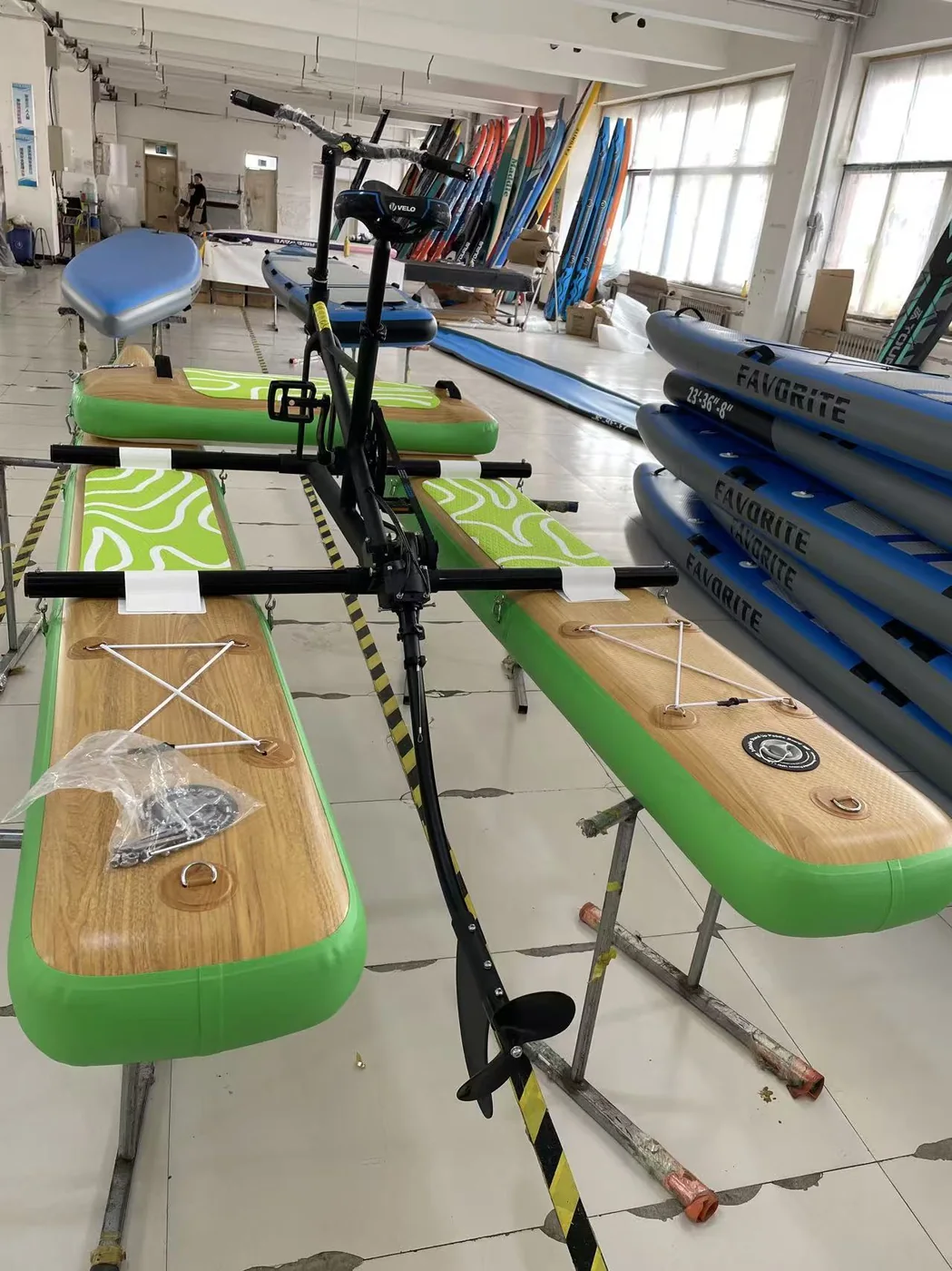
Wood grain is not a SUP-only finish. If your brand sells more than one water sports line, the same printed surface can run across inflatable kayaks and water bikes so the whole range looks like one catalogue. A wood-grain hydrobike with a matching printed deck and traction pad reads as a deliberate premium product rather than a commodity board with wheels attached — which is exactly how it sells at a higher shelf price in a resort or rental shop.
How to Start a Wood Grain SUP Board Program
We are a factory-direct private label paddle board manufacturer producing inflatable SUP, kayak and water bike products for brands, distributors and rental operators across Europe, the US and Japan. Wood grain is a finish we run in-house on our own drop-stitch lines, alongside laser marking on EVA deck pads and custom machining of deck openings.
The fastest way to get a usable answer is to send three things: the board size and shape you plan to sell, your artwork file or a reference image, and your target quantity. We will come back with a mockup, a quotation and a realistic lead time – typically within 24 hours.
- Browse our custom SUP board range, including colourways, deck pad options and full-print models.
- Read our printing guide for the full comparison of UV digital, screen, laminated full-deck and laser marking.
- Check drop stitch material and construction before you fix your spec – it affects rigidity and print bonding.
- Read the burst pressure and load testing guide so you know which construction to specify.
- See the full OEM service including packaging, hang tags, manuals and shipping terms.
- Prefer to talk it through? Use the contact page and we will reply within one working day.